
RSV shots for your baby: how do Beyfortus and Enflonsia differ?
Update (November 2026)
Enflonsia is now available at the Safe Care Center. For prices, please contact the clinic.
Hello! This is SONGDO ANSHIN, protecting the healthy airways of children in Songdo District 8.
It’s still midsummer, so the RSV (respiratory syncytial virus) season may feel far off. Even so, many wise parents are already looking into and asking about autumn RSV vaccination in advance.
Ahead of this autumn’s vaccination, alongside the established, representative preventive injection ‘Beyfortus,’ a new drug from MSD Korea, ‘Enflonsia,’ recently approved by the MFDS (Korea’s Ministry of Food and Drug Safety), has joined in, deepening parents’ questions and considerations.
Today, SONGDO ANSHIN will compare the two preventive antibody injections calmly and accurately, based on their clinical-trial evidence. (As of July 2026)
|
💡Conclusion at a glance • In clinical trials, both products showed a confirmed effect of reducing RSV-related hospitalization by over 80% , making them reliable preventive antibody injections. • The biggest practical difference is the dosing method. Beyfortus sets the dose by the baby’s weight, while Enflonsia gives the same single dose regardless of weight. • As for the two products, there is no head-to-head clinical trial directly comparing them yet. So we cannot definitively say “one is superior.” • Beyfortus is available now, and Enflonsia, after its domestic approval in June 2026, is scheduled to launch in the second half of the year. Both products are non-covered. |
Why does RSV matter?
RSV (respiratory syncytial virus) starts much like a cold, but in babies under one year it can progress to severe lower-respiratory infections such as bronchiolitis or pneumonia.
In a domestic health-insurance data analysis, about 45% of RSV patients under age 5 required inpatient treatment, and the hospitalization burden was greatest in babies aged 6–11 months.
Because there is still no specific cure for RSV, lately “preventive antibody injections” that supply antibodies in advance have been drawing attention.
Whereas a vaccine works by prompting the baby’s body to ‘make’ antibodies, these injections work by ‘directly supplying’ finished antibodies, so protection appears quickly after the shot. Beyfortus and Enflonsia, compared today, belong to this class.
Beyfortus vs. Enflonsia comparison
|
Item |
Beyfortus |
Enflonsia |
|
Active ingredient |
Nirsevimab |
Clesrovimab |
|
Manufacturer / Korea |
Sanofi (distributed by SK Bio) |
MSD Korea |
|
dosing method |
Weight-based (<5 kg: 50 mg / ≥5 kg: 100 mg) |
Weight-independent, single 105 mg |
|
Number of doses |
Once (per season) |
Once (per season) |
|
Protection duration |
About 5 months |
About 5–6 months |
|
Pivotal trial |
MELODY, HARMONIE |
CLEVER, SMART |
|
Status in Korea |
Available now |
Approved, launch pending |
|
Cost |
Non-covered (out-of-pocket) |
Non-covered (out-of-pocket) |
|
💡In simple terms The difference is simply between precisely matching the dose to weight (Beyfortus) and the convenience of not needing to weigh (Enflonsia) — both share the same big picture: ‘one shot protects for a season.’ |
How effective are they? ① Preventing hospitalization
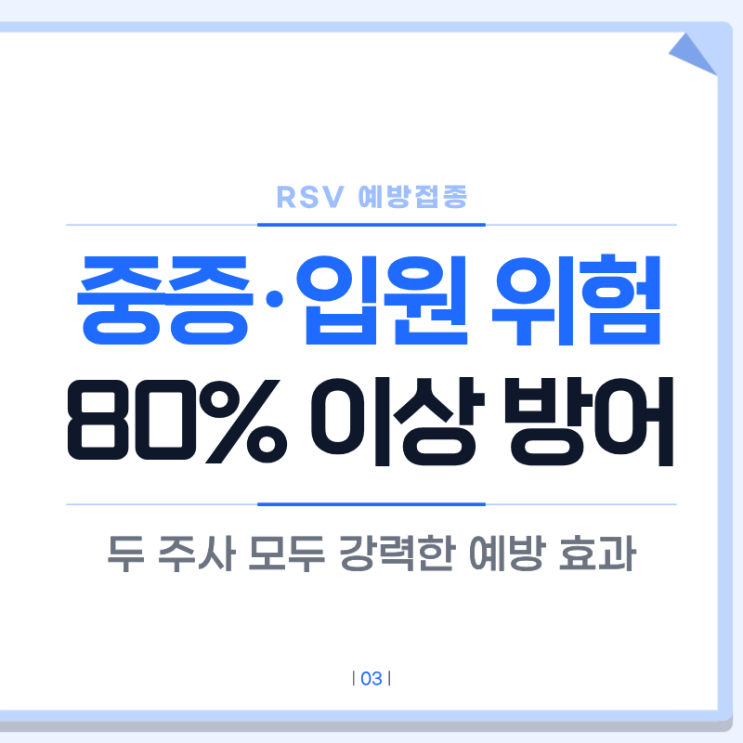
What parents most want to know is, in the end, “does it prevent hospitalization?” Fortunately, both products showed a clear effect here.
Beyfortus reduced hospitalization by 82.7% versus placebo in the HARMONIE study, and Enflonsia reduced it by 84.2% in the CLEVER study.
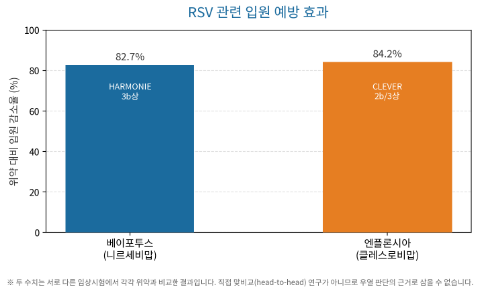
Figure 1. RSV-related hospitalization-prevention effect (results versus placebo, each from a separate clinical trial)
|
💡Key point to remember These two figures (82.7% vs 84.2%) come from different studies. Because the target babies, observation periods, and the definition of ‘hospitalization’ differ slightly, similar numbers should not be read as “Enflonsia is marginally better.” To put it precisely, “both products reduced hospitalization by more than 80%” is the correct interpretation. |
How effective are they? ② Evidence for each product
Beyond hospitalization, each product reported preventive effects across several indicators.
First, for Beyfortus, in addition to the MELODY study that supported its approval (a reduction of about 74.5% in medically attended RSV lower-respiratory infection), real-world data have also confirmed a steady reduction in hospitalizations.
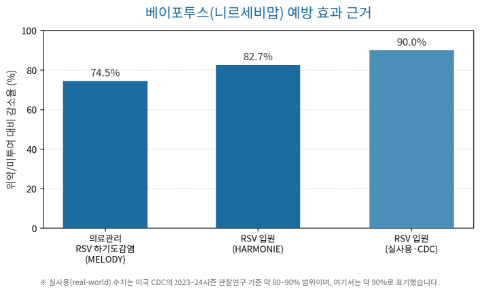
Figure 2. Evidence for the preventive effect of Beyfortus (nirsevimab)
In the CLEVER study of about 3,600 participants, Enflonsia reduced RSV lower-respiratory infection by 60.4%, hospitalization by 84.2%, and severe lower-respiratory infection by up to 91.7% versus placebo. In other words, the more severe the symptoms, the greater the preventive effect tends to be.
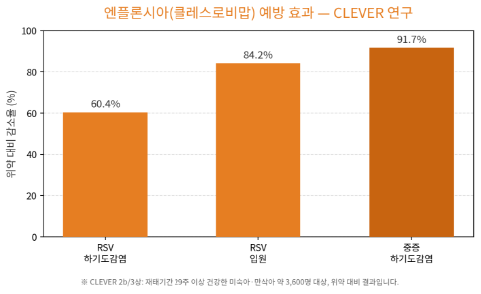
Figure 3. Preventive effect of Enflonsia (clesrovimab) — CLEVER study
|
💡Why do the ‘lower-respiratory infection’ numbers look lower? When even mild symptoms are all counted, the prevention-rate number drops (60.4%); when you look only at ‘serious events’ like hospitalization or severe disease, the number rises (84–92%). This is not because a product is weak, but a difference in what you count. What really matters from a parent’s view is ‘does it prevent severe disease and hospitalization,’ and on that point both products are strong. |
What about safety?

In clinical trials, both products showed safety comparable to placebo. For Enflonsia, the overall adverse-event rate was 77.3%, essentially no different from the placebo group (77.5%), and serious adverse events were similar at 11.5% and 12.4%, respectively. Beyfortus likewise showed mostly mild reactions such as rash, fever, and injection-site reactions, with a profile similar to placebo.
Both products can be given on the same day together with other essential vaccinations. However, depending on the individual baby’s condition (premature birth, heart or lung disease, etc.), the timing may differ, so a specialist consultation is essential.
Summary at a glance
|
Item |
Beyfortus |
Enflonsia |
|
Effect (hospitalization) |
82.7% reduction (HARMONIE) |
84.2% reduction (CLEVER) |
|
Strengths |
Rich real-world evidence, launched earlier |
Weight-independent single dose, convenient |
|
Considerations |
Need to confirm dose by weight |
Early stage of domestic launch |
|
Direct comparison |
No head-to-head study — superiority cannot be determined |
No head-to-head study — superiority cannot be determined |
Significance and limitations
-
Significance : The greatest significance of this comparison is that parents now have two verified RSV-prevention options to choose from.
-
Limitation : Because there is no study comparing the two products side by side under the same conditions, for now it is more accurate to approach this not as ‘which is better’ but as ‘which suits the baby’s situation better.’ Also, both products are non-covered, so cost and launch timing also affect the actual choice.
Closing & a word to parents
In summary, Beyfortus and Enflonsia are both effective preventive antibody injections that greatly reduce RSV-related severe illness and hospitalization.
. They differ only in approach (weight-based vs. weight-independent) and domestic launch timing; there is still no basis to say one is clearly superior to the other.
|
Which of the two products better suits your baby is decided by considering the baby’s age in months, weight, underlying conditions, timing, and cost together. This is not something for ads or reviews, but a matter to be judged through a specialist consultation. Please feel free to ask during your visit. |
📢 [Next post preview: Will private insurance cover RSV vaccination? & tips on asking about cost!]
Now that you’ve seen the precise medical differences between the two injections, we’ve prepared what parents most wonder about: “whether you can claim private insurance (non-covered guidance) and the most reasonable timing to ask about vaccination cost (a late-August tip).”
A follow-up post packed with this content, [Part 2: Newborn RSV vaccination price, cost, and private-insurance guidance], will be published right after.
So you don’t miss it and can check it first, please tap [Add neighbor] and [Like] and stay tuned!
References
· Hammitt LL, et al. Nirsevimab for Prevention of RSV in Healthy Late-Preterm and Term Infants (MELODY). N Engl J Med. 2022.
· Drysdale SB, et al. Nirsevimab for Prevention of Hospitalizations Due to RSV in Infants (HARMONIE). Lancet Child Adolesc Health, 2025 (180-day analysis).
· Merck. CLEVER (Phase 2b/3) and SMART (Phase 3) clinical studies; MSD Korea Enflonsia domestic approval documents (2026).
👇Related posts worth reading
Newborn RSV vaccination (Beyfortus) and BCG at the same time: is it safe to give them together?
A complete guide to side effects and precautions

Start your baby’s RSV prevention with a consultation!
|
Which of Beyfortus and Enflonsia better fits your baby’s age in months, weight, and health, Director Dr. An Sehwan will advise you personally. Please feel free to ask any questions. 📞 Booking, Inquiries 032-851-1365 💬 Booking channels Phone, KakaoTalk, Ddocdoc, Doctor Now, My Doctor 📍 Location Central The Sharp, Songdo Landmark City, Incheon (walking distance from Dalbitgongwonchukje Station on Incheon Line 1, on-site parking available) 🕘 Clinic hours Mon–Fri 09:00–20:00 (lunch 13:00–14:30) / Sat 09:00–14:00 / Sun 10:00–14:00 🔗 Online Website momsoa.co.kr, Naver Blog dransehwan |
(※ The RSV preventive antibody injections (Beyfortus, Enflonsia) are non-covered items. Costs are provided at your visit.)
(※ This article organizes publicly available clinical data for easy understanding and does not replace medical advice. Always decide on vaccination after a specialist consultation.)
