
Is it safe to give kids melatonin? A paper analysis of sleep effects and side effects in children and adolescents [Part 1]
[Our Child’s Growth & Sleep Story] Melatonin Trilogy, Part 1
Is melatonin safe for our child?
We examine the effects and safety of melatonin in child and adolescent sleep through academic papers.
|
💡Key points of this article
|
Interest in ‘good sleep’ and sleep aids is so high that the media recently ran an article on the difference between melatonin and magnesium as sleep aids (“Melatonin vs. magnesium when you can’t sleep”, Lady Kyunghyang).
(Please see the bottom of this article for the detailed link.)
But unlike information on adult supplements, the minds of parents wondering, “Is it really safe to give our child melatonin?” cannot help but be far more cautious. Today, let us carefully review, through academic papers, the actual effects and safety of melatonin for sleep in children and adolescents.
Why is a child’s sleep important?

Sleep is not simply rest for a child. During sleep, growth hormone is secreted, what was learned during the day is consolidated, and emotions and concentration are restored. That is why a child who does not sleep enough can be affected in height growth, learning, and mood regulation alike.
The problem is that a child’s insomnia leads to the parents’ insomnia. When a child wakes every night, the whole family grows exhausted together. So a child’s sleep problem is not ‘the child’s problem alone’ but ‘the whole family’s problem.’
💡 Recommended related reading
[Songdo Growth Clinic] Can our child grow taller? (A complete guide to bone age, growth hormone, and precocious puberty tests)
“A child’s deep sleep is directly linked to the secretion of growth hormone that supports height growth. If you are curious about your child’s current growth status, bone age, and growth potential, please refer to the column below ▼.”

What kind of medicine is melatonin?
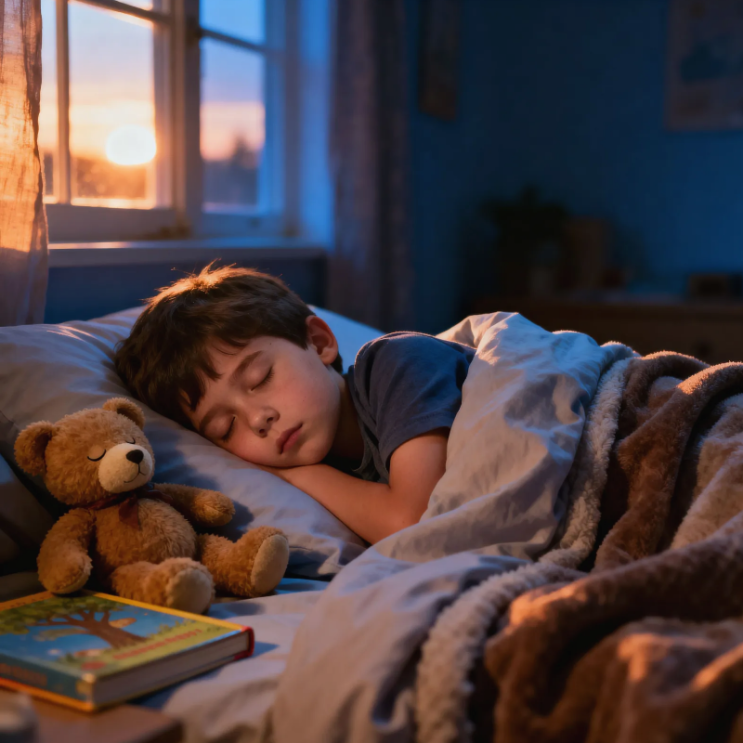
Melatonin is not some strange, newly invented ingredient; it is a hormone that our body (the pineal gland in the brain) naturally secretes when night falls. It rises in the dark and falls in the light, sending the body the signal that ‘it’s time to sleep now.’
So taking melatonin is different in nature from forcing sleep with a strong sleeping pill. It is closer to gently supporting the ‘time to sleep’ signal the body was already sending.
How effective is it?
When studies of children and adolescents conducted in various countries were pooled and analyzed, children who took melatonin were found to fall asleep faster and to have a longer total sleep time than children who took a fake pill (placebo).
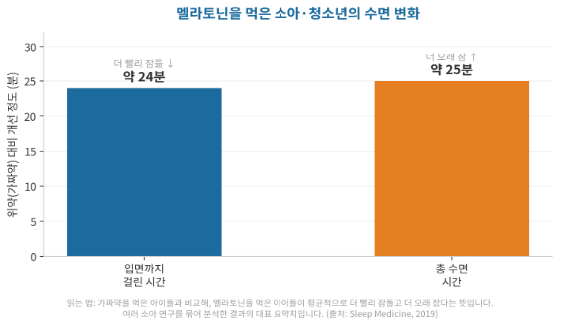
Figure 1. Changes in sleep in children and adolescents when taking melatonin (synthesis of several pediatric studies, representative summary values)
|
💡Key point
|
Are there no side effects?

As with any medicine, melatonin too can have side effects. However, the reported side effects are mostly mild and often appear for the first few days of use and then disappear.
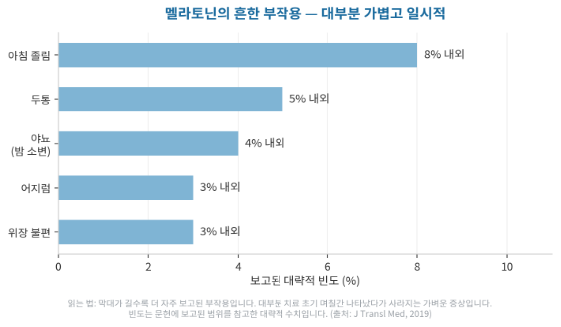
Figure 2. Commonly reported side effects of melatonin (approximate frequency)
|
Category |
|
|
Common side effects |
Morning drowsiness, mild headache, bedwetting (nighttime urination), dizziness — usually temporary |
|
Serious side effects |
Serious risks have rarely been reported so far (long-term effects are still under study) |
|
Cases requiring caution |
If your child is taking other medications or has a chronic condition, be sure to mention it during the visit |
|
💡Please remember just this!
|
Summary at a glance
|
Question |
Answer |
|
Is it a substance the body originally has? |
Yes, it is a hormone the body secretes on its own every night |
|
Is it effective? |
Confirmed to help children fall asleep faster and sleep longer |
|
Is it safe? |
Side effects are mostly mild and temporary |
|
Can I just buy and give it on my own? |
No — diagnosing the cause and consulting on dosage come first |
In closing
For children’s sleep problems, melatonin is an option backed by accumulated evidence and relatively safe. But the most important thing is to first identify ‘why our child cannot sleep.’
In the next part, ‘why does melatonin work especially well for some children?’ is the question we address. In particular, it is a story about children with autism spectrum disorder or ADHD.
📖 Reference paper
Esposito S, Laino D, D’Alonzo R, et al. Pediatric sleep disturbances and treatment with melatonin. Journal of Translational Medicine. 2019;17:77.
Wei S, Smits MG, Tang X, et al. Efficacy and safety of melatonin for sleep onset insomnia in children and adolescents: a meta-analysis of randomized controlled trials. Sleep Medicine. 2019.
Edemann-Callesen H, Andersen HK, Ussing A, et al. Use of melatonin for children and adolescents with chronic insomnia attributable to disorders beyond indication: a systematic review, meta-analysis and clinical recommendation. eClinicalMedicine. 2023;61:102064.
Note: variability in over-the-counter melatonin content — Erland LAE, Saxena PK. Melatonin natural health products and supplements: presence of serotonin and significant variability of melatonin content. J Clin Sleep Med. 2017;13(2):275-281.
📰 Related article
Source: Lady Kyunghyang, “Melatonin vs. magnesium when you can’t sleep… which sleep aid is right for me?”
(※ This is a reference article on adult sleep aids; for use in children and adolescents, please give priority to a specialist’s guidance.)

SONGDO ANSHIN
※ This article explains academic papers in an accessible way for the general public and does not replace medical advice.
Please decide whether to take it and at what dosage only after consulting a specialist.
