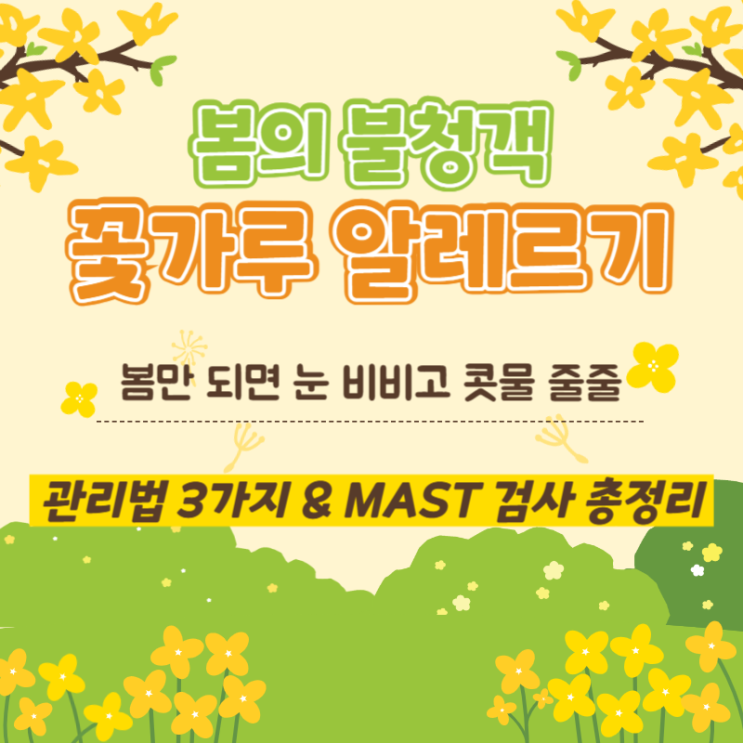
[SONGDO ANSHIN] Every spring, rubbing eyes and runny noses! A complete guide to pollen allergy management & the MAST test
Hello! Located in Songdo District 8, Incheon, we are SONGDO ANSHIN.
As we move into mid-April, daytime temperatures have risen significantly and outdoor activities have increased noticeably. If you head out to Songdo Central Park or Haedoji Park, you’ll see many families taking walks with their strollers. But if your child keeps rubbing their eyes or sneezing nonstop after a pleasant outing, parents’ worries deepen.
You might think, “The wind was cold yesterday. Did they catch a cold?” But if there’s no fever and only a runny nose, you should definitely suspect spring pollen allergy.
Today we’ll take an in-depth look at pollen allergy, which goes into full swing starting in April. We’ll cover everything from its causes to practical management methods and accurate diagnosis. Reading this one article all the way through will be a great help in relieving your child’s symptoms.
Thought it was a cold, but it’s an allergy? The differences between rhinitis and a cold

When children have a runny nose, people often reach for cold medicine first. However, allergic rhinitis requires completely different treatment from a cold, so accurate distinction is necessary.
-
Duration of symptoms: A cold usually improves within 1–2 weeks, but an allergy can last throughout the pollen season, or for 2 weeks or more each time the child is exposed to a particular environment.
-
Form of discharge: A cold may start out clear and gradually turn into yellowish mucus, but allergic rhinitis is characterized by a clear, watery runny nose
-
Accompanying symptoms: If there’s fever, muscle aches, or a sore throat, it’s likely a cold. On the other hand, if there’s no fever but the eyes or nose itch so much that the child keeps touching them, it’s overwhelmingly likely to be an allergy.
-
Variation by time of day: Allergy symptoms usually tend to be worst in the early morning or forenoon hours and ease somewhat in the afternoon.
What causes pollen allergies?

The main culprit behind spring allergies in Korea is not flowers but the fine pollen that drifts from pine, oak, birch, and other trees. When these tiny particles contact a child’s delicate nasal mucosa and eye conjunctiva, the immune system mistakes them for invaders and triggers an excessive inflammatory response.
In particular, our Songdo area has strong sea breezes and well-developed green spaces, so pollen can spread more widely. If your child has an especially hard time after outdoor activities, it’s a sign that they’re being heavily affected by the surrounding environment.
3 practical management rules to protect your child

1️⃣ Always check the ‘pollen concentration risk index’
Check the pollen concentration risk index provided by the Korea Meteorological Administration or weather apps every day. Concentration is usually highest between 5 and 10 a.m., so it’s best to keep windows closed during these hours and ventilate indoors briefly in the late afternoon when concentration drops.
2️⃣ The ‘shake it off at the front door’ strategy after going out
Pollen sticks very easily to fabric. Before coming inside, lightly shake off your child’s outerwear and bag outside the front door. This one small habit can reduce the amount of pollen entering your home by more than half.
3️⃣ A lukewarm shower and nasal rinse before bedtime
If pollen on the hair and skin gets onto bedding, your child may feel respiratory discomfort all night long. Be sure to wash their hair and give them a light shower before bed. If possible, also rinsing the inside of the nose with lukewarm saline is very effective at removing antigens stuck to the mucosa.
For a more accurate diagnosis, why the MAST test is needed

If your child suffers at the same time every year, the priority is to identify exactly which substances your child reacts to, rather than simply suppressing the symptoms.
At SONGDO ANSHIN, we perform the MAST test(Multiple Allergen Simultaneous Test), which checks dozens of allergy factors at once with just a small blood draw. Recently it has been expanded to 161 types, enabling even more thorough diagnosis.
By finding the real causes (pollen as well as house dust mites, pet dander, certain foods, and more), you can respond and manage the environment much more efficiently.
Myths and truths about drug treatment

“My child is so young. Is it really okay to give them
antihistamines already?”
Many parents worry about drug tolerance or side effects. However, the second-generation antihistamines prescribed these days have almost no drowsiness side effects and are used very safely even in children.
On the contrary, leaving symptoms untreated can lead to sinusitis, otitis media, or pediatric asthma, so it’s important to get help from a specialist at the appropriate time.
SONGDO ANSHIN will always provide care with all our heart, so that our children can breathe in the clear spring air and play to their heart’s content. If you suspect symptoms, please don’t hesitate to visit us for a consultation.
[Articles worth reading together to help your child’s health]