
Diabetes/Obesity drugs Wegovy & Mounjaro (GLP-1): Can they slow cancer progression and metastasis too?

Hello! This is SONGDO ANSHIN Growth & Obesity Clinic speaking.
Recently, one class of drugs has been getting the most attention, both in the medical community and among the public. These are the drugs best known as Wegovy, Mounjaro, Ozempic and others, part of the GLP-1 class of diabetes/obesity treatment drugs. Beyond their weight-loss effects, they show benefits for overall metabolic health, such as preventing cardiovascular disease and protecting the kidneys, and are drawing worldwide attention.
“Could this drug perhaps also have a positive effect on cancer progression and metastasis?”
A large-scale, up-to-date study providing meaningful clues to this intriguing question has been published. It is data from a research team at the Cleveland Clinic, one of the most prestigious hospitals in the world, analyzing about 22,000 patients. Today, our SONGDO ANSHIN Obesity Clinic will summarize the key points so that even non-experts can easily understand!
Key Message
Can GLP-1 diabetes/obesity drugs slow cancer progression?
Introducing the Cleveland Clinic study of 22,000 patients (ASCO 2026)
According to a US Cleveland Clinic research team’s analysis of data from about 22,000 cancer patients, patients who took GLP-1 class drugs used for diabetes/obesity treatment (Wegovy, Mounjaro, Ozempic, etc.) showed an approximately 32–50% lower risk of progression to stage 4 (metastasis) in lung, breast, colorectal, and liver cancer.
This study is scheduled to be presented at the American Society of Clinical Oncology (ASCO) in May 2026, and major media outlets including The Wall Street Journal have given it significant coverage.

Why is this study drawing attention?
Obesity is known as a leading cause that raises the risk of more than 13 types of cancer. This is because when weight increases, chronic inflammation develops in the body, and the balance of insulin and various hormones is disrupted, creating an environment favorable for cancer cells to grow.
GLP-1 (glucagon-like peptide-1) class drugs were originally developed as diabetes treatments, but as their powerful weight-loss effects became known, they are now also widely used as obesity treatments. Representative drugs include Wegovy (semaglutide), Mounjaro/Zepbound (tirzepatide), Ozempic and others.
However, recent studies have shown that these drugs go beyond simply reducing weight, bringing various health benefits such as cardiovascular disease prevention, sleep apnea improvement, and kidney protection. As a natural extension of this, the question “Could they also affect cancer?” was raised, and this study provides one of the clues.
What kind of study is it?
This study was conducted by Dr. Mark Orland’s research team at the Cleveland Clinic in the US.
The Cleveland Clinic is one of the leading general hospitals in the US, and these study results are scheduled to be formally presented at the American Society of Clinical Oncology (ASCO) Annual Meeting held in Chicago from May 29 to June 2, 2026.
The researchers used a global medical database called TriNetX, which aggregates data from over 150 million patients worldwide, to compare 10,225 patients who were prescribed GLP-1 after a cancer diagnosis with 12,115 patients who were prescribed other diabetes drugs (DPP-4 inhibitors such as “Galvus” and “Januvia”) during the same period.

Result ① : The GLP-1 group had fewer cancer metastases.
The researchers compared, between the two groups, the proportion of patients with 7 obesity-related cancers (lung, breast, colorectal, liver, kidney, pancreatic, and prostate cancer) who progressed from initial diagnosis (stage 1–3) to stage 4 (metastasis).
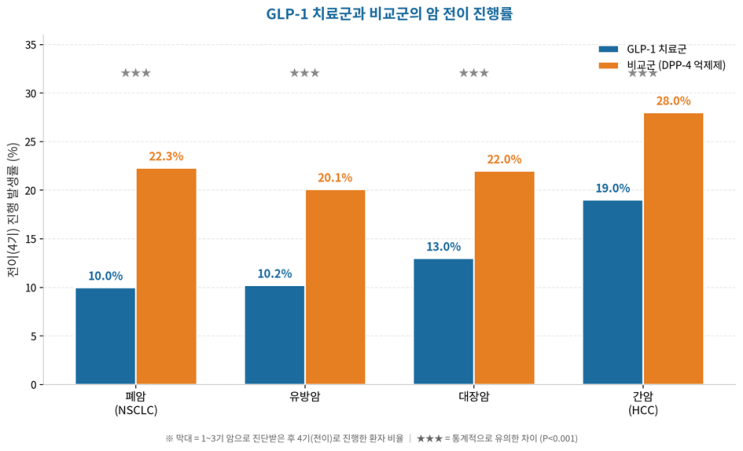
[Figure 1] Comparison of stage 4 progression rates between the two groups in 4 cancers
|
Key Points For lung cancer patients, only 1 in 10 of the GLP-1 group progressed to metastasis, whereas in the comparison group more than 2 in 10 metastasized. Similar patterns were observed in breast, colorectal, and liver cancer, and this difference was at a level hard to attribute to chance (P<0.001). |
Result ② : About 30–50% risk reduction in 4 cancers
Converting the difference in progression rates into a “risk reduction rate” makes it more intuitive. For example, in lung cancer, the metastasis risk of the GLP-1 group was about half that of the comparison group (50% reduction).
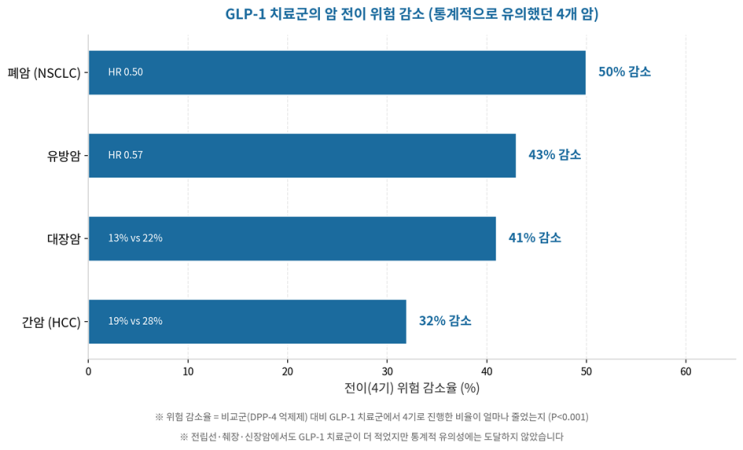
[Figure 2] Metastasis risk reduction rate of the GLP-1 treatment group in 4 cancers
In the remaining 3 cancers (prostate, pancreatic, kidney cancer), the GLP-1 group also showed fewer metastases, but because the number of patients was insufficient or the difference was small, it was not enough to conclude statistical “certainty.” This is an area that requires further research.
Result ③ : GLP-1 receptors within tumors are also an important clue
Going one step further, the researchers also analyzed whether patient survival rates differed depending on whether there were many or few GLP-1 receptors (the target on which the drug acts) within the cancer tissue.
|
GLP-1 receptors within tumors |
Mortality risk |
|
When receptors are high (all cancers) |
About 33% lower |
|
When receptors are high (breast cancer) |
About 45% lower |
[Table 1] Tumor GLP-1 receptor expression and mortality (TCGA database analysis)
These results support the hypothesis that GLP-1 does more than affect cancer indirectly by reducing weight: the drug may act directly on tumor cells to slow cancer progression.
Summary at a glance
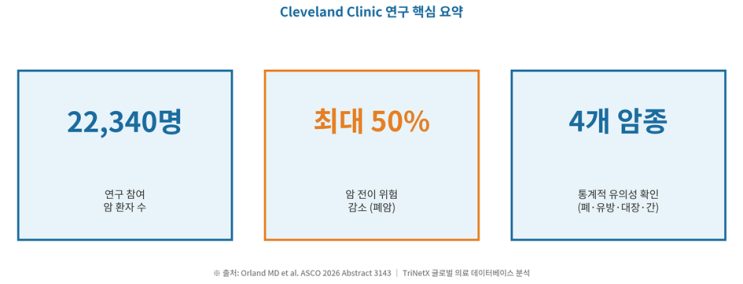
[Figure 3] Cleveland Clinic study key summary
👨⚕️ Side effects did not increase.
One of the biggest concerns when adding a new drug for a cancer patient is side effects.
In this study, there was almost no difference in the incidence of side effects between the GLP-1 group and the comparison group. The incidence of pancreatitis and gastrointestinal inflammation, which were concerns with GLP-1 use, was also not higher than in the comparison group.
This suggests that “when a diabetes/obesity patient already taking GLP-1 is diagnosed with cancer, there is no compelling reason to stop the drug.”
Significance and limitations
✅ Significance of the study
-
A consistent signal was confirmed in a large-scale dataset of real clinical data involving about 22,000 people.
-
A substantial difference of 30–50% appeared in 4 cancers, making it hard to view as small statistical chance.
-
The association between tumor GLP-1 receptors and survival rates was also confirmed together, increasing the likelihood that it is not mere coincidence.
⚠️ Limitations to be aware of
-
This study did not randomly divide patients into two groups; rather, it is an “observational study” that retrospectively analyzed already-existing medical records. Therefore, it cannot be definitively concluded that GLP-1 is the direct cause.
-
These results are still at the conference-presentation stage, before publication in a formal academic journal.
-
Prescribing GLP-1 for the purpose of cancer prevention or treatment is premature, and at present it is used for diabetes/obesity treatment.
Closing remarks: New possibilities of GLP-1
This Cleveland Clinic study once again showed that GLP-1 may be a drug that affects “overall metabolic health,” not just a diabetes/obesity treatment.
Still, the claim that “using GLP-1 prevents cancer” is not something we can assert at this stage. However, at the very least, it is steadily being confirmed that properly managing obesity or diabetes may itself be one pathway to reducing cancer risk over the long term.

|
💬 Dr. An’s clinical comment At our clinic, we actively utilize GLP-1 class drugs (Mounjaro, Wegovy, etc.) for diabetes and obesity. In particular, we recommend that the following people receive a consultation at an appropriate time. • Those with a BMI of 30 or higher, or those with a BMI of 27 or higher who also have hypertension, dyslipidemia, fatty liver, or similar conditions • With type 2 diabetes and whose blood sugar is not adequately controlled, or whose insulin resistance is severe • Weight-loss yo-yo: those who have repeatedly regained weight after losing it Whether to use medication and which type depends on each person’s health condition, accompanying diseases, and test results, so it must be decided only after sufficient consultation with a specialist. |
References
Orland MD, Maciejewski JP, et al. GLP-1 receptor agonists may reduce metastatic progression of certain obesity-related cancers. Abstract 3143. Presented at: 2026 American Society of Clinical Oncology (ASCO) Annual Meeting; May 29 – June 2, 2026; Chicago, IL.
※ This article was written based on official overseas press releases including the American Society of Clinical Oncology (ASCO) abstract, as well as WSJ, NBC News, and others. It is an article that reconstructs medical content in an easy-to-understand way to aid the general public’s comprehension, and it cannot replace a specialist’s individual medical advice or consultation.
💡 Articles worth reading together
Along with what we introduced today, if you are curious about the actual difference in effect between ‘Mounjaro’ and ‘Wegovy’ (the hottest topic in obesity treatment right now), please check out the post below as well!
Based on the latest research data, that post lays out the difference in weight-loss effect and blood sugar improvement by dosage in an easy-to-understand way.
👇 [Go see: Mounjaro vs Wegovy! What’s your choice? (Paper Review)]


SONGDO ANSHIN
Growth & Obesity Clinic (Annex) │ Songdo, Incheon
