
Growth Hormone Injection Side Effects: Does Bone Age Really Accelerate? The Truth About Growth Plate Closure Timing and Bone-Age Acceleration (Songdo Growth Clinic)

Hello! This is the SONGDO ANSHIN Growth Clinic.
Parents who are considering growth hormone therapy for their child’s height, or who have already started it, most often ask us this question in the exam room.
“Doctor, I’ve heard that if my child gets growth hormone injections, their bone age speeds up and the growth plates close early. Is that true? I’m worried we might just be borrowing in advance the height my child would have gained later, only to run out in the end.”
Many parents carry this kind of vague anxiety after hearing only what’s said in online parenting communities or by people around them. Since this is a treatment given to your precious child’s body, it’s only natural to feel cautious and worried, and we understand that very well.
So today, to ease these parental concerns, we want to rely not on hearsay but on the actual data from three highly reliable, internationally recognized medical papers to the real truth about growth hormone and bone-age acceleration clearly. We hope you’ll read on with peace of mind, based on the scientific evidence delivered to you directly from the Songdo Growth Clinic.
Does growth hormone therapy advance our child’s ‘bone age’?
[The truth about ‘growth hormone and bone-age (skeletal age) acceleration’ as seen through three papers]

|
The one-line conclusion — let us tell you first. • When growth hormone (GH) is used on its own, there is no strong evidence that it ‘pathologically’ advances bone age (skeletal age). • In children with growth hormone deficiency (GHD), bone age only catches up naturally on what had fallen behind (catch-up),and does not greatly outpace the normal rate. • Even in children with idiopathic short stature (ISS) whose height is close to normal, the change in bone age over one year of treatment was very small (BA/CA change of 0.04). • The situations where bone-age acceleration actually becomes a problem are ‘combined sex-hormone therapy’ or starting treatment ‘when bone age is already significantly advanced.’ |
Why bone age (skeletal age) matters: the reason parents worry

‘Bone age’ is the ‘age of the bones’: how mature the bones are, as seen on an X-ray of the hand and wrist. Compared with actual age (chronological age), it’s an indicator of how much ‘room’ a child still has to grow taller. Once the bones fully mature and the growth plates close, height growth stops.
That’s why many parents have this worry. “If my child gets growth hormone injections, won’t the bones grow faster, so the growth plates actually close early and my child loses out on height?” In this article, we’ll calmly examine this question using ‘evidence (papers).’
To tell you the conclusion in advance: at least when growth hormone is used ‘on its own,’ this worry is not well supported by the data. Let’s look at it one piece at a time.
Which three papers did we look at??
We chose three kinds of evidence, each with a different character: a randomized controlled trial (the most rigorous study), real-world data from Korean children, and a long-term follow-up study.
|
Study |
Type / Subjects |
What they looked at |
|
① ISS Phase 3 RCT (China) |
Randomized controlled trial · 481 children with short stature (ISS) |
Change in bone age / chronological age (BA/CA) over 1 year |
|
② LG Growth Study (Korea) |
Observational data, 92 children with GHD + ISS |
Trend in bone age − chronological age (BA−CA) over 3 years |
|
③ Long-term cohort (USA) |
Long-term follow-up, children and adolescents with GHD |
Whether skeletal maturation accelerated over the entire treatment period |
Two expressions come up often. BA/CA is the value of bone age divided by chronological age; 1.0 means the two advance at the same rate, and the higher it is, the faster the bones mature. BA−CA is the difference between the two ages, and a negative value (−) means ‘the bones are younger than the actual age’.
Children whose height is close to normal (ISS): bone age stays ‘almost the same’

The first is a randomized controlled trial, the most rigorous form of study. 481 children with short stature (ISS) were divided into a growth hormone treatment group and a non-treatment group at a 3:1 ratio and compared over 52 weeks (1 year).
|
Change after 1 year (Δ) |
GH treatment group |
Non-treatment control group |
Difference |
|
Height standard score (HT-SDS) |
+1.04 |
+0.20 |
Clear |
|
Height gain (cm) |
+10.19 |
+5.85 |
Clear |
|
Growth velocity (cm/year) |
+5.17 |
+0.75 |
Clear |
|
Bone age / chronological age (BA/CA) |
+0.04 |
+0.004 |
Very small |
|
IGF-1 standard score |
+2.31 |
+0.22 |
Rise |
Table 1. One-year results of the ISS Phase 3 RCT (all items P<0.001). Source: Yuan et al., Front Endocrinol 2022.
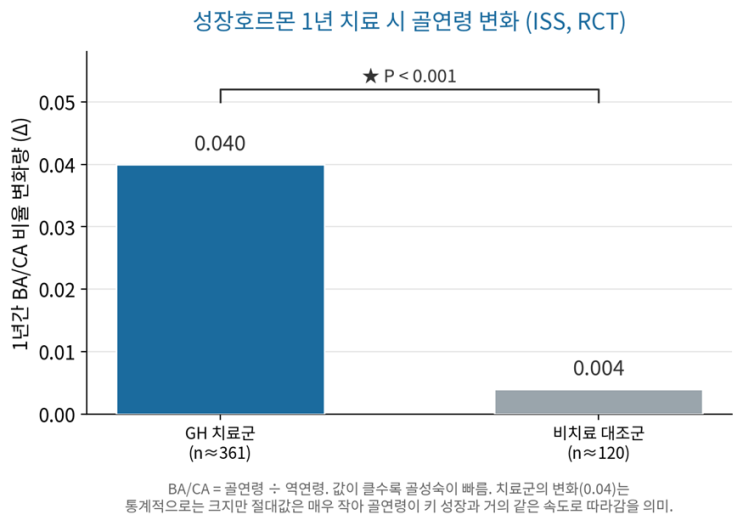
Figure 1. Amount of change in bone age / chronological age (BA/CA) over 1 year — even in the treatment group, the absolute value is very small.
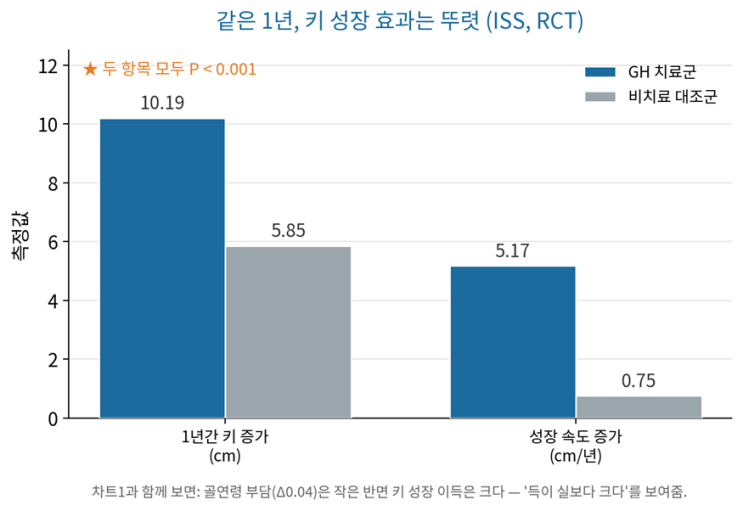
Figure 2. Over the same 1 year, the effect on height growth is clear.
|
Key points • The treatment group’s BA/CA change of 0.04 is statistically a ‘difference,’ but its absolute value is very small, meaning the bones kept pace at almost the same rate as height growth. • Meanwhile, over the same period, the height gain was nearly double (10.2 cm vs 5.9 cm). The picture is that what you ‘pay’ (bone age) is small compared with what you ‘gain’ (height). |
Growth hormone deficiency (GHD): bone age ‘catches up, but does not get ahead’

The second is real-world clinical data from Korean children (LG Growth Study). 78 children with growth hormone deficiency (GHD) were followed for 3 years, and the results are striking.
At the start of treatment, these children’s bone age was about 1.9 years younger than their actual age (estimated). Over 3 years on growth hormone, their bone age matured by 3.68 years, but even so, after 3 years it was still 1.21 years younger than their actual age. In other words, ‘the bones that had fallen behind merely caught up toward normal. They did not surpass normal and get ahead.’
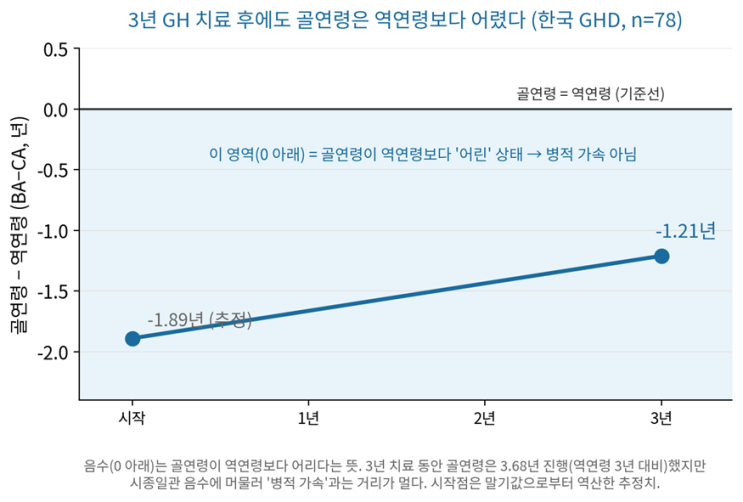
Figure 3. Throughout the 3 years of treatment, bone age stayed in the ‘younger’ zone (below 0) relative to chronological age. Source: LG Growth Study, Medicine 2019.
The researchers viewed the rate of bone-age progression over the 3 years as a ‘clinically acceptable’ level, and concluded it likely even raised predicted adult height. They also found that bone age, IGF-1, and growth hormone dose at the starting point had no major effect on bone-age progression.
The third, a long-term follow-up study (USA), points in the same direction. In children and adolescents with GHD who received growth hormone, skeletal maturation caught up over the first few years and then flattened out (plateau), with no meaningful bone-age acceleration overall. The researchers found that, before mid-to-late puberty, bone age was rarely advanced beyond expectation, and noted that the practice of taking bone-age X-rays repeatedly every year is excessive.
|
Key points • In GHD, bone age is not ‘abnormal acceleration’ but something closer to the ‘normalization of what had fallen behind’. • These results are also in line with the consensus of the American and European pediatric endocrine societies (PES, ESPE) and the Growth Hormone Research Society. |
Summary at a glance
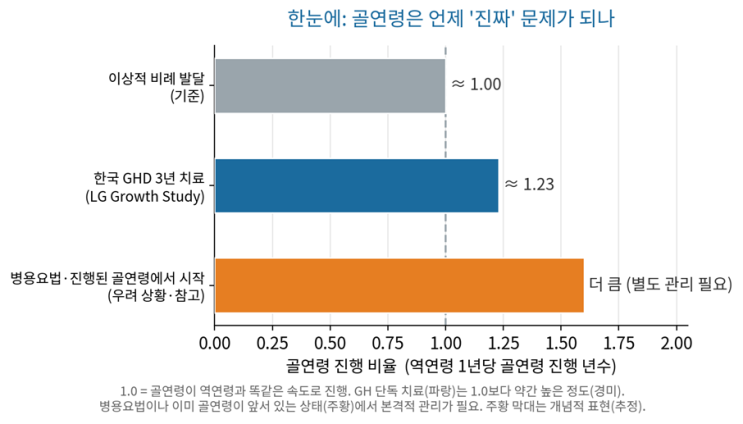
Figure 4. Rate of bone-age progression — growth hormone monotherapy is only slightly higher than ‘proportional development (1.0).’
|
Situation |
Conclusion about bone age |
|
Children whose height is close to normal (ISS), GH alone |
1-year BA/CA change of 0.04 — very small |
|
Growth hormone deficiency (GHD), GH alone |
The bones that fell behind catch up but do not exceed normal |
|
Cosmetic use alone in a child of normal height |
The data itself is limited — no strong evidence of acceleration |
|
Combined sex-hormone therapy / cases where bone age is already advanced |
Here, bone-age management really does matter |
🔗 [A related article worth reading together]
Beyond growth hormone injection monotherapy,
a child’s body weight and degree of obesity are also
among the major factors affecting pubertal progression and bone-age maturation.
“Does baby fat all turn into height?”: the medical facts on this, and
the effect of childhood obesity on growth hormone and the growth plates, if you’re curious,
▽ the article below is also worth referring to.

Is it still safe? Side effects at a glance

In the ISS clinical trial above, adverse events occurred in 89.8% of the treatment group and 82.4% of the non-treatment group, so the two groups were similar, and most were mild or moderate. Growth hormone is a treatment whose safety has been confirmed over a long period in deficiency and approved indications.
‘Bone-age acceleration’ itself, as we saw above, is not of major clinical concern with monotherapy. That said, there are other aspects to pay more attention to in growth hormone therapy overall: metabolic effects such as insulin resistance and blood glucose (which can vary with dose and are usually reversible), the size of the actual height gain relative to cost, and the timing decision of ‘when to start.’ Rather than worrying excessively about bone age alone, it’s reasonable to look at this bigger picture together.
How should you take this article? Significance and limitations
-
Significance: The vague fear of bone-age acceleration in growth hormone ‘monotherapy’ is not well supported by the data. It’s especially reassuring that the same pattern was confirmed in Korean children’s data.
-
Limitations: Long-term data for cosmetic use in children of normal height is still lacking. There is inter-reader variability in reading bone age itself, and because the Korean data is observational, it’s hard to assert causation definitively. And apart from the conclusion of this article, bone-age management becomes more important with ‘combined sex-hormone therapy’ or for ‘children whose bone age is already advanced.’
Closing words from the Songdo Growth Clinic
|
To summarize: • When growth hormone is used on its own in a child whose height is close to normal — there is no evidence that it strongly advances bone age (the data itself is limited). • In growth hormone deficiency (GHD) — bone age is at the level of normalization/catch-up, with no evidence of pathological acceleration. • What matters more than bone age is the metabolic effects, cost-effectiveness, and timing of treatment, and these differ from child to child. |
Whether and how to use growth hormone therapy must be decided by considering the child’s height status, bone age, pubertal stage, and test results together. Rather than judging based on vague worry or expectation alone, we strongly recommend a consultation with a specialist.

As the medical evidence clearly shows, you may set aside for now the fear that bone age will abnormally accelerate with growth hormone injection monotherapy.
However, as the limitations of the papers also noted, if your child is also undergoing sex-hormone suppression therapy, or if their bone age was already advanced beyond their peers before treatment, the approach must change completely. That is, it’s more important than anything to judge ‘whether now is the right time’ by precisely and comprehensively considering your own child’s current growth-plate status, pubertal progression stage, hormone-secretion levels, and so on.
If you’re wondering whether growth hormone therapy would have a real effect for your child, and whether there’s any risk of side effects, rather than relying on uncertain information on the internet, we recommend you get a precise diagnosis from a pediatric and adolescent medicine specialist.
Our SONGDO ANSHIN Growth Clinic, drawing on abundant clinical experience, from bone-age reading to precise predicted-height analysis based on current growth status, will carefully draw up a personalized growth map for your child, together with you.
Rather than spending time on vague worry, come in now so you don’t miss the golden window for your child’s growth, and start a systematic growth-assessment consultation. We’ll always be by your side until a parent’s worry turns into peace of mind.”
Reference papers
① Yuan J, Fu J, Wei H, et al. A Randomized Controlled Phase 3 Study on the Efficacy and Safety of Recombinant Human Growth Hormone in Children With Idiopathic Short Stature. Front Endocrinol (Lausanne). 2022;13:864908.
② Factors affecting bone age maturation during 3 years of growth hormone treatment in patients with idiopathic growth hormone deficiency and idiopathic short stature: Analysis of data from the LG Growth Study. Medicine (Baltimore). 2019;98(14). PMID 30946320.
③ Nwosu BU, Jasmin G, Parajuli S, et al. Long-term GH Therapy Does Not Advance Skeletal Maturation in Children and Adolescents. J Endocr Soc. 2021;5(5):bvab036.
※ This article is a plain-language explanation of academic papers for the general public, and does not replace medical advice.
