
Hand, Foot and Mouth Disease: Daycare-Return Criteria and When to Get the Recovery Certificate
When summer arrives, the number of children and parents coming to the clinic with hand, foot and mouth disease increases sharply.
In particular, many parents ask questions like “exactly how many days is the daycare/kindergarten isolation period?” and “when can my child be declared recovered and return to daycare?” about isolation and daycare-return criteria.
That unwelcome summer visitor for infants and toddlers, hand, foot and mouth disease, is so highly contagious that stopping daycare or kindergarten attendance is essential. For parents in a hurry day by day, “exactly when can my child return to daycare again” is likely the most pressing and anxiety-inducing question.
Today, SONGDO ANSHIN will lay out, by pediatric-specialist standards, the clear criteria for confirming recovery from hand, foot and mouth disease and the timing for issuing a contagiousness certificate (daycare-return confirmation), in plain terms!
|
💡 Key summary: HFMD recovery & daycare-return criteria in 3 lines
|
Hand, foot and mouth disease: how many days does the isolation period usually last?
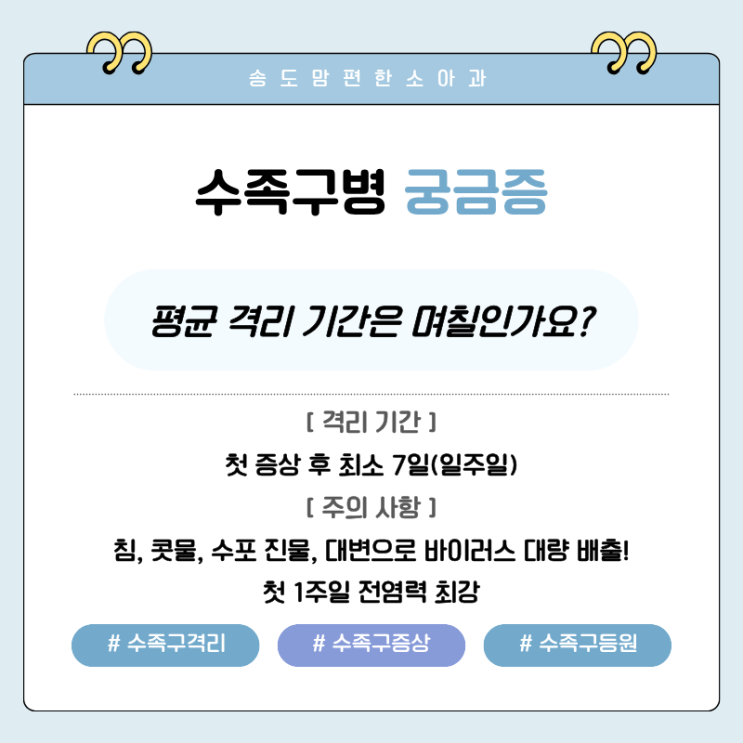
To give the conclusion first, the average isolation period for hand, foot and mouth disease is roughly 7 days (one week) from the day symptoms begin .
Hand, foot and mouth disease is most contagious during the first week after the first symptoms appear. During this time, the virus is shed in enormous amounts not only through the child’s saliva, nasal discharge and the fluid from the blisters, but also through the stool.
Therefore, no matter how urgent it is, for the first week you should avoid group settings and let the child rest comfortably at home.
The 3 ‘real’ recovery criteria a pediatric specialist tells you
In online parenting communities and elsewhere on the internet, you’ll see claims like “it’s fine to go once the blisters have scabbed over” and “it’s fine to go if there’s no fever.” Opinions vary widely, don’t they?
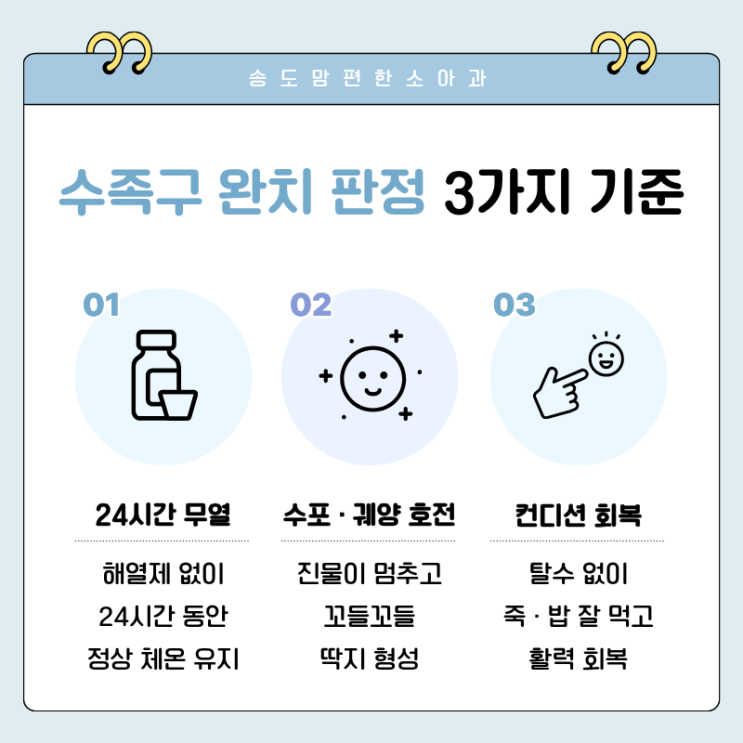
The exact criteria a doctor uses in the pediatric clinic to declare recovery are as follows.
1️⃣ There must be no ‘fever’ for 24 hours.
-
In the early stage of hand, foot and mouth disease, a high fever often accompanies it. Even without giving antipyretics, a normal body temperature maintained for at least 24 hours is the first sign that the child’s body is fighting off and beating the virus.
2️⃣ The blisters on the hands, feet and inside the mouth must subside or scab over.
-
This is the most important point! The red rash and blisters typical of HFMD must stop oozing and dry down firmly or turn into brown scabs. In particular, the ulcers inside the mouth (the raw, sore areas) must heal so that the child no longer drools and can swallow food. Only then do we consider contagiousness to be almost gone.
3️⃣ The child’s overall ‘condition’ must have recovered.
-
Children who couldn’t eat properly for several days because of a sore mouth may become dehydrated or run out of immune strength. Even if contagiousness is gone, starting group life right away can lead to a secondary infection by another virus, so you should check whether the child is eating rice or porridge well as usual and playing well.
💡 A helpful related article: How to relieve mouth pain from HFMD in babies
The biggest obstacle to recovering from HFMD is the refusal to eat and the risk of dehydration caused by ‘pain from mouth ulcers.’
When your child struggles even to swallow saliva, we often prescribe a non-irritating spray-type mucosal treatment in the clinic. If you’re curious about the correct way to use that spray, Neomucosal Forte, and the early symptoms and prevention of HFMD, please see the post below as well!
When can I get the ‘no HFMD contagiousness’ certificate (daycare-return confirmation)?
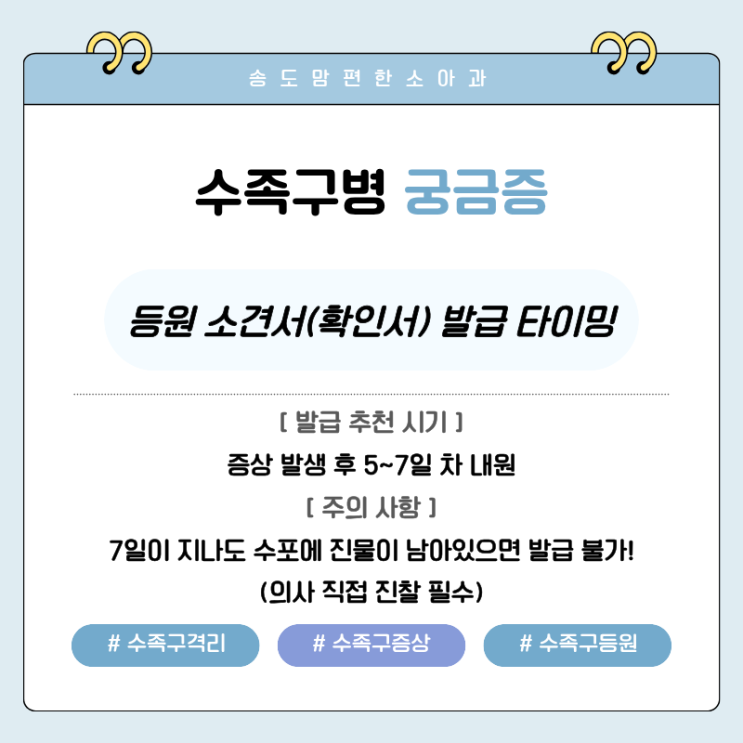
Most daycare centers and kindergartens require a doctor’s certificate or diagnosis stating that “group life is possible (no contagiousness)” when resuming attendance.
💡 When it can be issued
-
Usually on day 5–7 after symptoms appear, you can visit the clinic again to be checked.
📢 The director’s tip
-
Occasionally a parent says, “today is exactly day 7, so please just write the document,” but depending on a child’s immunity and the type of virus, the blisters can still be fresh even after 7 days. Please make sure that a pediatric specialist checks the back of your child’s throat and the blisters on the hands and feet in person before the document is safely issued. This protects the other children at the daycare and lets your own child go back without worry.
Recommended Meals for a Child Who Cannot Eat Because of Mouth Blisters
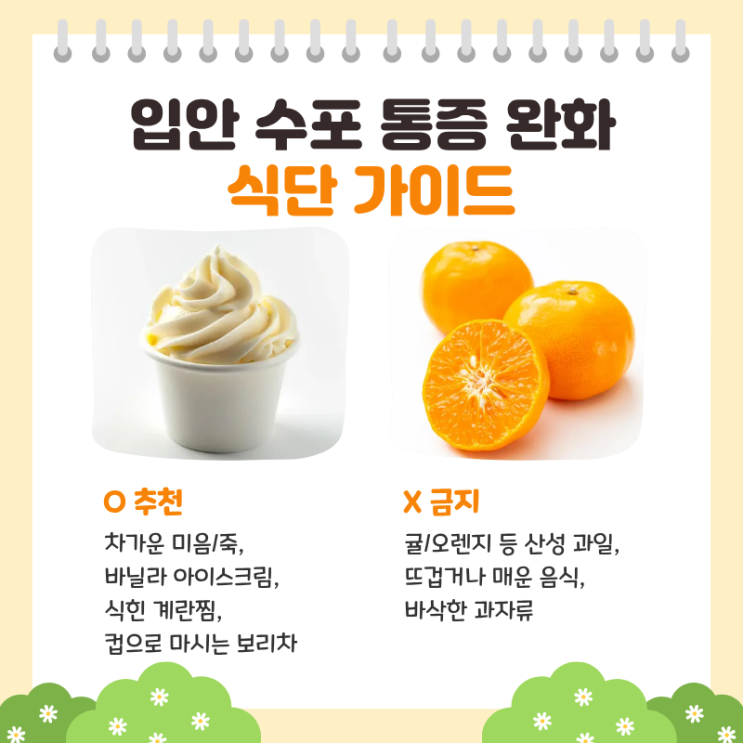
If the pain of stomatitis inside the mouth cuts off nutrition, dehydration can follow. At this point, ‘cold, soft, high-calorie food’ takes priority over ‘nutritious solid meals’.
✅ Recommended menu
-
Cold thin gruel/porridge : Beef-and-vegetable porridge or abalone porridge, boiled and then chilled in the refrigerator
-
Fluids and calories : Ice cream (vanilla/milk flavors recommended, avoid sharp fruit flavors), pudding, yogurt, cooled steamed egg
-
Drinks : Lukewarm or cold barley tea, sports drinks
(※ A straw creates negative pressure inside the mouth and can trigger pain, so it is better to let your child drink from a cup.)
✅ Foods to avoid
-
Highly acidic fruits : tangerines, oranges, kiwi, tomatoes (cause severe, stabbing pain in the sores inside the mouth)
-
Hot, salty or spicy foods : hot soups, heavily seasoned side dishes
-
Crunchy, hard snacks : fried foods, puffed-rice snacks (irritate the blisters and cause bleeding and pain)
📝 [Frequently Asked Questions Summary Q&A]
Q. How are hand, foot and mouth disease and herpangina different?
A. Both illnesses are caused by enteroviruses, but herpangina causes blisters only around the uvula inside the mouth, whereas hand, foot and mouth disease is accompanied by a blistering rash on the hands, feet and buttocks as well as inside the mouth – that is the difference.
Q. Is there a separate form for the certificate of recovery?
A. The name each institution asks for may differ, but in general a document issued by a pediatric clinic bearing the wording ‘no longer contagious and able to return to school’ – a treatment confirmation or a doctor’s note – can be submitted.
Pain and dehydration caused by blisters inside a child’s mouth are a great worry for guardians. Please keep your child well hydrated and manage meals around cold, soft food (a liquid diet), and be sure to visit the clinic before your child returns so that a specialist can make an accurate recovery decision.
A word of advice from SONGDO ANSHIN
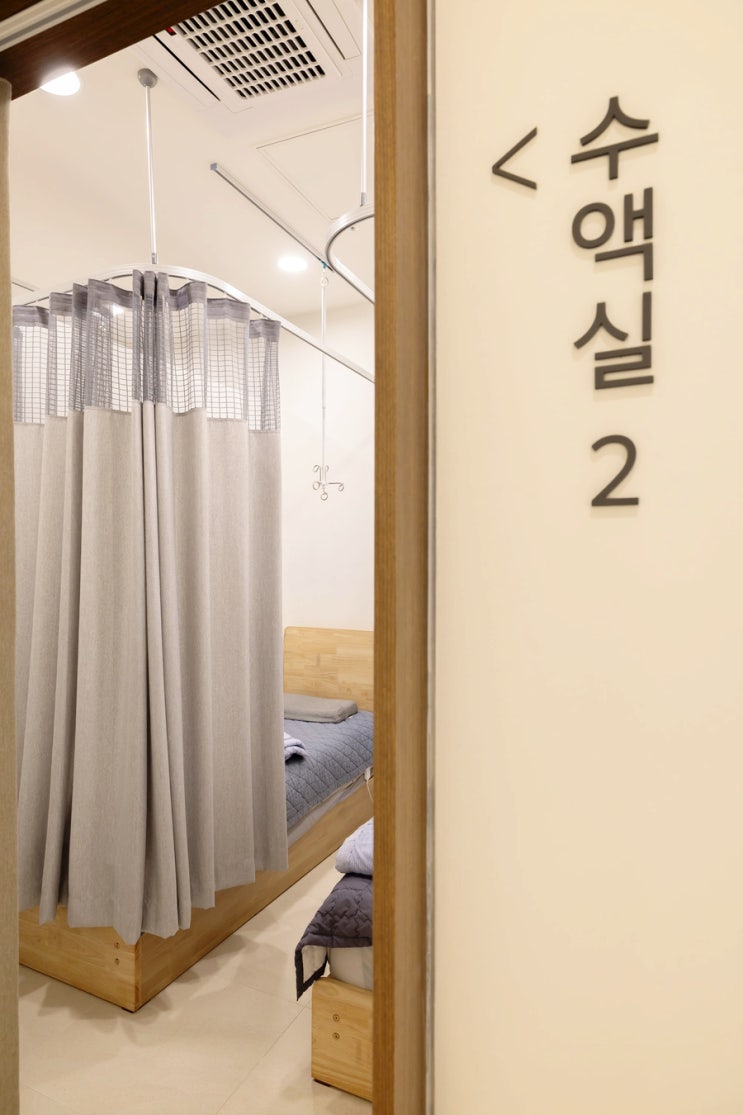

SONGDO ANSHIN pediatric IV room
Sadly, there is no dedicated vaccine or miracle drug to treat hand, foot and mouth disease. It is a disease the child must overcome on their own, with symptomatic care: antipyretics to bring down the fever and treatment to ease mouth pain. During this period, help your child eat something, even if it is just soft porridge, cooled scorched-rice water, yogurt or ice cream, and pay special attention to fluid intake.
Rather than agonizing alone over “whether or not to send my child to daycare” and getting stressed over the paperwork, on day 5–6 after symptoms appear, please come to SONGDO ANSHIN with peace of mind. We will carefully check whether recovery is complete and help with a safe return to daycare.
We will always be a reliable family doctor so our children can return to group life in good health.
