
Runny nose and headache from the air conditioning? How to tell air-conditioning sickness from a summer cold (IV fluids, nebulizer)
Since the new term began, we have seen a sharp rise in children coming in with sniffles, headaches, or a sense of listlessness caused by air conditioning that runs all day at school, kindergarten, and after-school academies.
In the consultation room, parents often ask us, “Doctor, has my child really caught a cold from the air conditioning? Or is it simply air-conditioning sickness?” It is one of the questions we hear most often.
Today, as a pediatric specialist, I will walk you through what troubles children in this lingering late-summer heat, from how to tell air-conditioning sickness apart from summer colds and viral illnesses all the way to prevention rules you can put to use in everyday life, explained clearly!
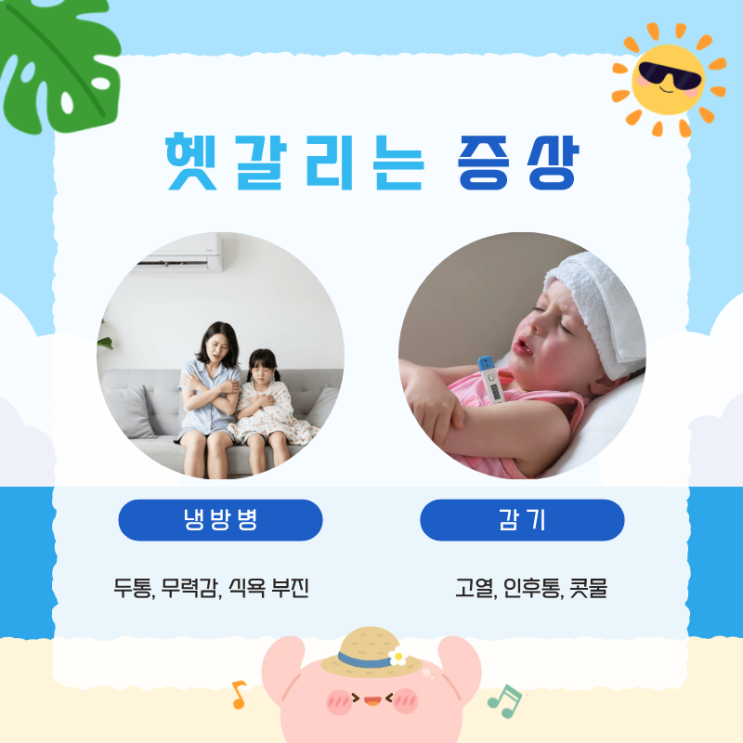
Key summary: air-conditioning sickness vs. a cold. Just remember this!
|
Category |
Air-conditioning sickness (autonomic nervous system dysregulation) |
Cold, viral illness (viral infection) |
|
Main symptoms |
Headache, listlessness, poor appetite, mild runny nose and sneezing |
Fever of 38 degrees or higher, sore throat, heavy runny nose, cough |
|
Duration |
Improves immediately once the indoor environment is adjusted and the child rests |
Lasts 3~7 days or longer |
|
Contagiousness |
None (does not spread to others) |
Yes (risk of transmission at daycare and school) |
Air-conditioning sickness: why are children more prone to it?
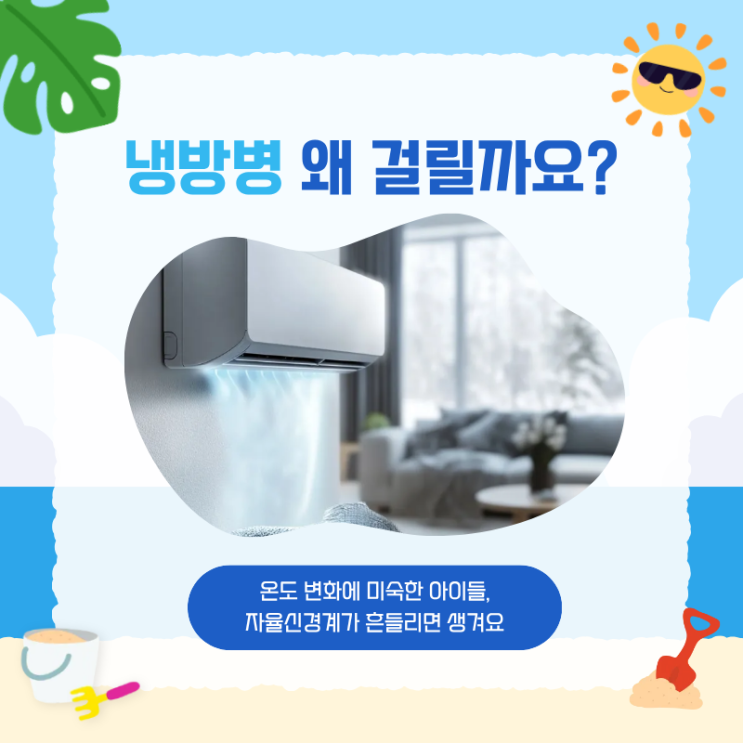
Air-conditioning sickness is not so much an illness caused by infection with a particular virus or bacterium; it is a set of regulatory symptoms that appear when the body’s autonomic nervous system cannot adapt to abrupt changes in temperature.
Children in particular regulate their body temperature far less efficiently than adults. When they come in from hot, humid outdoor air into a suddenly cold room, the blood vessels in the skin constrict sharply to hold on to body heat.
In the course of this, circulation and immune function dip temporarily, and symptoms such as a runny nose, headache, and indigestion appear.
Checking the main symptoms of air-conditioning sickness
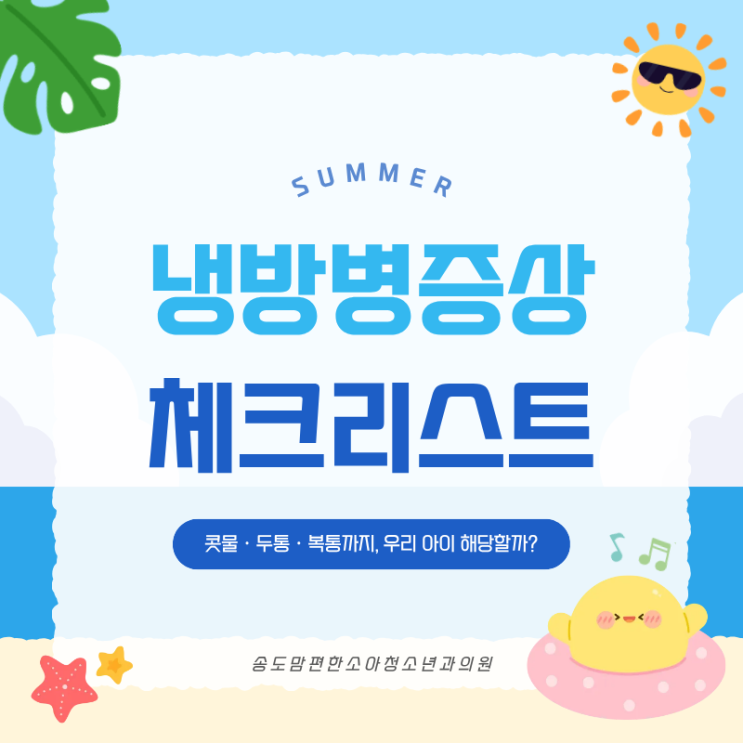
Because children regulate their body temperature poorly, the symptoms of air-conditioning sickness can be far more pronounced in them than in adults.
-
Respiratory symptoms: Runny nose, stuffy nose, sneezing, a mildly scratchy throat (very similar to an ordinary cold or allergic rhinitis, so the two need to be told apart.)
-
Whole-body symptoms: Headache, dizziness, a heavy, sluggish tiredness, poor appetite
-
Digestive symptoms: Abdominal pain, loose stools, or diarrhea caused by an imbalance in the autonomic nervous system
Three daily habits that prevent air-conditioning sickness
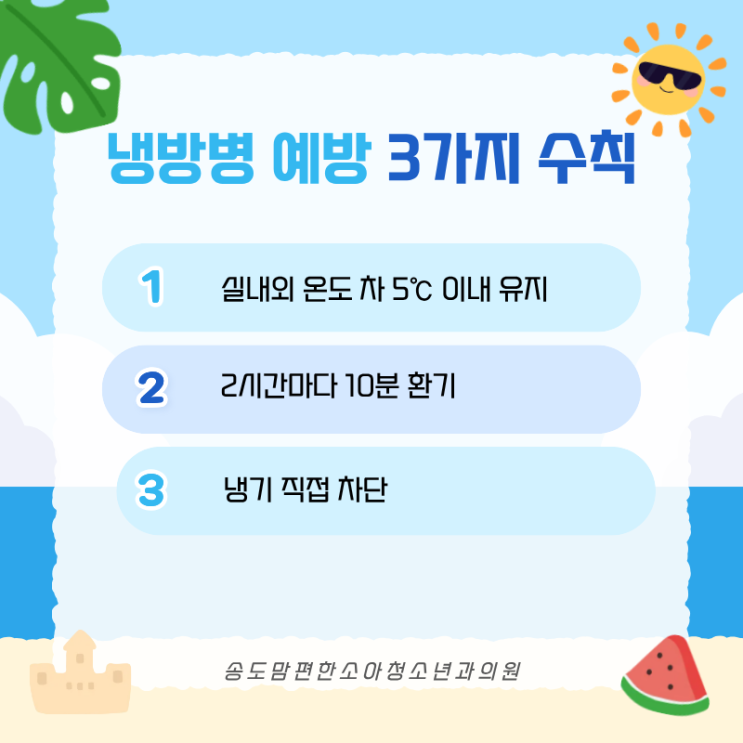
These are the surest preventive habits, and they are easy to practice at home and in childcare settings.
1️⃣ Keep the indoor-outdoor temperature gap within 5℃
Do not set the air conditioner too low. Even when it is hot outside, keeping the room at around 26~27℃ is about right.
2️⃣ Air the room out for 10 minutes every 2 hours
Running an air conditioner for a long time in a sealed room reduces the moisture in the air and dries out the respiratory mucosa. Ventilate regularly so that the indoor air keeps circulating.
3️⃣ Keep the cold draft from hitting your child directly
Angle the airflow upward or toward a wall so that the air conditioning does not blow straight onto the face or airway, and take a thin long-sleeved layer along when you go out to protect your child’s body temperature.
Advice from a pediatric specialist: what if the symptoms persist?

SONGDO ANSHIN Director: Dr. An Sehwan, pediatric specialist
Simple air-conditioning sickness improves quickly, within a day or two, once the air conditioner is turned off and the indoor environment is adjusted.
But if a high fever comes with it, or the nasal discharge turns yellow and the cough grows worse, this is likely not simple air-conditioning sickness but ‘summer cold’, ‘hand, foot and mouth disease’, ‘parainfluenza’, or another viral illness.
If the cough and stuffy nose drag on, or if fever leaves your child badly dehydrated and worn out, receiving nebulizer respiratory therapy or nutritional IV fluid therapy at the clinic is a great help toward a quick recovery. If your child is not getting better, we recommend a careful examination by a pediatric specialist.
📢 Recommended reading: how to manage respiratory symptoms
A cough and runny nose that started with the air conditioning: could it actually be allergic rhinitis?
Take a look at our guide to nebulizer respiratory therapy and our private pediatric IV room!
👇 Seasonal cough and runny nose: a cold or rhinitis? (evening clinic, IV room, nebulizer)
[SONGDO ANSHIN clinic information]
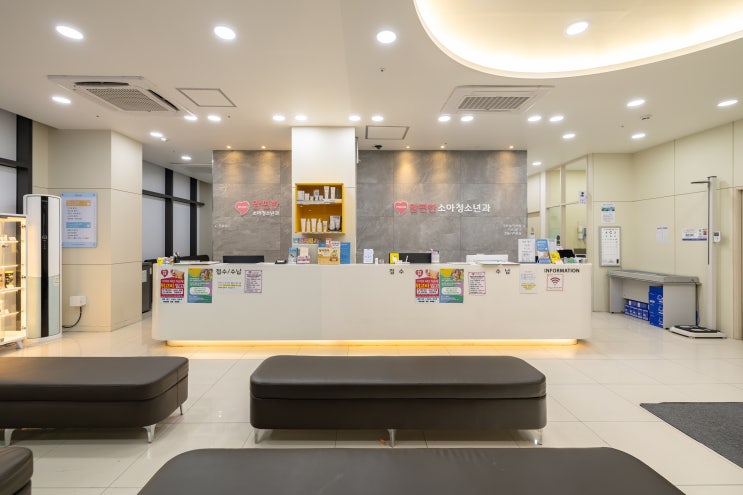
SONGDO ANSHIN main building
If you are worried about your child’s health or respiratory symptoms, please visit SONGDO ANSHIN any time. With careful, thorough examination we will help your child back to healthy everyday life.
📍 Location: 2F, Landmark City Central The Sharp officetel commercial complex, 68 Landmark-ro, Yeonsu-gu, Incheon (Units 204~207, 252, 255~257)
📞 Inquiries and appointments: 032-851-1365
