
Why Isn’t My Child Growing? 5 Things to Check Before Growth Hormone Testing or Injections (Songdo Growth Clinic, Part 5)
Your child isn’t growing taller,
5 things to check before any testing
The testing philosophy and promise of the SONGDO ANSHIN Growth Clinic — Part 5

|
💡[The SONGDO ANSHIN Growth Clinic promise] 1️⃣ When you are worried about your child’s height, the very first thing to do is not a test or an injection, but reviewing your child’s daily habits. The most solid evidence for supporting growth hormone secretion lies in everyday lifestyle habits. 2️⃣ Sleep, nutrition, physical activity, stress, and growth trend — if you look at these five first, in many cases you can support your child’s growth without unnecessary testing. 3️⃣ Of course, for a child who genuinely needs testing and treatment we do not delay the process. Before that, though, we go through what can be done at home, step by step, together with you. |
Testing and injections do not come first

My child is shorter than their peers,
should we do growth hormone testing or injections?
This is the question parents ask us most often at the Growth Clinic. However, growth hormone therapy is a treatment effective only for children diagnosed with growth hormone deficiency; it is not a cure-all that makes any child taller without such a diagnosis. Most short children do not have growth hormone deficiency. Their height reflects individual variation within the normal range, or constitutional growth delay.
That is why, before recommending tests or injections, we first review your child’s daily environment with you. The most solid evidence for stimulating growth hormone secretion comes not from expensive tests or injections, but from sound habits practiced every day.
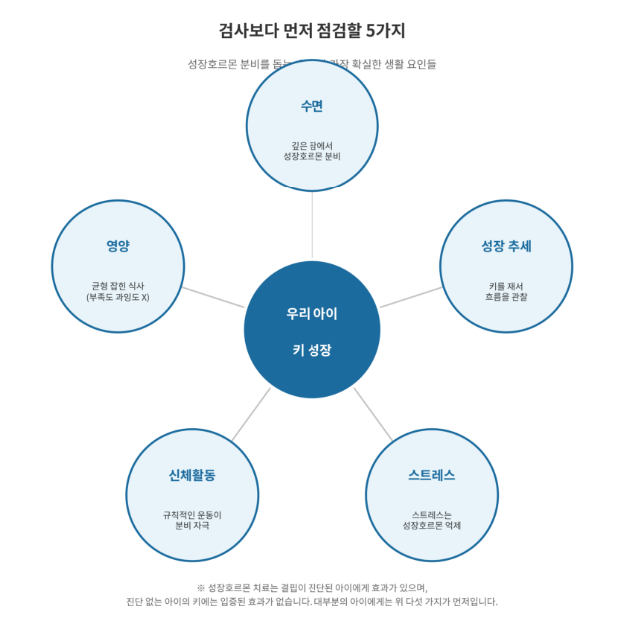
[Graph 1] Five things to check before testing: the lifestyle factors with the strongest evidence for supporting growth hormone secretion
First, sleep: the most important of all

Growth hormone is not secreted evenly throughout the day. It is released intensively once a child enters deep sleep (slow-wave sleep), and about 70~80% of the daily amount is produced during deep sleep.
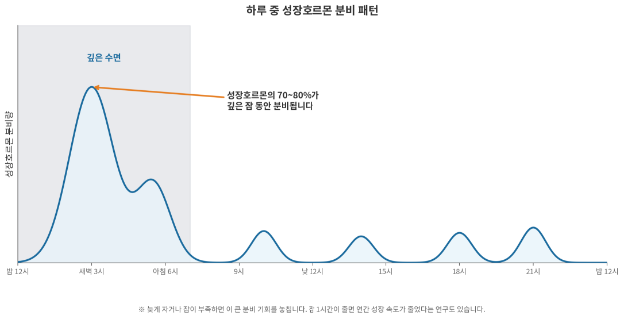
[Graph 2] Growth hormone is secreted most abundantly during the deep sleep that follows falling asleep.
So when a child goes to bed late or does not sleep enough, they miss the precious golden time when growth hormone is released most actively. Studies have in fact reported that annual height growth velocity fell with every 1 hour of sleep lost. More than any test or injection, getting your child to sleep early and deeply is the top priority.
|
💡[Sleep: here’s how to help] • Recommended sleep duration : 9~11 hours for elementary schoolers, 8~10 hours for middle and high schoolers • A consistent sleep cycle : Going to bed early and waking up on a regular schedule is better than going to bed late and getting up late. • Keeping devices away : Light from a smartphone or tablet before bed interferes with secretion of the sleep hormone (melatonin). Please cut back on use for 1 hour before bedtime. • Setting up the sleep environment : A dark, cool and quiet environment encourages deep sleep. |
Second, nutrition: too little and too much are both problems

“Eat well and you will grow” is true, but simply eating a lot is not the answer. Too little nutrition is a problem, and too much gets in the way of growth as well.
Growth requires protein (meat, fish, eggs, beans), calcium (milk, dairy products), and a wide variety of vegetables and fruits in balance. If severe picky eating leaves certain nutrients short, the raw material for bones and muscles to grow runs out. Conversely, if weight climbs excessively through overeating, sweets or processed foods, puberty may arrive earlier and the growth plates may close sooner.
|
💡 [Nutrition: here’s how to help]
|
Third, physical activity: regular movement

Regular exercise directly stimulates growth hormone secretion, strengthens bones and muscles, and helps your child sleep more deeply at night.
No one particular sport makes a child taller. Any activity that lets your child move and have fun is good, such as jump rope, running, cycling or ball games. A lifestyle of sitting all day looking only at a smartphone or TV screen does not help growth.
Fourth, stress: a calm mind affects height too

A surprisingly easy factor to overlook is stress itself. Continued stress triggers the release of a hormone called ‘cortisol’, and this hormone suppresses both the secretion and the action of growth hormone.
When an excessive academic load, a schedule squeezed in by cutting sleep, or an unsettled home environment continues, growth is affected negatively as well. Creating an environment where a child can rest fully and sleep with an easy mind is itself excellent growth care.
Fifth, growth trend: track the pattern with regular records

This is the most useful thing parents can do at home themselves. Measure height regularly and, rather than the height at a single point in time, observe the pattern and pace at which your child is growing over time.
Even if your child is shorter than peers, there is no great cause for concern as long as they keep growing steadily at a consistent rate each year. But if a child who had been growing well suddenly slows down, that is a signal that a specialist’s consultation is needed. What matters is not ‘a single current height’ but ‘the trajectory (trend) of growth’.
|
💡[Growth trend: how to check it] • Once every 3~6 months, measure and record height under the same conditions (morning, barefoot). • Check how much your child has grown over a year. (For elementary schoolers, usually 5~6cm or more per year) • If growth velocity slows noticeably, or the gap with peers keeps widening, please come in for a consultation. • The ‘height prediction tool’ on SONGDO ANSHIN website can help you gauge your child’s growth trajectory. |
🔗 [Growth Clinic series worth reading together]
Along with your child’s height, do the signs of puberty (breast buds, scalp odor and so on) seem early, leaving you wondering about testing for precocious puberty?
For puberty hormone testing as well, an accurate examination and a bone age assessment come before rushing in. Check the correct testing order in the Part 4 column below!
👉 [Growth Clinic Part 4] When is a puberty hormone test needed? (The correct order for precocious puberty testing)

Closing thoughts

When your child is shorter than their peers, worry makes it easy to think of tests and injections first. But what most children truly need is the basics: sleeping well, eating well, playing energetically and living comfortably.
If growth velocity is clearly slow despite managing these five well, or the gap with peers keeps widening, please feel free to visit the SONGDO ANSHIN Growth Clinic and ask us at any time.
We begin with an examination and a bone age assessment, and proceed with testing carefully only when it is truly necessary. Not missing a child who needs testing, and not recommending unnecessary testing to a child who does not — that is our principle.
|
📢 [Summary — 5 things to check before testing, for height growth] ① Sleep — early, enough, and regular (the most important) ② Nutrition — a balanced diet (mind both deficiency and excess) ③ Physical activity — move plenty, and enjoy it ④ Stress — a calm, emotionally stable environment ⑤ Growth trend — observe the growth trajectory with regular height measurements |
※ This article is intended to provide general information about growth and does not replace individual consultation with a specialist.
