
Flucelvax Cell-Culture Influenza Vaccine: How Much More Effective Is It Than Egg-Based Vaccines?

Flucelvax: Cell-Culture Influenza Vaccine
|
💡Key Takeaways — A 3-Minute Summary
This difference comes from growing the vaccine in cells instead of eggs, which avoids ‘egg-adaptive changes.’ However, the size of the difference varied from 4~15% depending on the season and the circulating viruses, and in people aged 65 and older there was no difference in some seasons. |
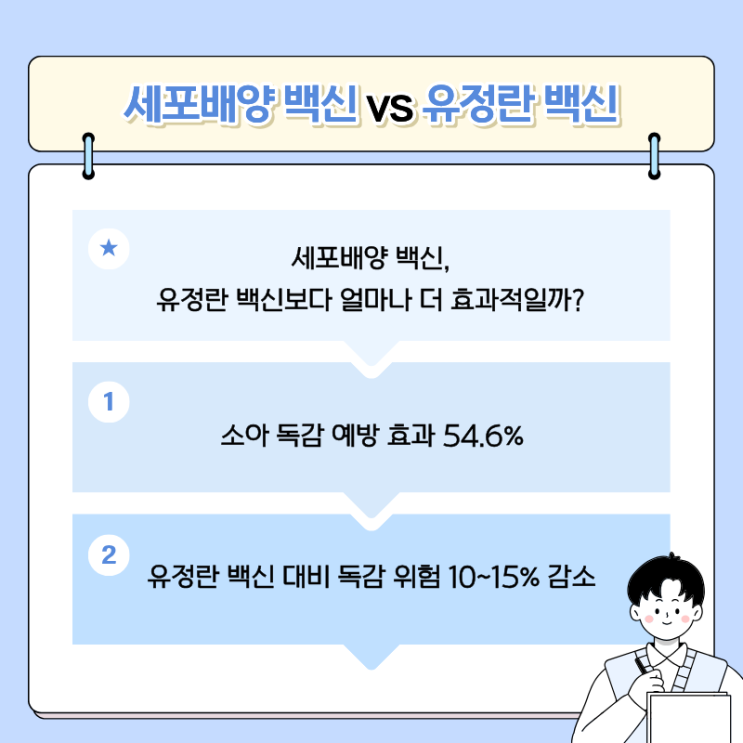
Cell-Culture Influenza Vaccine vs Egg-Based Influenza Vaccine
Influenza Vaccination Notes from Songdo Pediatrics
Hello, this is SONGDO ANSHIN.
Every year as fall and winter approach, parents ask us questions like “Which influenza vaccine should my child get this year?” and “What does Flucelvax cost, and who can receive it?” We hear these questions very often.
Many families in particular find themselves deciding between egg-based vaccines from global pharmaceutical companies such as Sanofi and Flucelvax, the cell-culture vaccine from CSL Seqirus.
In today’s post, based on three key papers on Flucelvax personally summarized by our director, we will explain in detail what scientific evidence and benefits the cell-culture vaccine offers compared with egg-based vaccines.
Why Does It Matter ‘Where the Vaccine Was Grown’?
The protective effect of influenza vaccines differs from year to year. It usually ranges between 40~60%, and in some years drops to the 20% range. This is partly because the circulating viruses change every year, but there is another, lesser-known reason: how the vaccine is made.
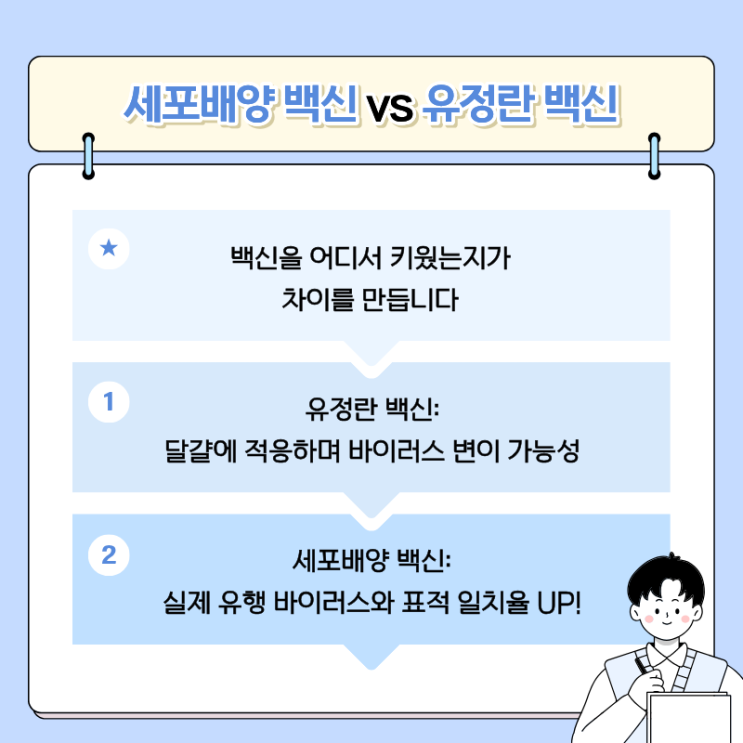
Until now, most influenza vaccines have been made using embryonated (fertilized) chicken eggs to grow the virus. It is a proven method used for more than 70 years, but it has one weakness.
For a human influenza virus to grow well inside an egg, it must change its own shape to adapt to egg cells, and in this process the viral surface protein targeted by the vaccine (hemagglutinin, HA) changes slightly. This is called egg adaptation.
As a result, the ‘suspect’s face’ the vaccine teaches the immune system drifts slightly from the face of the virus actually circulating, and this problem is especially pronounced with the A/H3N2 subtype. It drew wide attention during the 2017~18 season in the U.S., when influenza vaccine effectiveness was unusually low.
In contrast, the cell-culture method grows the virus in mammalian cells (the MDCK cell line) maintained in the laboratory instead of in eggs. Because it never passes through eggs, egg adaptation does not occur, and the antigens more closely match the viruses recommended by the World Health Organization (WHO). Containing no egg components is an added benefit.
|
💡What Kind of Vaccine Is Flucelvax? Flucelvax is an inactivated (killed virus fragment) influenza vaccine made by the cell-culture method. It was first used in the United States in 2016. In Korea, it received approval from the Ministry of Food and Drug Safety (MFDS) in August 2024 and has been given to children aged 6 months and older and adults since the 2025/26 season. The product supplied in Korea for the 2026/27 season is trivalent (A/H1N1, A/H3N2, B/Victoria). This is because B/Yamagata lineage viruses have not been detected anywhere in the world since March 2020, so the WHO recommended switching to trivalent vaccines. The papers introduced below evaluated the quadrivalent product, but the manufacturing method and the 3 shared strains are the same. |
Which Studies Did We Look At, and How Did They Compare?
Among studies on cell-culture vaccines, we selected 3 papers that were published in high-quality journals, were large in scale, and focused on children.
The three studies differ in character and complement one another.
|
① Nolan et al., NEJM 2021 |
② Stein et al., OFID 2024 |
③ Imran et al., PIDJ 2022 |
|
|
Study design |
Randomized clinical trial (observer-blinded, phase 3/4) |
Real-world medical data analysis (test-negative design) |
Real-world medical data analysis (retrospective cohort) |
|
Where & when |
8 countries, 3 seasons (2017 Southern Hemisphere, 2017/18 & 2018/19 Northern Hemisphere) |
U.S., 3 seasons (2017/18, 2018/19, 2019/20) |
U.S., 1 season (2019/20) |
|
Who |
Healthy children aged 2 to under 18 4,514 children |
Aged 4~64 31,824 / 33,388 / 34,398 people |
Children & adolescents aged 4~17 1,301,470 people |
|
Compared with |
Cell-culture quadrivalent vs non-influenza vaccine (meningococcal MenACWY) |
Cell-culture quadrivalent vs egg-based quadrivalent |
Cell-culture quadrivalent vs egg-based quadrivalent |
|
What was measured |
Influenza confirmed by PCR or culture |
Test-confirmed influenza in outpatient settings |
Influenza-related medical records (diagnosis codes) |
|
Question answered |
“Does it actually prevent influenza in children?” |
“Is it better than the egg-based vaccine? Even across different seasons?” |
“Does it hold up when looking at children alone?” |
Table 1. Overview of the 3 reviewed papers. NEJM = New England Journal of Medicine, OFID = Open Forum Infectious Diseases, PIDJ = Pediatric Infectious Disease Journal.
|
💡You Only Need to Know Three Terms
|
Result ① – Does it actually protect children from influenza?
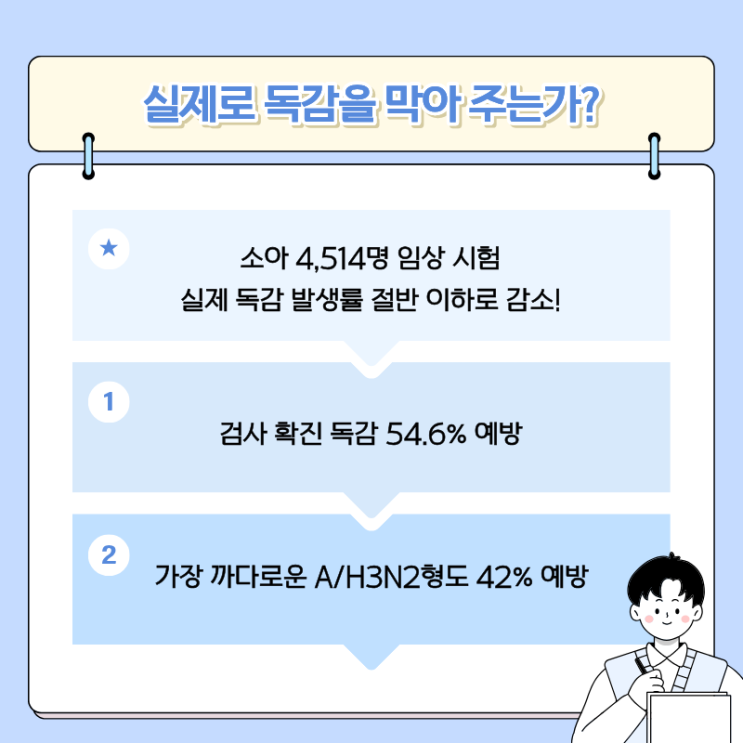
This was the first randomized study to confirm how much the cell-culture influenza vaccine reduces ‘actual influenza cases’ in children aged 2 and older.
A total of 4,514 children in 8 countries were randomly assigned to receive either the cell-culture influenza vaccine or a meningococcal vaccine unrelated to influenza; afterward, whenever influenza-like symptoms appeared, PCR testing determined whether it was confirmed influenza.
|
Item |
Cell-culture influenza vaccine (n=2,257) |
Non-influenza control vaccine (n=2,252) |
Vaccine efficacy (95% CI) |
|
Test-confirmed influenza (overall) |
175 children (7.8%) |
364 children (16.2%) |
54.6% (45.7–62.1) ★ |
|
A/H1N1 |
– |
– |
80.7% (69.2–87.9) ★ |
|
the A/H3N2 subtype |
– |
– |
42.1% (20.3–57.9) ★ |
|
Influenza B |
– |
– |
47.6% (31.4–60.0) ★ |
|
Viruses antigenically matched to vaccine strains |
– |
– |
63.6% (53.6–71.5) ★ |
|
Subgroups by age, sex, and prior vaccination |
– |
– |
Consistent at 42.1~82.3% |
Table 2. Main results of the NEJM 2021 randomized clinical trial. ★ = statistically significant. Case counts by type are listed in the original paper’s supplementary materials.
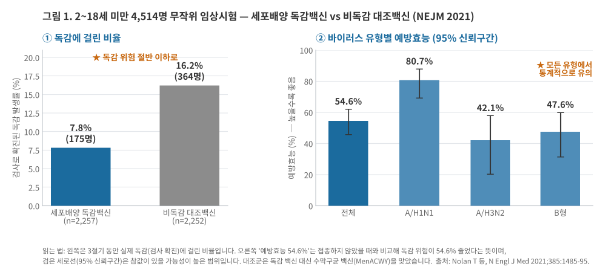
Figure 1. Pediatric randomized clinical trial — influenza incidence (left) and vaccine efficacy by virus type (right)
|
💡Key Points
|
Result ② — Is It Really Better Than the Egg-Based Vaccine?
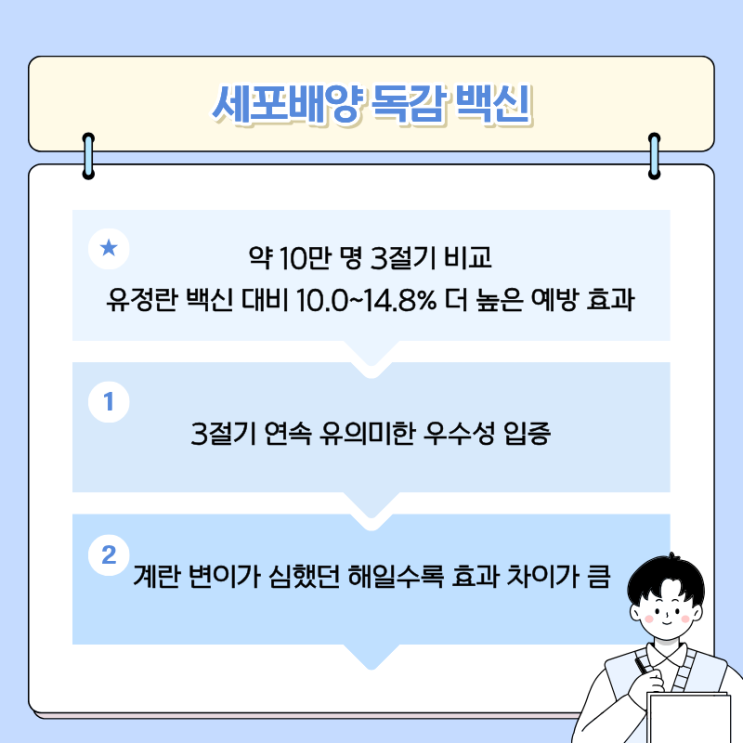
The first study compared ‘vaccine vs no vaccine.’ What parents are more curious about is ‘how different it is from the egg-based vaccine they have been getting’.
The second paper used a U.S. database of electronic health records and insurance claims covering 120 million people, analyzing about 100,000 vaccinated people aged 4~64 who were tested for influenza-like symptoms over 3 seasons.
A positive test is treated as a ‘case’ and a negative test as a ‘control,’ and the probability of testing positive is compared between recipients of the two vaccines. This is the test-negative design approach. It carries less risk of confusing influenza with other respiratory illnesses than relying on diagnosis codes alone.
|
Season |
Number analyzed (cell-culture / egg-based) |
Test positivity Cell-culture |
Test positivity Egg-based |
Relative effectiveness vs egg-based (95% CI) |
Characteristics of that season |
|
2017–18 |
31,824 people (3,115 / 28,709) |
23.3% |
29.2% |
14.8% (7.0–22.0) ★ |
Major A/H3N2 epidemic; pronounced egg adaptation in egg-based vaccine strains |
|
2018–19 |
33,388 people (3,426 / 29,962) |
21.1% |
31.0% |
12.5% (4.7–19.6) ★ |
Sequential A/H1N1 → A/H3N2 circulation; drifted variant emerged late in the season |
|
2019–20 |
34,398 people (3,890 / 30,508) |
25.2% |
32.7% |
10.0% (2.7–16.7) ★ |
B/Victoria & A/H1N1 circulation; all 4 cell-culture strains were cell-derived |
Table 3. OFID 2024 — relative effectiveness by season. ★ = statistically significant. Positivity rates are unadjusted raw data; relative effectiveness is adjusted for age, sex, region, timing of testing, underlying conditions, and other factors.
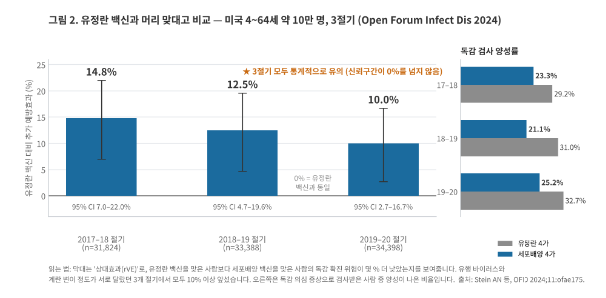
Figure 2. Relative effectiveness of the cell-culture quadrivalent vaccine vs the egg-based quadrivalent vaccine by season (left) and influenza test positivity (right)
|
💡Key Points
|
📝Looking at Children Alone — Imran et al., PIDJ 2022
The third paper used the same U.S. database, selecting only children and adolescents aged 4~17 and analyzing the 2019/20 season.
It compared 60,480 recipients of the cell-culture quadrivalent vaccine with 1,240,990 recipients of the egg-based quadrivalent vaccine, looking at influenza-related medical visits (outpatient, emergency room, and hospitalization).
|
Outcome (ages 4~17, 2019–20 season) |
Relative effectiveness vs egg-based (95% CI) |
|
All influenza-related medical visits (outpatient + emergency room + hospitalization) |
12.2% (7.5–16.6) ★ |
|
Outpatient visits only |
14.3% (9.3–19.0) ★ |
|
Reference — same age group, 2018–19 season (Boikos et al., CID 2021) |
3.9% (0.9–7.0) ★ |
Table 4. Analysis limited to children and adolescents. ★ = statistically significant. The 2018–19 pediatric result is a subgroup figure from the all-ages analysis (7.6%).
In children as well, a difference of almost the same size as in the all-ages results was reproduced. However, in the pediatric subgroup analysis of the season just before (2018/19), the difference was smaller at 3.9%.
Although that result was statistically significant, it is worth remembering that the size of the benefit can vary by season.
Summary at a Glance
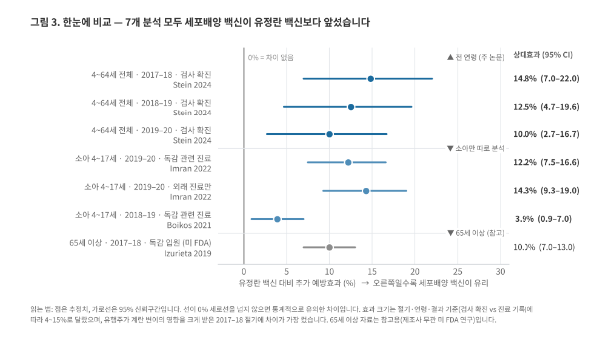
Figure 3. Relative effectiveness of cell-culture vs egg-based vaccines — 7 analyses from the 3 reviewed papers and 2 reference studies
|
Question |
Answer |
Evidence |
|
Does it actually prevent influenza in children? |
Yes. Prevents 54.6% of test-confirmed influenza; significant for every type |
① NEJM 2021, randomized clinical trial, 4,514 children |
|
Is it better than the egg-based vaccine? |
Yes. 10.0~14.8% lower risk of confirmed influenza for 3 consecutive seasons |
② OFID 2024, about 100,000 people, test-negative design |
|
Does it hold up in children alone? |
Yes. 12.2% fewer influenza-related visits, 14.3% fewer outpatient visits (but 3.9% in the previous season) |
③ PIDJ 2022, about 1.3 million people |
|
Is the direction the same across seasons and ages? |
The direction is consistent; the size varies from 4~15%. In people aged 65 and older, no difference in some seasons |
U.S. FDA analysis of people aged 65+: 10% (2017–18); 2.5% in 2018–19 (not significant) |
Table 5. Summary answers to the three questions
Are the Side Effects Any Different?
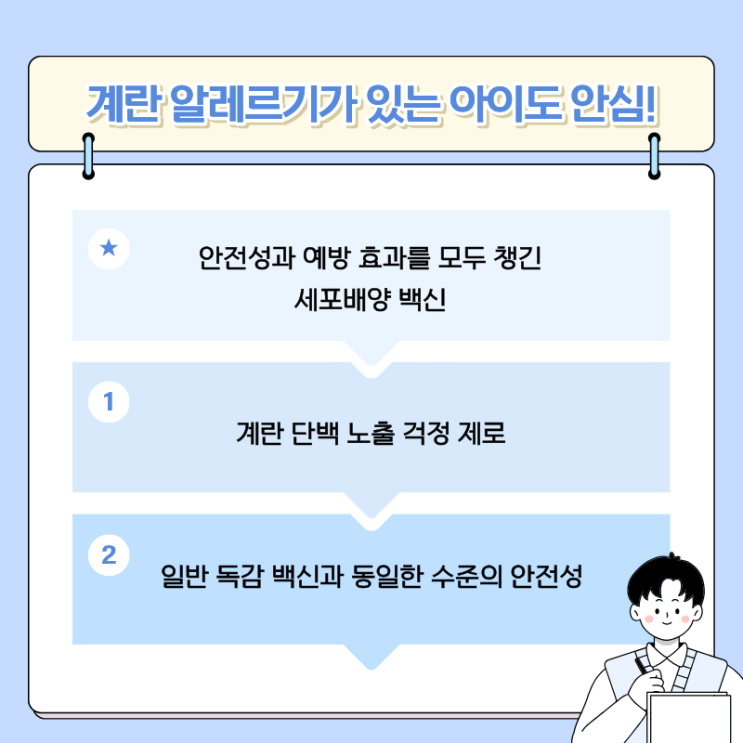
A different manufacturing method does not mean that what goes into the body is very different. Like other inactivated influenza vaccines, the cell-culture vaccine is a ‘killed vaccine’ containing only fragments of the virus’s surface proteins.
In the NEJM clinical trial, the rate of adverse events was similar between the cell-culture vaccine group and the control vaccine group, and there was no difference in serious adverse events between the two groups.
The common adverse events listed in the Korean product approval are similar to those of other influenza vaccines.
-
6 months~3 years: Injection-site tenderness (27.9%), redness (25.8%), induration (17.3%), irritability (27.9%), drowsiness (26.9%), diarrhea (17.9%)
-
2~8 years: Injection-site tenderness (28.7%), pain (27.9%), redness (21.3%)
Most of these reactions resolve on their own within 1~2 days.
🥚What If My Child Has an Egg Allergy?
Under current guidelines, children with an egg allergy can still receive standard influenza vaccines. However, cell-culture vaccines such as Flucelvax use no eggs in the manufacturing process, so there is no need to worry about egg-protein exposure at all, which makes them a vaccination option that parents can choose with even more confidence.
How Far Should We Trust These Results?
Significance and Limitations
✅ Significance
-
The evidence includes the first randomized study to confirm the absolute efficacy of the cell-culture influenza vaccine in children.
-
The comparison with the egg-based vaccine came out in the same direction for 3 consecutive seasons, so it was not a fluke of one season, and it was reproduced in the child-only analysis and in the U.S. FDA’s analysis of people aged 65 and older (10%), which was independent of the manufacturer.
-
Because the core studies used test-confirmed influenza as the outcome, they are more likely to be measuring ‘true influenza’ than studies that rely only on diagnosis codes.
✅ Limitations and Notes
-
All three papers were funded by the manufacturer (CSL Seqirus) or include authors affiliated with it. It is reassuring that the independent U.S. FDA analysis showed similar results, but this should be kept in mind when reading them.
-
② and ③ are analyses of real-world medical data, not randomized trials. The two groups differed from the start (for example, cell-culture vaccine recipients were older on average and had more underlying conditions), and although the results were statistically adjusted, differences that could not be adjusted for may remain.
-
All of the data are from the United States. Circulating strains and vaccination patterns in Korea may differ.
-
The size of the difference varied by season. For children in the 2018/19 season it was 3.9%, and for people aged 65 and older in the 2018/19 season there was no significant difference. The accurate summary is not ‘always 15% better,’ but ‘the benefit grows in years when egg adaptation is a problem.’
-
A relative effectiveness of 10~15% means ‘it also prevents some of the influenza cases that egg-based vaccines fail to prevent’, but it does not mean complete protection against influenza. Even among children who received the cell-culture vaccine, 7.8% still caught influenza.
-
The studies were conducted with quadrivalent products, while the product supplied in Korea this year is trivalent. The omitted B/Yamagata lineage has not circulated since 2020, so no practical difference is expected, but comparative data on the trivalent product itself are not yet available.
-
There are no studies directly comparing it with other cell-culture influenza vaccines distributed in Korea. The advantages of the cell-culture method are likely shared, but the amount of accumulated evidence differs by product.
Closing Remarks from Songdo Pediatrics
To sum up the evidence so far in one sentence:
Cell-culture influenza vaccines prevent influenza 10~15% better than egg-based vaccines, and this difference was confirmed for three consecutive seasons with different circulating viruses, as well as when children were analyzed separately.
The size of the effect may vary from year to year, but the direction has never reversed.
With influenza vaccination, what matters most is ‘whether you get vaccinated,’ and only then ‘which vaccine you get.’ Egg-based vaccines (Sanofi and others) are excellent vaccines with a long track record, and cell-culture vaccines such as Flucelvax are also an excellent alternative.
Which vaccine suits your child better should be decided by considering age, underlying conditions, allergy history, cost, and other factors together. If you have any questions, please feel free to discuss them with our specialist in the exam room.
|
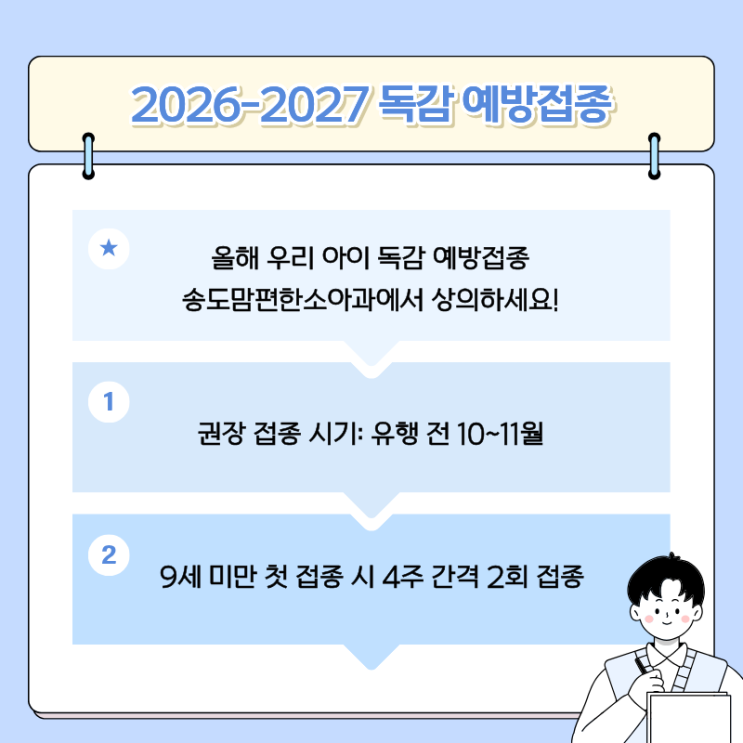
💡Vaccination Guide Influenza vaccination is recommended every year for all children, adolescents, and adults aged 6 months and older. Children under 9 receiving their first-ever influenza vaccine need 2 doses 4 weeks apart, and the best time to be vaccinated is October~November, before the influenza season begins. |
References
1. Nolan T, Fortanier AC, Leav B, et al. Efficacy of a cell-culture–derived quadrivalent influenza vaccine in children. N Engl J Med 2021;385(16):1485-1495. doi:10.1056/NEJMoa2024848
2. Stein AN, Mills CW, McGovern I, et al. Relative vaccine effectiveness of cell- vs egg-based quadrivalent influenza vaccine against test-confirmed influenza over 3 seasons between 2017 and 2020 in the United States. Open Forum Infect Dis 2024;11(5):ofae175. doi:10.1093/ofid/ofae175
3. Imran M, Ortiz JR, McLean HQ, et al. Relative effectiveness of cell-based versus egg-based quadrivalent influenza vaccines in children and adolescents in the United States during the 2019–2020 influenza season. Pediatr Infect Dis J 2022;41(9):769-774. doi:10.1097/INF.0000000000003620
Supplementary references: Izurieta HS, et al. J Infect Dis 2019;220(8):1255-1264 (aged 65+, 2017–18), Izurieta HS, et al. J Infect Dis 2020;222(2):278-287 (aged 65+, 2018–19), Boikos C, et al. Clin Infect Dis 2021;73(3):e692-e698 (2018–19, by age), Ministry of Food and Drug Safety (MFDS) Flucelvax product approval information (adverse events).
SONGDO ANSHIN
※ This article explains academic papers in plain language for the general public and does not replace medical advice.
Please be sure to consult a specialist before deciding whether to vaccinate and which vaccine to choose.
