From Symptoms to Prevention of Summer Heat-Related Illnesses! A Complete Guide to Heatstroke, Heat Exhaustion, Heat Cramps, Heat Syncope, Heat Edema, Heat Rash, and Sunburn
Hello, this is SONGDO ANSHIN.
The weather these days is getting hotter by the day, isn’t it?
At times like these, the illness you especially need to watch out for is heat-related illness..
To protect the health of your child and family in the sweltering heat, today we’ll carefully walk you through everything you need to know, from the types of heat-related illnesses to their symptoms, first-aid measures, and prevention guidelines.
<Source: Korea Disease Control and Prevention Agency, Apeujima TV>
What are heat-related illnesses?
heat-related illness. They are acute illnesses that occur when the body’s temperature-regulating function breaks down in a hot and humid environment..
Representative heat-related illnesses include heatstroke, heat exhaustion, heat cramps, heat syncope, heat edema, heat rash (prickly heat), and sunburn, among others.
When the body’s heat is not properly released, it can cause anything from headache and dizziness to, in severe cases, reduced consciousness and organ damage. Therefore, recognizing the early symptoms and responding quickly is more important than anything else.
In particular, children, the elderly, people with chronic illnesses, and outdoor workers are high-risk groups, so they require more careful management.
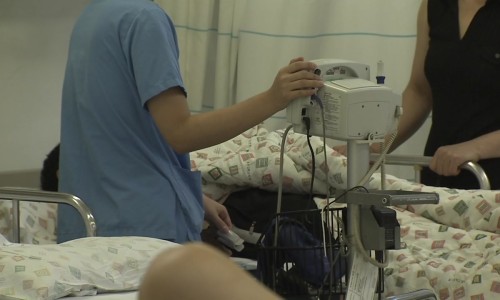
<Source: YTN 2025.07.02>
Representative heat-illness symptoms and first aid
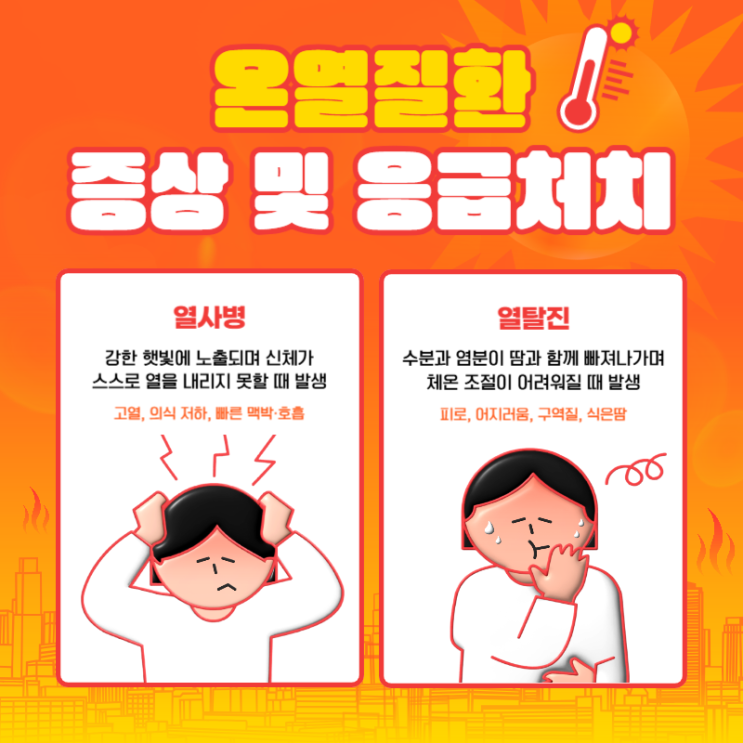
|
Illness name |
Main symptoms |
Emergency measures |
|
Heatstroke |
High fever of 40℃ or above, reduced consciousness, cessation of sweating, rapid pulse and breathing |
Call 119 immediately → move to a cool place → loosen clothing → lower body temperature (cold water/ice packs) → do not give fluids if unconscious |
|
Heat exhaustion |
Fatigue, dizziness, nausea, cold and clammy skin |
Rest in a cool place → replenish fluids and electrolytes with sports drinks, etc. |
|
Heat cramps |
Muscle cramps (arms, legs, abdomen, etc.), excessive sweating |
Stop activity → drink fluids → massage the cramping area → visit a hospital if symptoms persist |
|
Heat syncope |
Sudden fainting, pale face |
Lay the person down and raise the legs to restore blood flow → move to a cool place |
|
Heat edema |
Swelling of hands and feet, a feeling of heaviness |
Lie down and rest → keep the arms and legs higher than the heart |
|
Heat rash (prickly heat) |
Small red rash, itchiness |
Suppress sweating → maintain a cool, dry environment → powder or ointment may be used |
|
Sunburn |
After sun exposure, the skin becomes red and burning, with pain and blisters |
Move to shade → wash with cold water or apply a cold pack → apply a non-irritating ointment/lotion → do not pop blisters |
How to prevent heat-related illnesses in summer
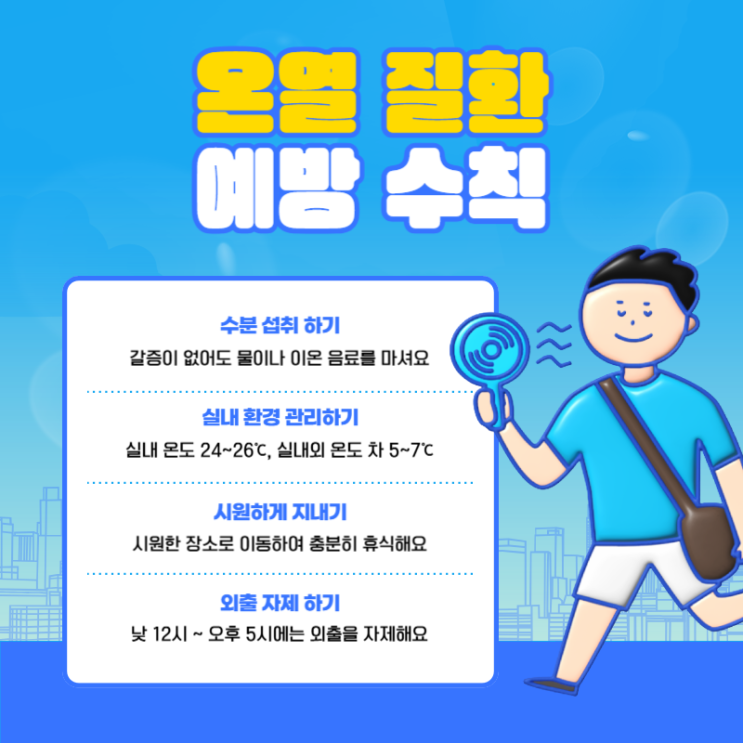
1. Water, shade, rest – the 3 basic rules
• Drink water often : Even if you don’t feel thirsty, replenish fluids regularly.
• Rest in the shade : During outdoor activities, every 30 minutes take a rest in the shade.
• Avoid going out at midday : From 12 p.m. to 5 p.m.,refrain from activity as much as possible.
💡 TIP: It’s also effective to have foods with high water content, such as sports drinks, watermelon, and cucumber.
2. Manage your indoor environment too
• Maintain the indoor temperature appropriately, 24~26℃ and when using air conditioning, keep the temperature difference between indoors and outdoors 5~7℃ within an appropriate range.
• When using the air conditioner, proper ventilation is essential.
• Air conditioner filter management is also important! Mold and bacteria can be a cause of respiratory illnesses.
3. Clothing and protective gear matter too
• Well- ventilated clothing and light-colored tones are recommended.
• Block sunlight with a hat, parasol, and sunglasses.
• Make active use of cooling scarves, ice packs, portable fans, etc.

<Source: Korea Disease Control and Prevention Agency>
4. Those who need to take special care
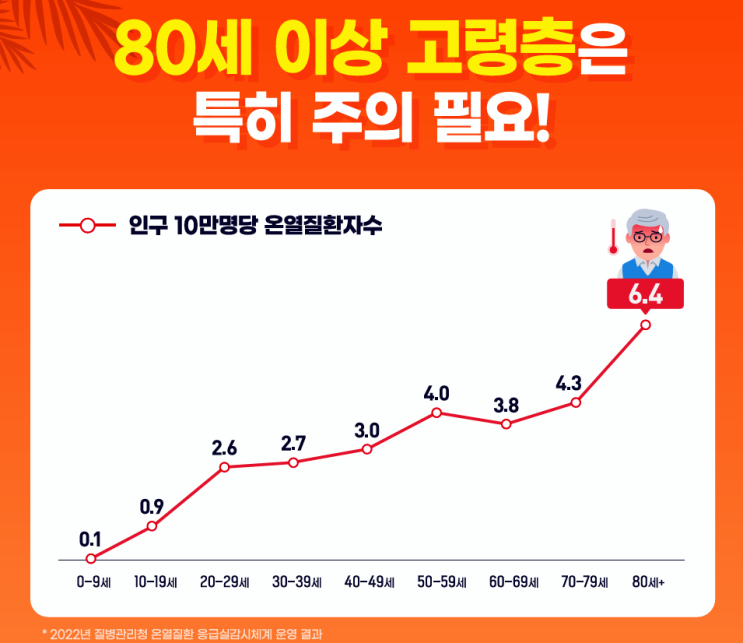
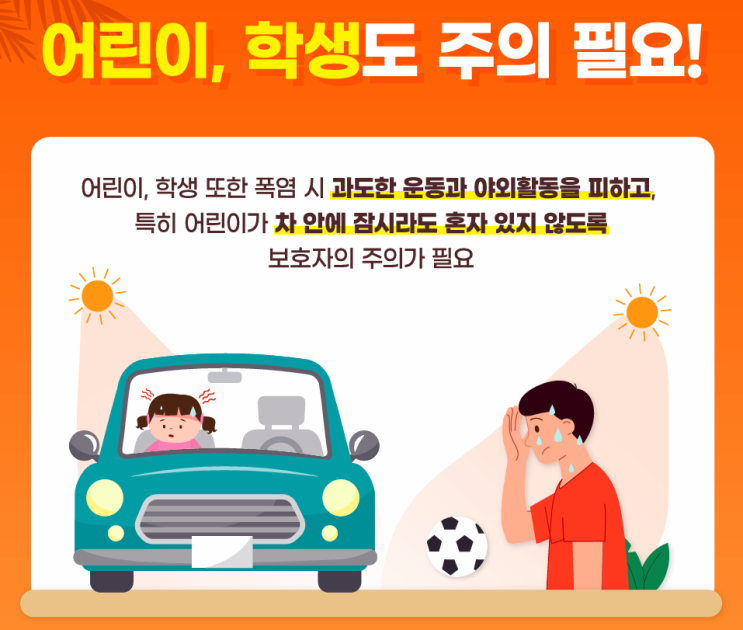
• Children, the elderly, pregnant women, and people with chronic illnesses have a reduced ability to regulate body temperature, so even brief exposure to heat can be dangerous for them.
In particular, Never leave a child alone in a vehicle!
<Source: Korea Disease Control and Prevention Agency>
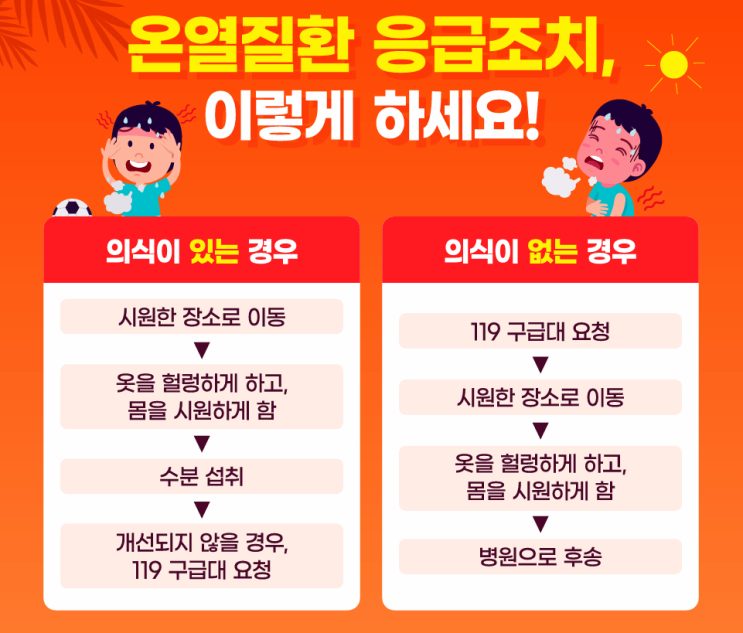
5. How to handle emergencies
• When symptoms such as dizziness, vomiting, headache, or reduced consciousness appear
→ move to a cool place immediately → replenish fluids → call 119 if symptoms persist.
• When the person is unconscious, never give them anything to drink!
• When body temperature rises rapidly,
→ lower the body temperature quickly with ice packs, water-soaked towels, fans, etc.
<Source: Korea Disease Control and Prevention Agency>
Additional tips for outdoor workers and farmers
• Work in pairs (two-person teams)to check on each other’s condition.
• Check weather alerts frequently → it is recommended to stop work during heat-wave alerts.
• Before and after work, take in fluids and electrolytes, and drink sports drinks or water often during work as well.
• If abnormal symptoms appear, stop work immediately and rest in the shade.

<Source: Korea Disease Control and Prevention Agency>
A word from SONGDO ANSHIN

this is SONGDO ANSHIN At our clinic, in preparation for summer heat-related illnesses we operate the following services.
✔️ In case of dehydration symptoms, IV fluid therapy is available.
✔️ If a heat-related illness is suspected,
prompt examination and, if necessary, referral to a specialized institution.
✔️ We also conduct
differential diagnosis from summer infectious diseases.
This summer, for the health of your child and family, fluid intake, indoor and outdoor temperature control, and above all an understanding of heat-related illnesses are essential.
Please practice the guidelines we’ve shared today together with your whole family, and we hope you have a healthy and safe summer even amid the heat.
If you have any questions or inquiries about symptoms, feel free to this is SONGDO ANSHIN contact us anytime.