
Is Summer Air-Conditioning Sickness a Pediatric Illness Different from a Cold? What Symptoms Should You Watch For? / SONGDO ANSHIN
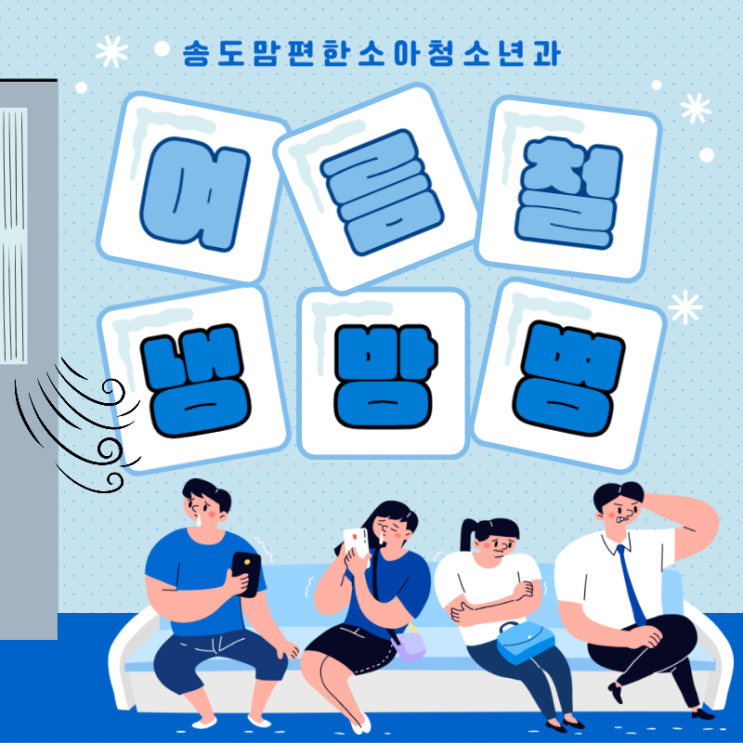
These days, more and more households keep the air conditioner on all day to escape the summer heat, and during consultations at our Songdo pediatric clinic we often hear questions like this.
“I’ve been running the air conditioner a lot lately, and my child keeps feeling sluggish and has a runny nose. Is it a summer cold? Or is it air-conditioning sickness?”
In an environment with a large indoor-outdoor temperature difference, children’s condition tends to deteriorate easily.
Young children in particular have a body temperature regulation ability and an immune system that are still immature, so summer pediatric illnesses, namely, air-conditioning sickness can affect them more easily.
Today, we’ll explain in detail the causes of air-conditioning sickness, how it differs from a cold, points to watch out for, and the treatment approach at our Songdo pediatric clinic, all the way through.

What is air-conditioning sickness? A representative summer pediatric illness!
air-conditioning sickness is not a medical diagnostic term, but it is a symptom group that appears very commonly in summer pediatric consultations..
Even without a viral infection, the indoor-outdoor temperature difference, cold drafts, dry air, and so on can cause an abnormal autonomic nervous system response. This is what the term refers to.

🔍 Main causes of air-conditioning sickness
• Indoor-outdoor temperature difference
Due to sudden temperature changes, the balance of the autonomic nervous system breaks down and body temperature is not properly regulated, so symptoms of air-conditioning sickness may appear.
• Continuous exposure to cold air
When exposed to air conditioner drafts for a long time, body temperature drops and immunity weakens, so cold-like symptoms may develop.
• Dry indoor air
When the indoor air becomes excessively dry due to air conditioning, the respiratory mucous membranes dry out and their defenses weaken, lowering resistance to viruses and bacteria.
• Bacteria/mold in the air conditioner filter
An air conditioner filter that has not been cleaned for a long time, due to the bacteria and mold accumulated inside it, respiratory irritation or infectious illnesses can be triggered.

Air-conditioning sickness vs. summer cold: differences in symptoms
This is the part parents most often confuse.
The child’s symptoms must first be distinguished as to whether they are air-conditioning sickness or a summer cold (upper respiratory infection).
|
Category |
air-conditioning sickness |
Summer cold (upper respiratory infection) |
|
Main cause |
Temperature changes, cold air, dryness |
Viral infection |
|
Fever |
None or low-grade fever |
Fever is common |
|
Runny nose |
Clear runny nose |
Clear or yellow, sticky runny nose |
|
Cough |
Scratchy throat, dry cough |
Frequent cough, accompanied by phlegm |
|
Other symptoms |
Headache, dizziness, indigestion, lethargy |
Chills, muscle aches, sore throat |
|
Recovery speed |
Relatively quick improvement when the environment is adjusted |
Usually lasts more than 3 to 7 days |
🌱 If it is accompanied by fever, severe cough, yellow runny nose, or sore throat, a cold (upper respiratory infection) is highly likely, so appropriate treatment is needed..

Be especially careful about summer air-conditioning sickness in these cases!
• When the indoor-outdoor temperature difference is 8 degrees or more occurs
• When, all day long, air conditioner drafts are blown on you
• During sleep, cold air directly hits the face and neck when it does
• Air conditioner filter cleaning has not been done for a long time (risk of mold/Legionella bacteria)
• A child who has allergic rhinitis or asthma, that is, a child who lives with these on a regular basis
Air-conditioning sickness symptoms commonly seen at the pediatric clinic
summer air-conditioning sickness of children who come to our Songdo pediatric clinic with representative symptoms are as follows.

• Sluggish and lacking energy
• Reduced appetite, not eating well
• Clear runny nose, mild nasal congestion
• Scratchy throat, dry cough
• Indigestion, abdominal pain, diarrhea
• Complaints of headache and dizziness
🌱 In particular, young children often express only vague discomfort, such as “My tummy hurts,” “My head hurts,” or “I’m sleepy,” so careful observation by parents is necessary.

If air-conditioning sickness lasts a long time? You need to suspect another illness!
air-conditioning sickness It often improves within a few days through environmental adjustment in many cases, but if symptoms persist for a long time or worsen, you must check whether it is another illness.
🔍 Representative illnesses that need to be distinguished
• Acute rhinitis (nasal cold) : yellow runny nose, nasal congestion, sneezing
• Acute pharyngitis (throat cold) : throat pain, high fever, tonsil swelling
• Upper respiratory infection (cold) : runny nose, cough, fever
• Complications such as otitis media and pneumonia : in children, these can easily follow a cold
🌱 At SONGDO ANSHIN, depending on the child’s condition, we also conduct additional tests such as blood tests and chest X-rays when necessary.
Prevention rules for air-conditioning sickness! Be sure to follow them in summer
At our Songdo pediatric clinic the methods of preventing summer air-conditioning sickness that we emphasize to parents every time are these..

• Indoor-outdoor temperature difference Keep it within 5 to 7 degrees.
• The air conditioner draft should not directly hit the child do this.
• Periodic indoor ventilation and maintaining appropriate humidity (40–60%).
• Protect the mucous membranes with adequate fluid intake.
• Strengthen immunity with regular meals and sleep.
• Air conditioner filter and indoor cleanliness manage thoroughly.
🌱 In particular, During nighttime sleep, to keep cold air from directly hitting the face and neck, use curtains, windbreaks, blankets, etc., for indirect cooling, which is good.
And children with underlying conditions such as allergic rhinitis or asthma need even more care.
<Source: KBS News YouTube>
If air-conditioning sickness symptoms last a long time? A pediatric examination is absolutely necessary
In the following cases, it may not be simple air-conditioning sickness, so we recommend a pediatric examination in the near future..
• When a high fever of 38 degrees or more persists for 2 or more days
• When the cough is severe or accompanied by yellow phlegm
• When the child has difficulty breathing or the breathing sounds are abnormal
• When loss of appetite or a lethargic state continues
• When accompanied by abdominal pain, vomiting, or diarrhea
• When symptoms persist for 3 or more days
🌱 Summer upper respiratory infection, acute rhinitis, pharyngitis, pneumonia, and so on: the possibility of other illnesses like these must also be considered.
Features of SONGDO ANSHIN’s summer respiratory care

• We provide customized care taking into account the child’s age and symptom characteristics.
• We carefully distinguish and treat pediatric respiratory illnesses with similar symptoms, such as colds, rhinitis, and pharyngitis.
• When necessary, prompt testing leads to an accurate diagnosis of the cause and quick guidance on the results.
• For children with pre-existing underlying conditions such as rhinitis, asthma, or allergies, we provide management consultations to prevent worsening and control symptoms.
• To prevent recurrence, we also provide education on prevention rules and lifestyle habits that can be practiced at home.

The sweltering summer! Air-conditioning sickness may seem like a symptom easy to brush off, but in children it can worsen into other pediatric respiratory illnesses.
If symptoms last a long time or become severe, please be sure to get an accurate examination at our Songdo pediatric clinic.
For your children’s healthy summer, SONGDO ANSHIN will be with you.