
Are Adolescent Wegovy Side Effects Really Something to Worry About? (Adolescent Obesity Treatment Through the Research)
Childhood and Adolescent Obesity Treatment Through the Research
[Wegovy for Adolescents: Are the Side Effects Really Something to Worry About?]
|
💡To give you this article’s conclusion first 1️⃣ In the 68-week trial, the rate of discontinuing treatment because of side effects was the same (5%) in both the Wegovy group and the placebo group. 2️⃣ The depression- and suicide-related adverse events that guardians worry about most were actually reported more often in the placebo group, and a pooled analysis combining 18 trials found no signal of an increase. 3️⃣ After 68 weeks of treatment, no effect on growth indicators or pubertal development was reported. 4️⃣ That said, gastrointestinal symptoms such as nausea and vomiting, and gallstones, do actually increase. These are not a ‘risk to be hidden’ but a ‘side effect to be anticipated and managed.’ |
Wegovy for adolescents:
why do we ask about side effects first?

SONGDO ANSHIN Annex, Growth & Obesity Clinic
In October 2025, the Ministry of Food and Drug Safety expanded its approval of Wegovy (active ingredient semaglutide) to adolescents aged 12 and older.
This is the first time a once-weekly GLP-1 obesity medication has been approved for adolescents in Korea.
After the approval news broke, the question we heard most often in the clinic was not “How much weight will they lose?” at all.
“They’re at the age of rapid growth. Could this cause problems with their growth?”
“There’s been talk of depression in the news lately. Will it be alright?”
These were the kinds of questions. And they are natural worries.
The risk an adult takes on for themselves and the risk a parent must decide on behalf of a child carry different weight.
So in this article, rather than efficacy, we weighted safety, and laid out what was actually observed in the real clinical trials exactly as the numbers stand.
Which studies did we look at?
We selected the three studies with the highest level of evidence.
The first two were published in NEJM (The New England Journal of Medicine), the world’s most authoritative medical journal, and the third in JAMA Pediatrics, the top journal in the field of pediatrics.
|
Study |
Subjects |
Method |
Duration |
|
① STEP TEENS (NEJM 2022) |
201 obese adolescents aged 12 to under 18 |
Wegovy (semaglutide) 2.4mg once weekly vs. placebo, randomized |
68 weeks |
|
② SCALE Teens (NEJM 2020) |
251 obese adolescents aged 12 to under 18 |
Saxenda (liraglutide) 3.0mg daily vs. placebo, randomized |
56 weeks + 26 weeks after discontinuation |
|
③ Pooled analysis (JAMA Pediatrics 2025) |
1,402 individuals aged 6 to 17 |
Re-analysis pooling 18 GLP-1 trials |
Up to 1 year |
All three studies were ‘randomized, double-blind.’
Participants are divided into two groups as if by drawing lots, and the study proceeds with neither the patient nor the medical staff knowing which side received the real drug. It is the most reliable study design, built so that expectation or preconception cannot distort the results.
There is one point worth noting. Studies ① and ② were not head-to-head comparisons but were each conducted separately. Because the participants’ characteristics and durations differ, directly comparing the two drugs’ numbers should be taken only as a reference.
❤️ See also our previous post ❤️
If you’re curious about the basic mechanism of Wegovy and
the concrete weight-loss effect from the NEJM trial data,
▼ please see the article below first.
👉 Can adolescents use Wegovy too? The efficacy and safety of obesity injection treatment

Result 1. Efficacy: how much did it drop?
To talk about safety, we first have to know ‘what we take a risk in order to gain.’ Let’s start with the efficacy of the two drugs.
Graph 1. BMI reduction effect compared with placebo
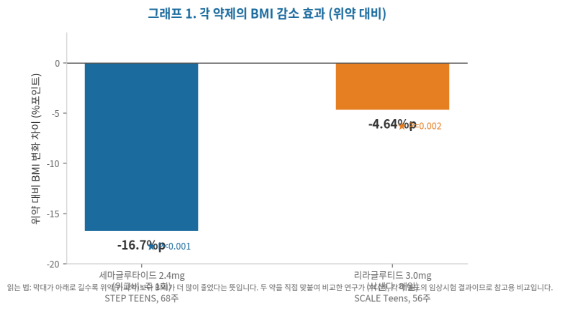
With Wegovy, BMI dropped 16.1% at week 68, while over the same period the placebo group rose 0.6%. The difference between the two groups was 16.7 percentage points.
Saxenda reduced BMI by 4.64 percentage points more than placebo at week 56. Even accounting for the difference between a once-weekly injection and a daily one, it is clear that Wegovy’s effect is considerably larger.
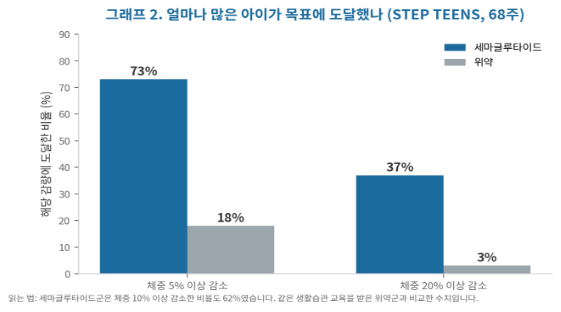
Graph 2. Proportion of children who reached the target weight loss (STEP TEENS)

|
💡Key point
|
Result 2. Safety: what actually happened?
This is the heart of the article. Transcribing exactly the adverse events reported over 68 weeks in STEP TEENS gives the following.
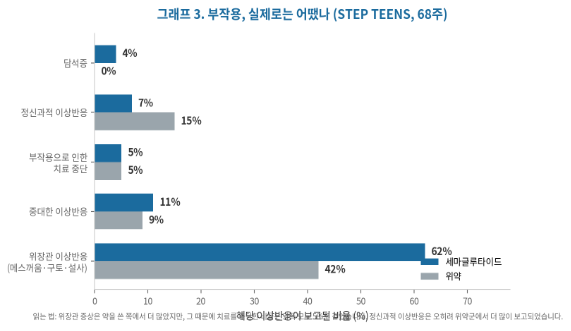
Graph 3. Comparison of adverse-event rates (STEP TEENS, 68 weeks)
|
Item |
Wegovy group |
Placebo group |
How to read it |
|
Gastrointestinal symptoms (nausea, vomiting, diarrhea) |
62% |
42% |
Actually increased. Mostly concentrated in the first 16 weeks of dose escalation, mild to moderate, and subsiding over time. |
|
Discontinuation of treatment due to side effects |
5% |
5% |
Same on both sides. It means symptoms increased, but not to the point of giving up the drug. |
|
Serious adverse events |
11% |
9% |
No large difference |
|
Psychiatric adverse events |
7% |
15% |
Actually more than twice as many in the placebo group |
|
Gallstones |
4% (5 people) |
0 people |
Actually increased. A known side effect that accompanies rapid weight loss. |

|
💡Key point — two kinds of side effects must be distinguished
This is not something to conceal or deny, but an area to be managed by adjusting the pace of dose escalation and checking regularly.
In STEP TEENS, depression-scale (PHQ-9) and suicide-risk (C-SSRS) scores were similar between the two groups, and psychiatric adverse events were reported more often in the placebo group. And the discontinuation rate due to side effects, the same 5% in both groups, is the number that best demonstrates this drug’s tolerability. |
Summary at a glance
It is too early to judge from a single trial. The result of pooling and re-analyzing data from 18 GLP-1 trials in children and adolescents, 1,402 individuals, is as follows.
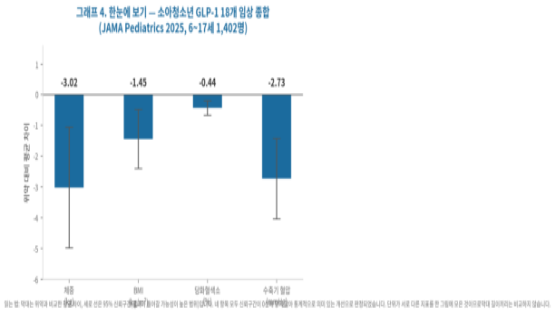
Graph 4. Pooled analysis of 18 pediatric/adolescent GLP-1 trials (JAMA Pediatrics 2025)
Weight, BMI, HbA1c, and systolic blood pressure all improved meaningfully. And in this analysis too, the incidence of depression, suicidal ideation, and suicidal behavior showed no difference from the placebo group.
|
What guardians worry about |
What the data says |
|
Won’t growth stop? |
After 68 weeks of treatment, no effect on growth indicators or pubertal development was reported |
|
Won’t they become depressed or have extreme thoughts? |
No signal of an increase was found in any of the three studies |
|
Won’t they have to take it for life? |
When discontinued, a tendency for weight to return was observed. A perspective like that of chronic-disease management is needed |
|
What if they feel too sick to keep taking it? |
Symptoms increased, but the rate of stopping because of them was 5%, the same as in the placebo group |
Side effects: how did the two drugs differ?
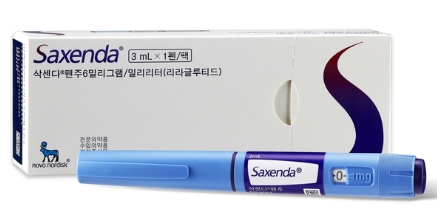
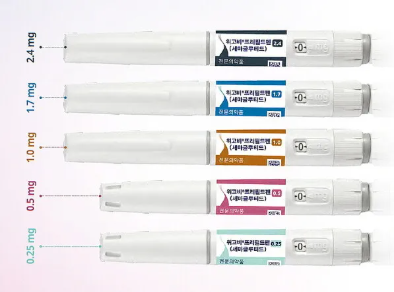
Saxenda vs. Wegovy
Compared with Saxenda (liraglutide), there is an interesting difference. In the Saxenda trial, gastrointestinal adverse events were 64.8% (placebo 36.5%), a level similar to Wegovy, but the rate of discontinuing treatment due to side effects was 10.4%, clearly diverging from the placebo group’s 0%.
The difference between a daily injection and a once-weekly injection, together with the characteristics of the drug itself, appears to have played a part. But as noted earlier, this was not a study that pitted the two drugs directly against each other, so read it only as a reference to the trend.
Significance and limits: what this data cannot tell us
To read evidence properly, you also have to know where that evidence does not reach.
|
💡Questions these studies cannot answer
|
Closing
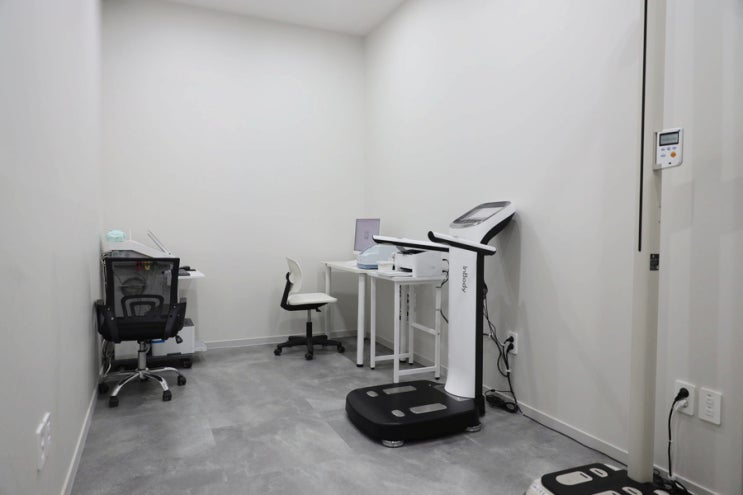
SONGDO ANSHIN Annex Laboratory
‘Safe’ does not mean ‘nothing happens.’ Of ten children on Wegovy, six may feel gastrointestinal discomfort, and of a hundred, four may develop gallstones. There is no reason to hide these numbers.
What the data actually says is this. The expected side effects are mostly concentrated early and subside over time, and the proportion of children who gave up treatment because of them was no different from the children who received placebo. And in growth and mental health, the biggest concerns, no signal supporting those worries emerged.
At the same time, this drug is not an option for every adolescent who needs weight management. The approval criteria are set strictly, and it is recommended to discontinue if BMI does not fall by at least 5% after 12 weeks of dosing.
It is not a drug to be started merely because one wants to lose weight. Rather, it is a treatment that is started after the disease of obesity has been diagnosed and evaluated, and then continued with regular check-ups.
It becomes possible to judge only when the child’s growth stage, degree of pubertal progression, comorbidities, and the trajectory of weight change so far are all considered together. Whether this is the treatment your child needs, and whether now is the right time, we recommend deciding after consulting a specialist.
[References]
1. Weghuber D, Barrett T, Barrientos-Pérez M, et al. Once-Weekly Semaglutide in Adolescents with Obesity. N Engl J Med. 2022;387(24):2245-2257.
2. Kelly AS, Auerbach P, Barrientos-Perez M, et al. A Randomized, Controlled Trial of Liraglutide for Adolescents with Obesity. N Engl J Med. 2020;382(22):2117-2128.
3. Kotecha P, Huang W, Yeh YY, et al. Efficacy and Safety of GLP-1 RAs in Children and Adolescents With Obesity or Type 2 Diabetes: A Systematic Review and Meta-Analysis. JAMA Pediatr. 2025;179(12):1308-1317.
SONGDO ANSHIN
※ This article is a plain-language explanation of academic papers for the general public and does not replace medical advice.
