
Melatonin’s effect: why it works better for insomnia in children with autism or ADHD (Pediatric sleep disorder research review, Part 2)
[Our Child’s Growth & Sleep Stories] Melatonin Trilogy, Part 2
Why does melatonin work especially well for children with autism or ADHD?
We use academic research to explain, clearly and simply, why the same medication produces different responses in different children.
|
💡Key points of this article
|
Why does the same medication affect children so differently?
Among parents, the remark “Melatonin worked wonders for one child, but another child barely responded at all” comes up again and again.
This is not mere coincidence. Everything depends on “whether the child’s body was producing melatonin properly in the first place.”
Sleep problems in children with autism (ASD): what makes them different?

More than half of children with autism spectrum disorder (ASD) also experience serious sleep disturbances.
This is not because the child has a sensitive temperament; rather, the biological pathway that synthesizes melatonin itself differs. A range of studies has made this clear.
When the enzyme responsible for the final step of melatonin synthesis (ASMT) does not work properly, the brain cannot generate a strong enough “time to sleep” signal even when night falls.
For these children, therefore, giving melatonin is not simply taking a sleeping pill but a form of “replacement therapy that directly restores a substance the body lacks.” Naturally, the treatment response and the benefit are high.
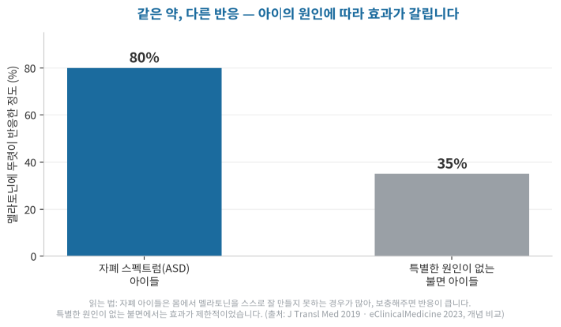
Figure 1. How the melatonin response varies by underlying cause (conceptual comparison)
|
💡Key point Figures vary between studies, but roughly 80% of children with autism are reported to show marked improvement in the time it takes to fall asleep (sleep onset latency) and in total sleep time. This is because the “sleep signal” their body was missing is reliably restored. |
Does melatonin work in a similar way for children with ADHD?
A substantial proportion of children with ADHD (attention deficit hyperactivity disorder) report sleep problems.
In children with ADHD the body clock (sleep phase) is shifted later, so they tend strongly to stay awake until late at night. Melatonin shifts this delayed body clock earlier and resets it.
Studies also show that melatonin is effective at easing the difficulty falling asleep caused by the stimulant medications used to treat ADHD.
But “insomnia with no identified cause” is a different story.

Here there is a contrast worth noting.
According to a large-scale analysis published in 2023 in the international journal eClinicalMedicine, giving melatonin to children and adolescents with ordinary insomnia (no neurodevelopmental disorder and no specific identified cause) produced somewhat different results.
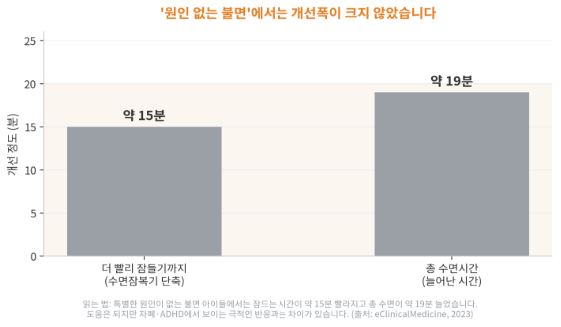
Figure 2. The effect of melatonin in “insomnia with no identified cause” (eClinicalMedicine, 2023)
In these children, falling asleep came only about 15 minutes sooner and total sleep time increased by only about 19 minutes, with no clear change in daytime functioning or overall sleep quality. It helps, but it was clearly different from the dramatic response seen in children with autism or ADHD.
|
💡What the findings suggest The difference between children for whom melatonin works well and those for whom it does not lies not in luck but in the cause of the insomnia.
Treating a child’s sleep disorder must therefore begin with accurately identifying the underlying reason the child cannot sleep. |
Melatonin response by child profile, at a glance
|
Child profile |
Melatonin response |
Cause and mechanism |
|
Autism spectrum (ASD) |
Responds strongly |
Poor self-production of melatonin → supplementation helps |
|
ADHD |
Responds well |
Body clock shifted later → circadian rhythm normalized |
|
Insomnia with no identified cause |
Limited |
The body’s melatonin is normal → little benefit from supplementation |
In closing
Melatonin is not a cure-all for every case of pediatric insomnia. It is a “cause-matched sleep hormone” that delivers its best effect when it is applied to fit an accurate diagnosis of the underlying cause. For a child’s sleep problem, therefore, the safe course is to decide the direction of treatment through a proper consultation with a specialist.
Part 3, coming next, covers the practical guide parents ask about most.
👉“Overseas direct-purchase and pharmacy melatonin supplements versus melatonin prescribed at a clinic, both 2mg, so why do the effect and the price differ?” That is the question we take on next.
💡Recommended companion reading
If you would like to know how melatonin basically works in the body,
along with the general sleep benefits, the safety and the side effects when children and adolescents take it,
please read the Part 1 column below first.
[Part 1] Is it safe to give kids melatonin? A research review of sleep benefits and side effects in children and adolescents
📖 References
Esposito S, Laino D, D’Alonzo R, et al. Pediatric sleep disturbances and treatment with melatonin. Journal of Translational Medicine. 2019;17:77.
Wei S, Smits MG, Tang X, et al. Efficacy and safety of melatonin for sleep onset insomnia in children and adolescents: a meta-analysis of randomized controlled trials. Sleep Medicine. 2019.
Edemann-Callesen H, Andersen HK, Ussing A, et al. Use of melatonin for children and adolescents with chronic insomnia attributable to disorders beyond indication: a systematic review, meta-analysis and clinical recommendation. eClinicalMedicine. 2023;61:102064.
Reference: variability in the melatonin content of commercial products — Erland LAE, Saxena PK. Melatonin natural health products and supplements: presence of serotonin and significant variability of melatonin content. J Clin Sleep Med. 2017;13(2):275-281.
SONGDO ANSHIN
※ This article explains academic research in plain language for a general audience and does not replace medical advice.
Whether to use it and at what dose must be decided after consulting a specialist.
