Red cheeks and spots on the body? Erythema infectiosum (slapped cheek disease): causes, incubation period, symptoms and daycare return criteria (vs. hand, foot and mouth disease)
|
💡 3-second key summary for busy parents 1️⃣ Cause and incubation period Parvovirus B19 infection is the cause, and after an incubation period of about 4~14 days early symptoms such as a low-grade fever and a runny nose appear. 2️⃣ Main symptoms (adults can catch it too) In children it appears as red patches on both cheeks and a lacy rash on the trunk, while adults who become infected may also have joint pain or swelling of the hands. 3️⃣ Treatment and daycare return criteria There is no specific cure, so supportive care is given to control itching and fever. Once the red rash on the cheeks stands out, the child is no longer contagious and can return to daycare. |
Many parents come to the clinic startled after looking at their child’s face and finding both cheeks red, puffy and flushed, as if they had been slapped with a palm.
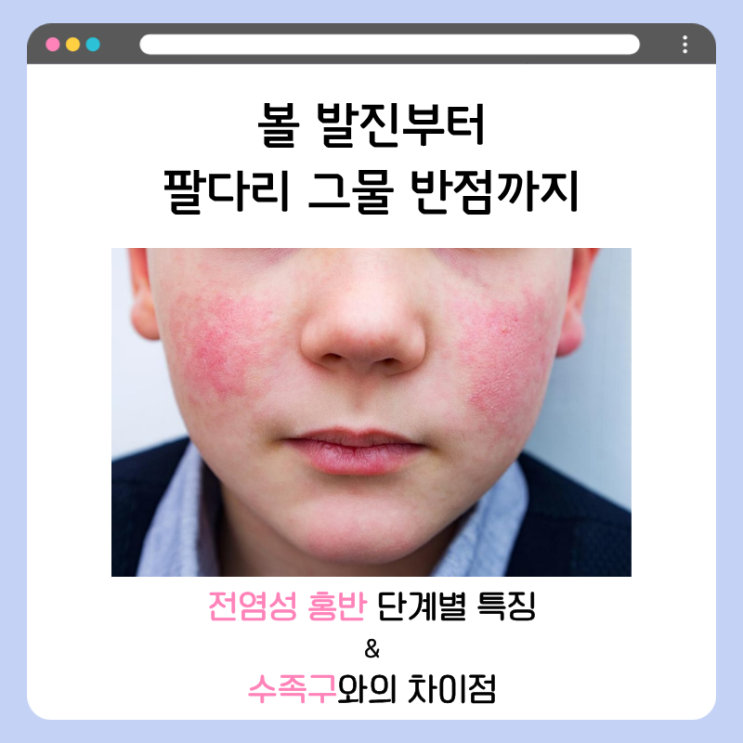
If there is little fever or only a low-grade fever, but the cheeks turn apple-red and a few days later lacy red patches spread over the arms and legs, erythema infectiosum (infectious erythema, also known as slapped cheek or apple disease) should be suspected.
Erythema infectiosum is easily mistaken for simple baby skin trouble, early hand, foot and mouth disease, or chickenpox! Today SONGDO ANSHIN walks you through it all at a glance: the causative virus, the incubation period, whether adults catch it, treatment, and daycare return criteria.
What causes erythema infectiosum and how long is the incubation period?
This condition, officially called erythema infectiosum in medical terminology, is caused by Parvovirus B19 infection.
-
Cause of erythema infectiosum : It spreads mainly through respiratory droplets (saliva) from an infected person or through contact.
-
Incubation period of erythema infectiosum : After exposure to the virus, there is an incubation period of usually 4~14 days (up to 2~3 weeks) , after which it begins with cold-like signs such as a low-grade fever or a runny nose.
Symptoms of erythema infectiosum stage by stage (children vs. adults)
📊 Erythema infectiosum vs. hand, foot and mouth disease: comparison table
|
Category |
Erythema infectiosum (slapped cheek disease) |
Hand, foot and mouth disease |
|
Main rash sites |
Both cheeks (apple-shaped), arms, legs and trunk (lacy pattern) |
Blisters inside the mouth, red blisters/rash on the palms and soles |
|
Rash characteristics |
The cheeks swell red first, then it spreads to the body |
Appears mainly on the hands and feet, around the mouth and on the buttocks |
|
Daycare / isolation criteria |
Already non-contagious once the red cheek rash appears (may return to daycare) |
Isolation required until the blisters dry and the fever comes down |
-
Stage 1 (early low-grade fever and cheek rash) : Cold-like symptoms (a low-grade fever, headache and runny nose) appear mildly for 1~2 days, then red patches show up on both cheeks as if the child had been slapped with a palm. (This appearance is why it earned the nickname “baby apple disease.”)
-
Stage 2 (lacy rash on the arms and legs) : Around the time the redness of the cheeks fades (1~4 days later), red patches spread to the arms, legs and trunk and turn into a rash that looks like “lace” or “netting.”
-
Stage 3 (fading and recurrence) : The rash slowly disappears over 1~3 weeks, but it may briefly darken again after sun exposure, a warm bath, or when the child feels flushed after exercise.
⚠️ Watch out for look-alike rashes!
If red patches appear together with a high fever of 38.5 degrees or more, a sore throat and a strawberry tongue, it may not be erythema infectiosum but scarlet fever, which needs antibiotic treatment, so see a pediatrician right away.
Can adults get erythema infectiosum too?
Yes, adults can be infected as well!
However, rather than the red cheeks children get, adults more often present with joint pain or swelling in the fingers and knees, or flu-like body aches instead.
Daycare return criteria and isolation for erythema infectiosum
Hand, foot and mouth disease and chickenpox are highly contagious while the rash is present, but erythema infectiosum is the opposite: by the moment the “red cheek rash” stands out, the child is already no longer contagious.
-
Most contagious period : Before the red rash appears, while there are cold-like signs such as a low-grade fever or a runny nose (when the virus is being shed)
-
Daycare return criteria for erythema infectiosum : By the time the red rash shows on the cheeks the child is no longer contagious, so if they feel well and have no fever they can attend daycare or kindergarten without any separate isolation. That said, the facility may ask you to keep the child home because of the rash, so we recommend visiting a pediatric clinic to obtain and submit a written statement confirming that the child is no longer contagious.
⚠️ The most important precaution from a pediatrician!
Children and healthy adults get through it mildly, but pregnant women must strictly avoid contact with anyone who has erythema infectiosum.
If parvovirus infection occurs during pregnancy (especially in the first to second trimester), the risk of fetal hydrops or miscarriage can rise, so parents expecting a second child and any pregnant women around them need to take extra care.
How erythema infectiosum is treated and what medicines are used
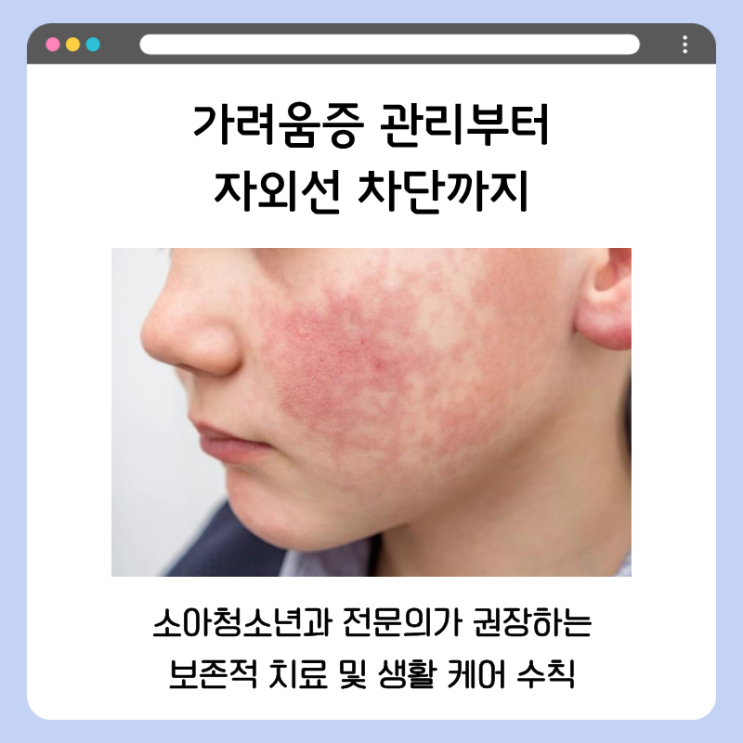
No specific antiviral drug has been developed for erythema infectiosum, so we provide supportive care that relieves the child’s symptoms .
1️⃣ Itch care : If the rash itches badly, an ointment prescribed by the pediatric clinic or an oral antihistamine is used.
2️⃣ Managing fever and joint pain : If there is a low-grade fever or body aches, a children’s antipyretic and analgesic is prescribed and taken.
3️⃣ Lukewarm baths & sun protection : Hot baths and sun exposure can make the rash worse, so wash your child with lukewarm water and dress them in long sleeves for outdoor activities.
When a baby’s cheeks suddenly turn red and spots appear on the trunk, arms or legs, it is only natural for parents to feel alarmed. Whenever unusual symptoms appear, we recommend visiting a nearby pediatric clinic for an accurate diagnosis.
🔗 Child health guides worth reading together
For parents worried about a child’s rash or high fever,
here are earlier posts that are worth reading together.
📌 [Baby’s fever is 39 degrees: should you wake a sleeping child to give an antipyretic?]

📌 [A complete guide to alternating antipyretics: intervals and timing]