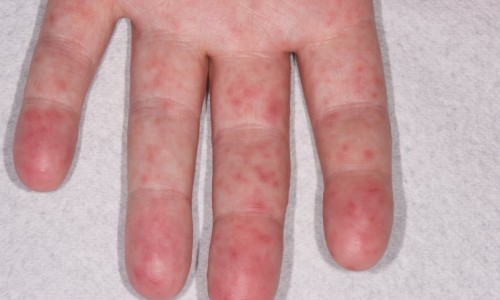
Hand, Foot and Mouth Disease & Herpangina: Recovery Criteria and When to Return to School! Recommended Meals for a Child Who Will Not Eat Because of Mouth Blisters (Certificate of Recovery)
Mid-September has arrived and the seasons are turning, yet among children in group settings such as kindergartens and daycare centers, visits for hand, foot and mouth disease and herpangina (stomatitis) are still continuing.
Both illnesses produce stinging blisters inside the mouth, so the child struggles even to swallow saliva and starts refusing food. In particular, many guardians are asking about the criteria for a recovery decision so their child can safely return to school before the upcoming Chuseok holiday.
In today’s post we have neatly organized everything – from meal plans that ease the pain inside your child’s mouth, to the exact criteria for returning to school, to when a certificate of recovery is issued.
|
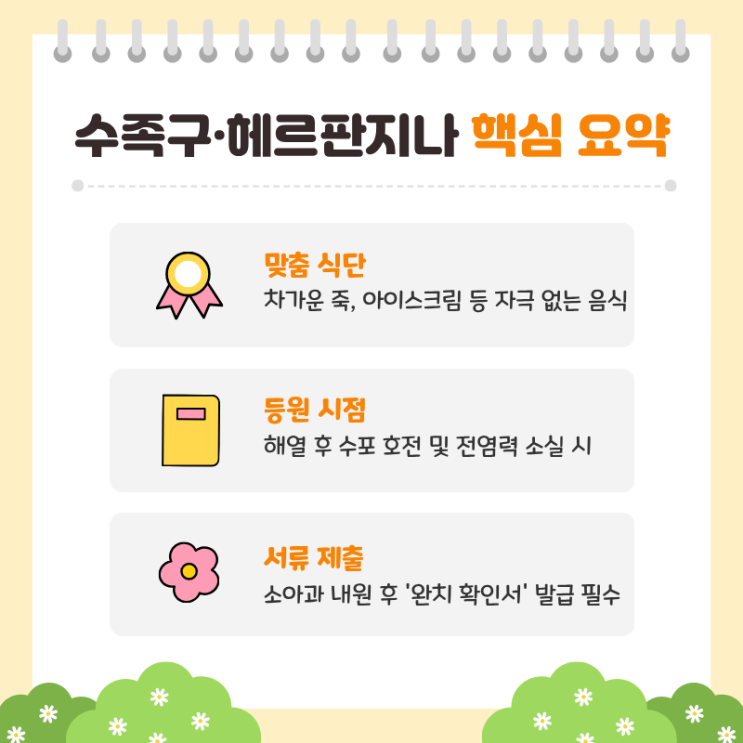
💡 [Today’s Key Points in 3 Lines] 1️⃣ Suitable meals: Hand, foot and mouth disease and herpangina cause severe pain inside the mouth, so feed mainly non-irritating, cold foods (soft porridge, ice cream, cooled steamed egg). 2️⃣ When your child can return to school : Your child can return once the fever has come down and the blisters inside the mouth and the red spots (rash) on the hands and feet have improved meaningfully, so that the illness is no longer contagious. 3️⃣ Certificate of recovery : Before returning, you must visit a pediatric clinic and submit a certificate of recovery (medical certificate/doctor’s note) stating that the child is no longer contagious and may return to school. |
Recommended Meals for a Child Who Cannot Eat Because of Mouth Blisters
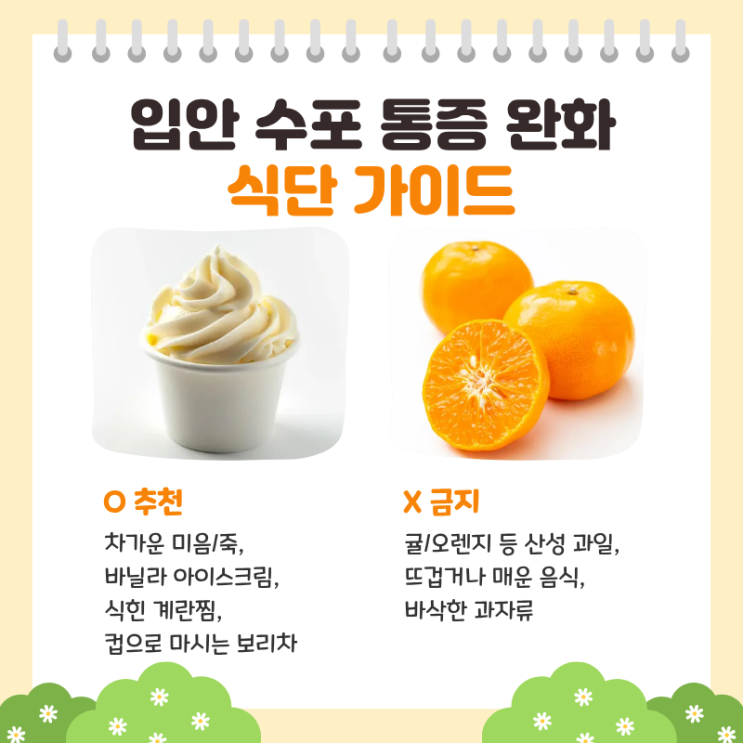
If the pain of stomatitis inside the mouth cuts off nutrition, dehydration can follow. At this point, ‘cold, soft, high-calorie food’ takes priority over ‘nutritious solid meals’.
✅ Recommended menu
-
Cold thin gruel/porridge : Beef-and-vegetable porridge or abalone porridge, boiled and then chilled in the refrigerator
-
Fluids and calories : Ice cream (vanilla/milk flavors recommended, avoid sharp fruit flavors), pudding, yogurt, cooled steamed egg
-
Drinks : Lukewarm or cold barley tea, sports drinks
(※ A straw creates negative pressure inside the mouth and can trigger pain, so it is better to let your child drink from a cup.)
✅ Foods to avoid
-
Highly acidic fruits : tangerines, oranges, kiwi, tomatoes (cause severe, stabbing pain in the sores inside the mouth)
-
Hot, salty or spicy foods : hot soups, heavily seasoned side dishes
-
Crunchy, hard snacks : fried foods, puffed-rice snacks (irritate the blisters and cause bleeding and pain)
When a Certificate of Recovery Is Issued for Hand, Foot and Mouth Disease or Herpangina, and the Criteria for Returning to School
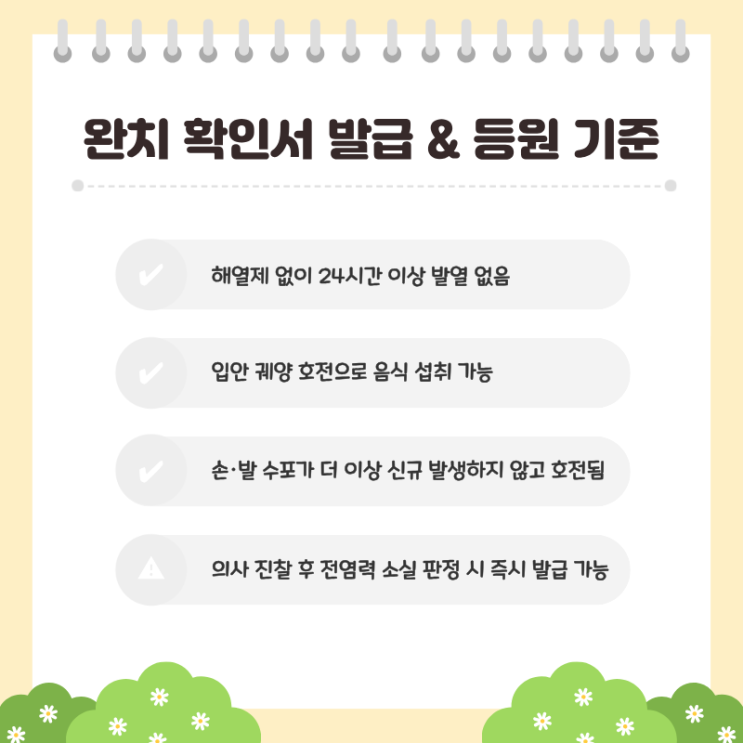
Daycare centers, kindergartens and elementary schools follow the statutory infectious-disease isolation guidelines, so a certificate of recovery (doctor’s note/medical certificate) must be submitted when your child returns.
-
Isolation period : Contagiousness is usually strongest for about 5 to 7 days after symptoms begin.
🏥 Criteria for issuing a certificate of recovery (when to visit the clinic)
1️⃣ When there has been no fever for 24 hours or more without antipyretics
2️⃣ When the ulcers inside the mouth have settled and eating has become comfortable
3️⃣ When no new blisters are forming on the hands and feet and the redness has faded
📌 Points to note
Even if faint blister marks or traces remain on the skin, a certificate of recovery can be issued and your child may return to school once the doctor has examined them and judges that they are no longer contagious.
📝 [Frequently Asked Questions Summary Q&A]
Q. How are hand, foot and mouth disease and herpangina different?
A. Both illnesses are caused by enteroviruses, but herpangina causes blisters only around the uvula inside the mouth, whereas hand, foot and mouth disease is accompanied by a blistering rash on the hands, feet and buttocks as well as inside the mouth – that is the difference.
Q. Is there a separate form for the certificate of recovery?
A. The name each institution asks for may differ, but in general a document issued by a pediatric clinic bearing the wording ‘no longer contagious and able to return to school’ – a treatment confirmation or a doctor’s note – can be submitted.
Pain and dehydration caused by blisters inside a child’s mouth are a great worry for guardians. Please keep your child well hydrated and manage meals around cold, soft food (a liquid diet), and be sure to visit the clinic before your child returns so that a specialist can make an accurate recovery decision.
💡Related posts worth reading
Is the pain from the blisters inside your child’s mouth so severe that they cannot swallow food at all?
Also check how to use the oral pain-relief spray eligible for indemnity insurance coverage (Neo Mucosal Forte)!
👉 [Go to: How to Relieve Hand, Foot and Mouth Disease Symptoms in Children and Ease the Pain of Mouth Blisters]