
Why won’t you do a blood test for my short child? | A Songdo pediatric Growth Clinic with no overtreatment

Hello! Located in Songdo District 8, this is SONGDO ANSHIN Growth Clinic.
You may have heard recent news about clinics that hang a dermatology sign but don’t actually treat common skin conditions like atopic dermatitis or hives, instead running profitable cosmetic procedures by appointment only. Many parents have probably felt bitter watching the medical field, which should put patients’ health first, become overly commercialized.
Unfortunately, this phenomenon is gradually appearing in the field of children’s height growth and pediatric growth clinics as well. More and more clinics avoid basic pediatric care such as colds and gastroenteritis, while uniformly recommending full-package growth tests costing hundreds of thousands of won as the first step the moment a short child visits.
SONGDO ANSHIN strictly avoids such commercial practices. Only when a clinic is built on solid, fundamental pediatric care can a child’s growth be diagnosed correctly. This is SONGDO ANSHIN’s firm philosophy.
In fact, there is a question we hear most often from parents in the Growth Clinic exam room.
“Doctor, the child next door got a detailed growth test, so why don’t you do a blood test for my child?”
Today, SONGDO ANSHIN Growth Clinic would like to give an honest and clear answer to that question.
SONGDO ANSHIN Growth Clinic’s Promise
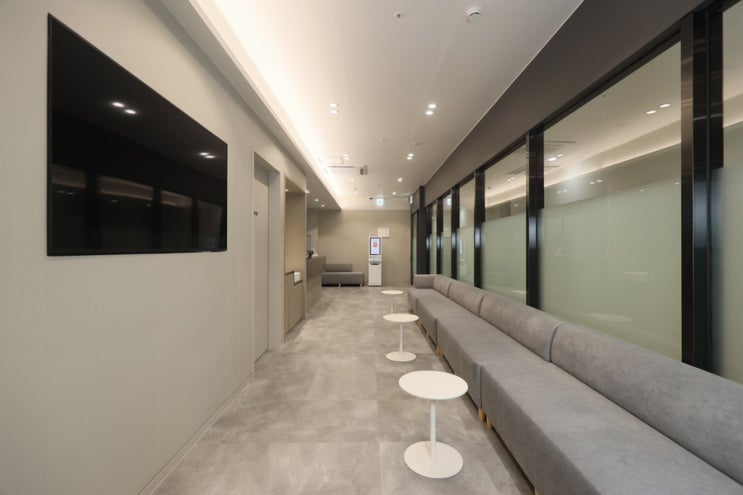
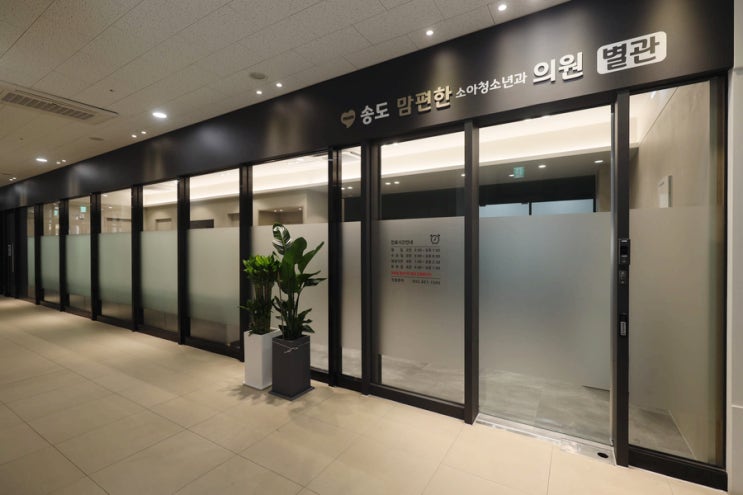
SONGDO ANSHIN annex Growth Clinic waiting room
-
We do not uniformly recommend tests to every short child. We perform them precisely only when there is a possibility of obtaining medically decisive information.
-
International guidelines and large-scale studies agree. Even when uniform tests are performed on asymptomatic short children, the rate of new diagnoses is only 1.3%.
-
Truly necessary tests are performed in the way most comfortable for the patient. A test that normally requires hospitalization, done as an outpatient; a test that normally requires venous blood draw, done with a single drop from a fingertip! “SONGDO ANSHIN” is a name, but it is also a promise.
The question we hear most often in the exam room
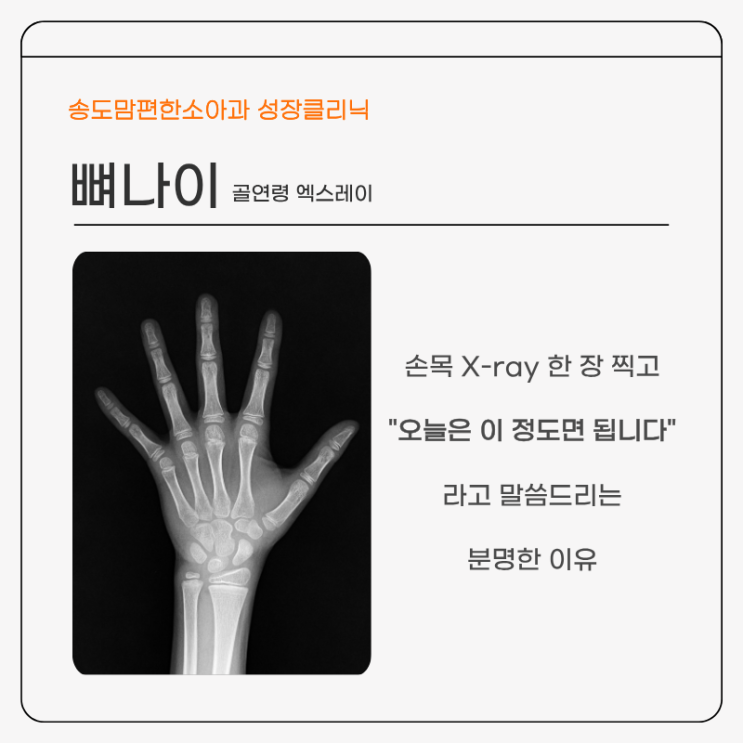
Doctor, why don’t you do a blood test for my child?
This is the question we hear most often in the Growth Clinic exam room.
Some have heard that other clinics recommend hormone tests as soon as a short child arrives; some have heard that a friend’s child got a full-package test; some feel they’d only be reassured if everything were done at once like a comprehensive checkup — all of these are natural questions.
There is a clear reason why we take a single wrist X-ray and say, “This is enough for today.” Today we would like to honestly explain that reason and the values our clinic pursues.
SONGDO ANSHIN Growth Clinic’s vision and mission
-
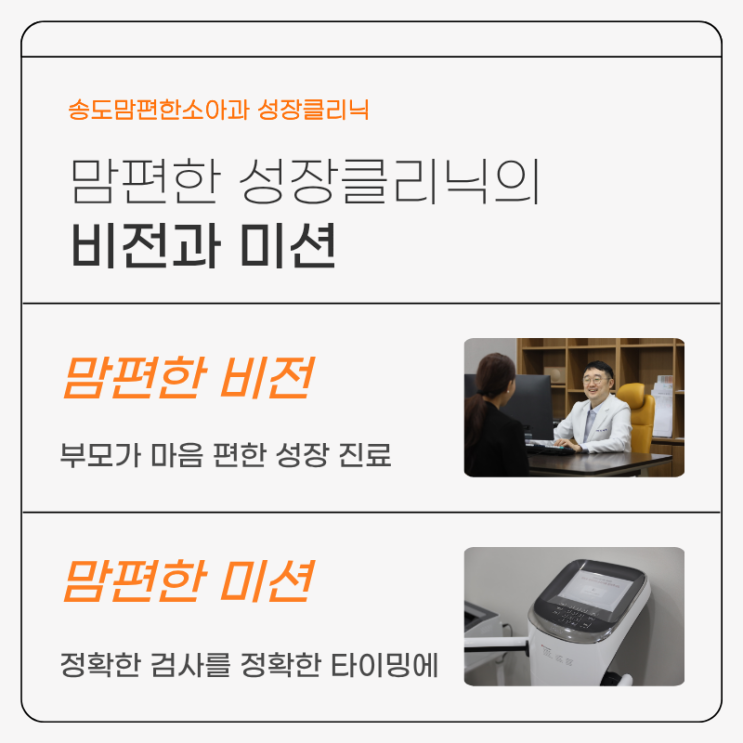
Vision: growth care that gives parents peace of mind
Our clinic’s name is “SONGDO ANSHIN.” The name itself is a promise.
Parents being at ease does not simply mean that the cost is not burdensome.
Being sure that “my child received only the tests that were truly necessary” is what true “peace of mind” means.
Trust that decisions were made on medically verified judgment — the value we pursue can be summarized in this one thing.
-
Mission: the right test at the right time
The principle of care we pursue is simple.
Principles of test decisions
① If that test has a chance of changing the treatment plan→ we perform it actively and precisely.
② If that test leads to the same conclusion regardless of the result→ we do not recommend it.
This principle doesn’t just mean “we don’t do tests.”
When necessary, we may perform on an outpatient basis tests that usually require hospitalization, and we may confirm results in just 15 minutes with a single fingertip drop, without venous blood draw.
When it must be done precisely, we do it precisely. This is our mission.
Consensus of the international medical community: selective testing is the medical standard

Our care philosophy is not merely personal opinion. The world’s major medical societies and large-scale clinical studies have all reached the same conclusion.
“Uniform, comprehensive testing of asymptomatic short children is not justified; targeted, selective testing is the standard.”
✅ Study 1: Sisley et al. (2013), Journal of the American Academy of Pediatrics
A retrospective analysis by Cincinnati Children’s Hospital in the United States of 235 asymptomatic children with normal exams among 1,373 referred for short stature from 2008–2011. It fully traced what diagnoses resulted after testing.
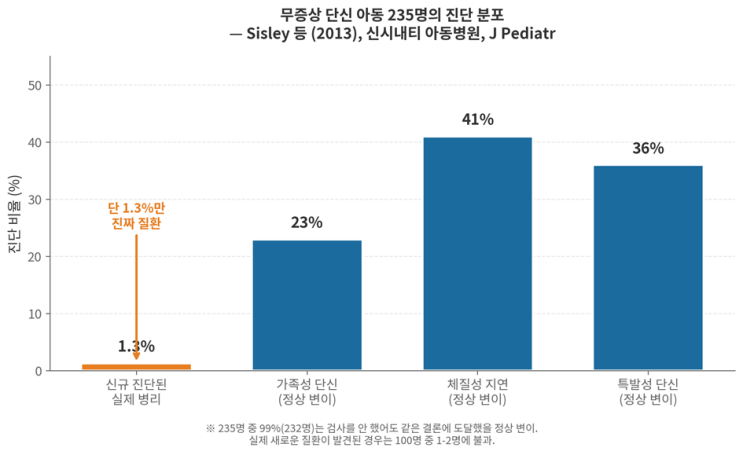
[Graph 1] Of 235 children, only 1.3% (3 children) had a newly diagnosed actual disease. The remaining 99% were other expressions of normal variation.
🎈Key point
Even when a full set of blood tests is uniformly performed on a child who is simply short with no other symptoms, only 1–2 out of 100 receive a new diagnosis. The other 98–99 are patients who would have reached the same conclusion without testing.
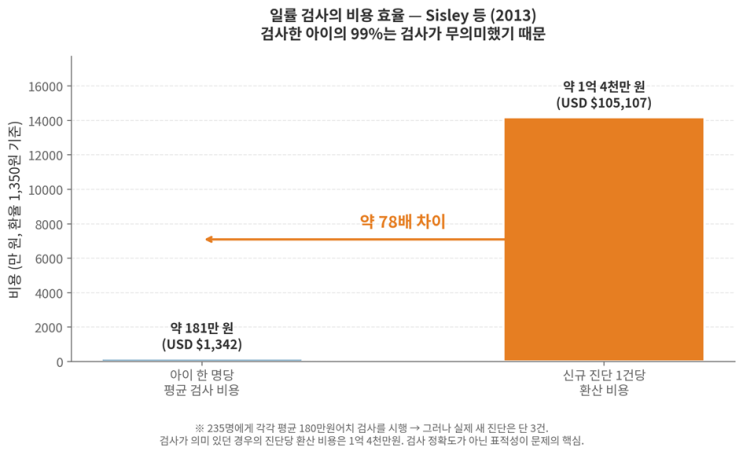
[Graph 2] In cases where testing was meaningful, the per-diagnosis converted cost was about 78 times the average testing burden. The core issue is not test accuracy but targeting.
To quote Sisley et al.’s conclusion directly, “Non-targeted comprehensive testing in healthy short children is not justified.” .
This study clearly shows that uniform testing is unreasonable not only medically but also in terms of cost and efficiency.
✅ Study 2: Grimberg et al. (2017), Pediatric Endocrine Society guidelines
These are the official care recommendations of the Pediatric Endocrine Society (PES) in the United States. In short-stature care, they emphasize the following.
-
Growth hormone stimulation testing is not uniformly recommended for all short children.
-
Growth hormone treatment is recommended when GH deficiency is clearly diagnosed.
-
GH treatment for children with idiopathic short stature is decided carefully and jointly by parents and physician.
-
Even when the height standard deviation score is ≤ -2.25, GH is not automatically prescribed.
✅ Study 3: ESPE international guidelines (2026), European Society for Paediatric Endocrinology
This is the most recent international consensus, in which the European Society for Paediatric Endocrinology and others participated. It presents a stepwise decision-making algorithm for testing short children.
-
When there are distinctive findings such as facial dysmorphism, skeletal abnormalities, or family history ➡️ testing value is very high, with a diagnostic rate of 60–68%.
-
Uniform testing without distinctive findings ➡️ low diagnostic rate; not recommended.
-
Targeted, selective testing is the modern standard, and as testing tools advance, guidelines move in an even more selective direction.
📢 What all three studies say together
The empirical study (Sisley, 2013) ➡️ the society guideline (Grimberg, 2017) ➡️ the most recent international consensus (ESPE, 2026) all point in the same direction. Targeted, selective testing is the medical standard, and uniform testing is justified neither medically nor in terms of cost-effectiveness.
So at SONGDO ANSHIN Growth Clinic

The above international consensus is exactly our care principle. Our clinic practices as follows.
SONGDO ANSHIN Growth Clinic test policy: at a glance
<Reference: the 4 tests SONGDO ANSHIN Growth Clinic does not recommend and the 3 tests we actively and selectively perform >
|
Tests we do not recommend (when there is no indication) |
Actively and selectively performed (SONGDO ANSHIN Growth Clinic) |
|
❌ Uniform hormone / nutrition panel |
⭕ Growth hormone stimulation test (outpatient, nearly the only one in Incheon, Gyeonggi) |
|
❌ Uniform ultrasound (uterus, ovary, breast, testes) |
⭕ HbA1c , Lipid POCT (results in 15 minutes) |
|
❌ Vitamin , mineral panel (Vit A, B, C, K, selenium) |
⭕ Allergy MAST, 161 antigens (when indicated) |
|
❌ Frequent follow-up tests (repeated every 3 months) |
|
Principle: tests with a chance of changing the treatment plan → actively performed / same conclusion regardless of the result → not recommended
1️⃣ Tests we do not recommend (when there is no indication)
|
Test |
Reason we do not recommend it |
|
Uniform hormone/nutrition panel (thyroid, IGF-1, etc.) |
In asymptomatic short children with normal exams, testing yields a new diagnosis rate of 1.3%. Most reach the same conclusion regardless of test results. |
|
Uniform ultrasound (uterus, ovary, breast, testes) |
Additional information is very limited without an indication (distinctive physical findings or test abnormalities). Puberty can first be assessed by physical exam and bone age. |
|
Vitamin, mineral panel (Vit A, B, C, K, selenium, etc.) |
For pediatric growth and bone health, only vitamin D has verified clinical significance. There is insufficient basis for uniformly testing the remaining items. |
|
Frequent follow-up tests (X-ray, blood every 3 months) |
The basic interval is 6 months. It is shortened only when there are abnormal findings or at the point of a treatment decision. Frequent repeat testing only increases burden. |
2️⃣ Tests we actively and selectively perform
|
Test |
Our clinic’s distinction |
|
Growth hormone stimulation test (diagnosing GH deficiency) |
Nearly the only clinic in the Incheon, Gyeonggi region able to perform it on an outpatient basis. A test that standardly requires hospitalization is split into two outpatient visits one week apart, maximizing patient and family convenience. The test itself is labor-intensive, but we operate it for our patients. |
|
HbA1c, Lipid POCT |
Performed with a single fingertip drop, without venous blood draw. Results confirmed within 15 minutes, allowing the diagnosis and treatment plan to be decided on the day of the first visit. This minimizes burden for children anxious about blood draws. |
|
Allergy MAST, 161 antigens |
Actively performed when there are suspicious symptoms. It can check sensitization to 161 antigens at once, offering excellent informational value for the cost and clearly setting the direction of allergy management. |
A guide for parents: if you’ve been recommended a test at another clinic

When you are recommended a test at another clinic, we suggest you ask the following three questions.
|
🎈 Three good questions to ask ① “What is the specific medical reason this test is essential at this point?” ② “How would the treatment plan change depending on this test’s result?” ③ “What medical problems could arise if I don’t have this test?” |
If the doctor answers these three questions specifically, then it is right to have the test.
If the answer is vague or along the lines of “let’s just take a look first,” it’s not too late to think it over once more.
If you’d like to clearly diagnose your child’s current condition with a precise 4-STEP system and no overtreatment, you may also wish to refer to our previous post.
👇 Learn about SONGDO ANSHIN’s 4-STEP precise growth testing system

Closing: Songdo Growth Clinic’s promise
Just like a dermatology clinic that doesn’t treat skin conditions, a structure in which a child’s overall health is not examined deeply and care is provided as if merely selling a product called a growth package cannot produce care that is truly suited to each child.
As a pediatric specialist who comprehensively examines a child’s constitution, nutrition, stage of pubertal development, and even family history, one must first be a pediatrician faithful to the basics; only then does the right answer for growth come properly into view.
💡 The promise of SONGDO ANSHIN Growth Clinic is simple.
1️⃣ We do not recommend tests for the sake of testing.
2️⃣ Tests that will give decisive information, we recommend firmly.
3️⃣ When a test is necessary, we perform it in the way most comfortable for the patient.
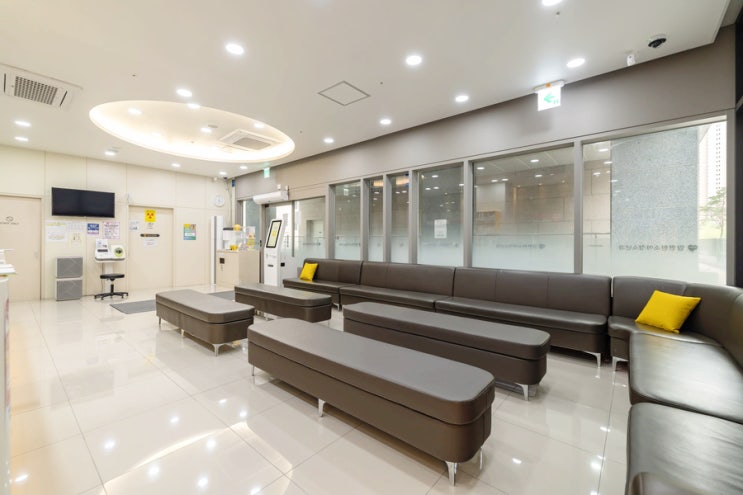
SONGDO ANSHIN main building waiting room
“SONGDO ANSHIN” is a name. But it is also a promise.
That when parents leave our clinic they feel “we did only what was necessary; I’m at ease” — that is the kind of care we pursue every day.
If you’d like to examine your child’s height, growth, and puberty together based on medical evidence and without excessive testing, or if you’d like to double-check whether a test recommended at another clinic is truly necessary, please visit anytime. We will take ample time to consult sincerely and decide together with you.
📖 Reference papers
1. Sisley S, Trujillo MV, Khoury J, Backeljauw P. Low incidence of pathology detection and high cost of screening in the evaluation of asymptomatic short children. J Pediatr. 2013;163(4):1045-1051.
2. Grimberg A, DiVall SA, Polychronakos C, et al. Guidelines for Growth Hormone and Insulin-Like Growth Factor-I Treatment in Children and Adolescents: Growth Hormone Deficiency, Idiopathic Short Stature, and Primary Insulin-Like Growth Factor-I Deficiency. Horm Res Paediatr. 2017;86(6):361-397.
3. Wit JM, et al. International guideline on genetic testing of children with short stature. Eur J Endocrinol. 2026;194(2):R17.
※ This post is an easy explanation of academic papers for the general public and does not replace medical advice.
