
Can You Use Lidomex Ointment on the Face? Telling Atopic Dermatitis from Seasonal Dry Skin, and Rules for Safe Use

With the cold autumn wind and dry air, many parents worry when their baby’s cheeks or the folds of the arms and legs turn red and rough, right?
As the seasons change, there are a few questions parents ask us most often about their baby’s skin.
“The skin is very red and bumpy like goosebumps. Is it atopic dermatitis, or is it just dryness?”
“I’d like to use the Lidomex ointment we have at home. Is it okay on my baby’s face or around the mouth?”
Today we’ll go over, in simple terms, how to tell atopic dermatitis from dry skin dermatitis, the safe use rules for steroid ointments (such as Lidomex) that confuse parents most, and the order for applying moisturizer!
|
💡 [Key Summary] Skin Conditions & Lidomex Ointment Rules
|
Red Patches and Skin Trouble: Atopic Dermatitis vs Seasonal Dry Skin
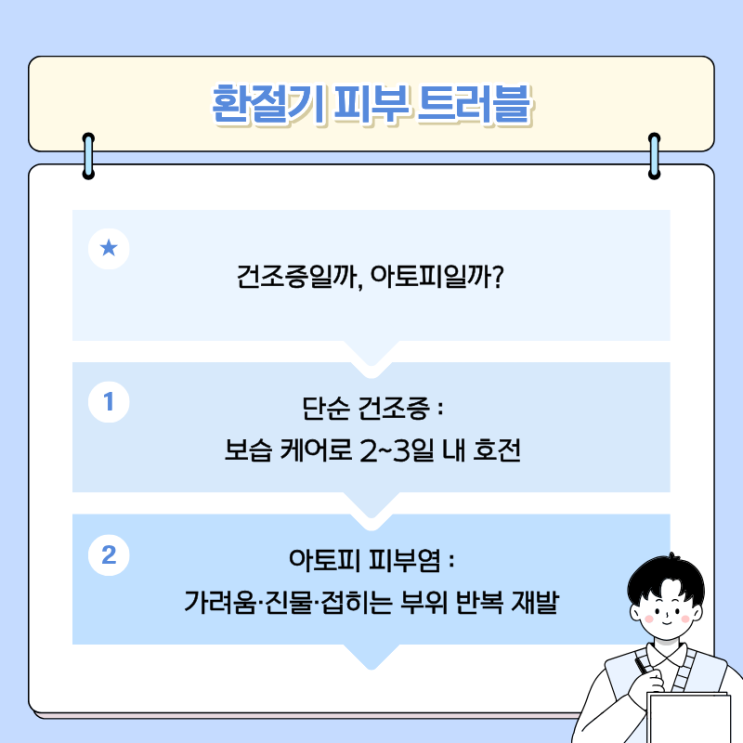
When the seasons change, the skin barrier weakens and moisture escapes quickly, so red patches and skin trouble appear easily.
|
Category |
Seasonal dry skin dermatitis |
Atopic dermatitis |
|
Main causes |
Sudden drop in humidity, cold wind, friction |
Genetic factors, immune imbalance, allergies |
|
Where it appears |
Areas directly exposed to wind, such as the cheeks and thighs |
Infants (cheeks, head), children and adults (folds of the arms and legs) |
|
Main symptoms |
Parched skin, slight redness, roughness |
Intense itching, oozing, scabs, repeated flare-ups |
|
Response to care |
Improves within 2–3 days with intensive moisturizing |
Moisturizing alone has limits, and medical treatment is needed |
🔗 [Recommended Allergy Guide]
“Does your baby’s skin stay irritated even with moisturizer, with trouble that keeps coming back for no clear reason?”
It may not be simple dry skin. Allergens such as certain foods, house dust mites or animal hair may be the cause. You can find details about the 161-allergen MAST allergy test offered at our clinic in the ▽ post below!
👇 Songdo Allergy Testing MAST 161 Types Expanded! Find the cause of allergies more thoroughly with no extra cost

4 Rules for Using Lidomex Ointment Safely

Lidomex (active ingredient: prednisolone valeroacetate), often prescribed at pediatric clinics, is a mild steroid ointment that works well for dermatitis in infants and young children. It is currently classified as a prescription-only medicine, so it must be used only after an accurate diagnosis and prescription by a pediatrician.
1️⃣ Use the right amount (FTU)
-
The amount of ointment squeezed out from an adult’s fingertip to the first joint (about 0.5g), or 1 FTU, covers an area the size of two adult palms. For a baby, the rule is to use much less than this and spread it very thinly.
2️⃣ Cautions for the face and around the eyes
-
The skin around the eyes is very thin and absorbs medicine easily, so take extra care that the ointment does not get into the eyes. For drool rash or dermatitis around the mouth, apply a thin layer right before sleep or right after feeding so your baby does not lick it off.
3️⃣ Order with moisturizer
-
Either the ointment or the moisturizer can go on first, but if you follow the order [apply the ointment thinly to the affected area first ➡️ wait 5–10 minutes for it to absorb ➡️ spread moisturizer widely], the medicine does not spread to other areas and absorbs cleanly.
4️⃣ Don’t stop on your own or use it long term
-
When symptoms improve, follow the doctor’s instructions and apply it less often before stopping. Parents should not keep applying leftover ointment on their own for a month or longer.
Bath & Moisturizing Tips to Protect the Skin Barrier in Changing Seasons

-
Keep baths under 10 minutes : Finish quickly with lukewarm water at 37–38°C.
-
Apply moisturizer within 3 minutes : After the bath, pat the skin dry with a towel, then apply plenty of moisturizing cream within 3 minutes, before the moisture evaporates.
-
Keep indoor humidity at 50–60% : Use a humidifier so your baby’s living space does not get dry.
If your child’s skin still oozes after several days of moisturizing, or the itching keeps them from sleeping, please don’t put it off. We recommend getting an accurate diagnosis and prescription from a pediatrician.
