Complete Guide to Alternating Fever Reducers: Timing & Intervals! Brufen, Champ, Coldwon, 38°C, 39°C High Fever Precautions (SONGDO ANSHIN)
Hello! This is SONGDO ANSHIN, located in District 8 of Songdo, Incheon.
Late at night, when your child’s forehead suddenly starts burning up, a parent’s heart can’t help but feel anxious. Especially when the fever won’t come down easily even after giving a fever reducer, and a high fever around 39°C persists, “Can I give another fever reducer now?” and “What should the time interval be for alternating fever reducers?” are probably questions you’ve typed into the search bar again and again in those early morning hours.
Generally, when the body temperature is 38°C or higher and the child is uncomfortable, you can begin giving a fever reducer. But when the fever doesn’t come down well with a single medication, you may consider alternating fever reducers for children.
Since this is a matter directly tied to our children’s safety, today, from the perspective of a Songdo pediatric clinic, we will clearly organize the most accurate and safe guide to alternating fever reducers and ingredient-specific precautions for you. Tuck it into your medicine bag and pull it out whenever you need it!
Fever reducers: just remember two main categories!
The children’s fever reducers sold in stores come in a variety of brands and product names, but when classified by ingredient, they are broadly divided into two categories. Alternating use means giving ‘fever reducers of different categories’ in turn.
Be sure to check the ‘active ingredient’ on the back of the fever reducer packaging you have at home.
|
Fever reducer category |
Representative ingredient name |
Characteristics and dosing interval |
|
Category A |
Acetaminophen |
Gentle on the stomach and can be taken from 4 months of age (Interval for re-dosing the same ingredient: 4–6 hours) |
|
Category B |
Ibuprofen / Dexibuprofen |
Has an anti-inflammatory effect that reduces inflammation (Interval for re-dosing the same ingredient: 4–6 hours) |

⚠️ Hold on! The precaution parents confuse the most
‘Dexibuprofen’ is a drug that extracts only the most effective part from the ‘ibuprofen’ ingredient. Therefore, since ibuprofen and dexibuprofen belong to the same category (Category B), alternating between these two is NOT alternating use! There is a risk of overdosing on the same ingredient, so please be careful.
An easy way to tell apart the categories of your home first-aid medicines
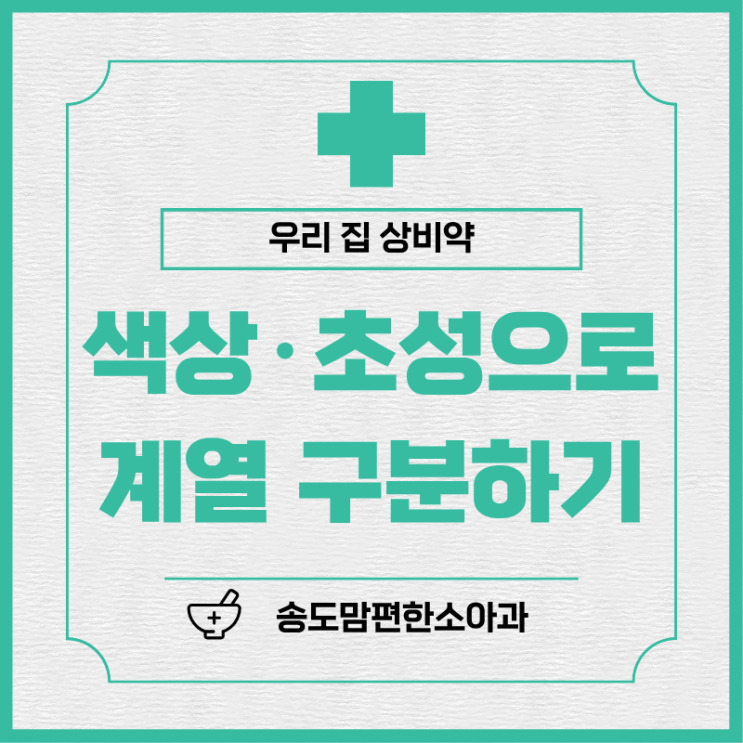
In order not to advertise or promote any specific pharmaceutical company’s products, we provide examples of the most common first-aid medicines parents typically keep at home, by package type. Open your medicine bag and compare with the ingredient labels!
-
Category A (Acetaminophen): Common tablet-form fever reducers/painkillers (such as Ty__nol), squeeze-pouch syrup in a red box (Champ_), syrup in a purple box (Cold_won), and so on
-
Category B (Ibuprofen): Traditional bottle-form fever syrups (such as Bru_fen), squeeze-pouch syrup in a blue box (Champ_), syrup in a sky-blue box (Cold_won), and so on
-
Category B (Dexibuprofen): Syrups containing dexibuprofen, a representative ingredient often prescribed at pediatric clinics (Max_bufen, Cu_fen, and so on)
※ The product name examples above are merely representative examples by ingredient to help parents understand, and do not guarantee or recommend the efficacy of any specific product.
Safe timing and timeline for alternating fever reducers
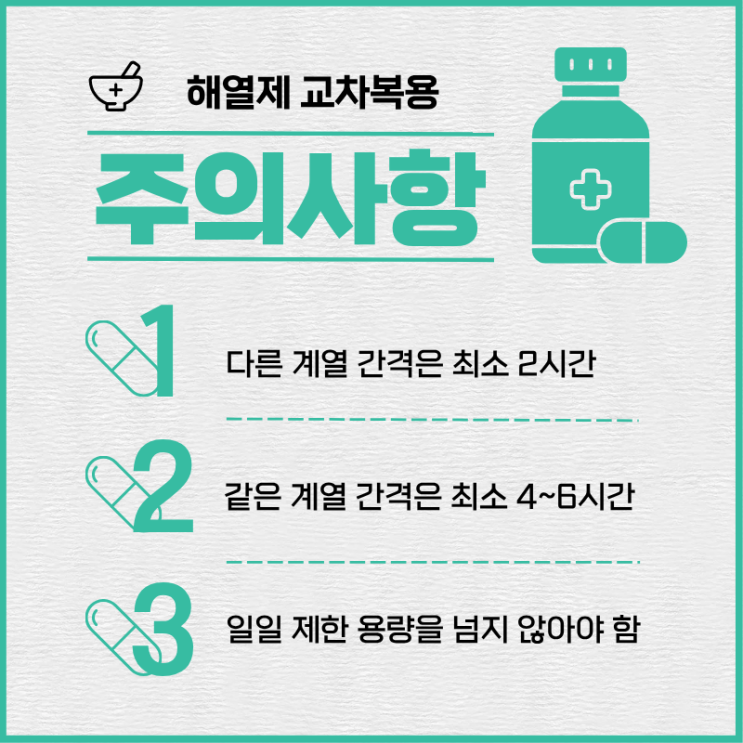
Alternating use is done “when the fever does not come down at all even after 2 hours have passed since giving one fever reducer, and the child becomes listless or fussy.” You proceed as follows.
-
Interval for alternating between different categories:at least 2 hours
-
Interval for dosing within the same category: at least 4–6 hours
-
Maximum number of doses per day: You must not exceed the daily limit dosage (dosage by body weight) listed in each ingredient’s instructions.
⏰ Example timeline for correct alternating use (Acetaminophen ➡️ Ibuprofen)
-
8:00 PM➡️ Take Category A (Acetaminophen)
-
(After 2 hours the fever has not come down and the child is uncomfortable)
-
10:00 PM➡️ Take Category B (Ibuprofen or Dexibuprofen)
-
(The fever rises again)
-
12:00 AM (midnight)➡️ Category A (Acetaminophen) may be taken
💡Good to read together
A situation that flusters parents just as much as alternating fever reducers is when the child vomits after taking a fever reducer..
When you’re unsure whether the child vomited before the medicine was absorbed into the body, and whether you should give it again, check the guide below.
We have organized the exact response method by time frame.
🚨Emergency steps when a febrile seizure occurs
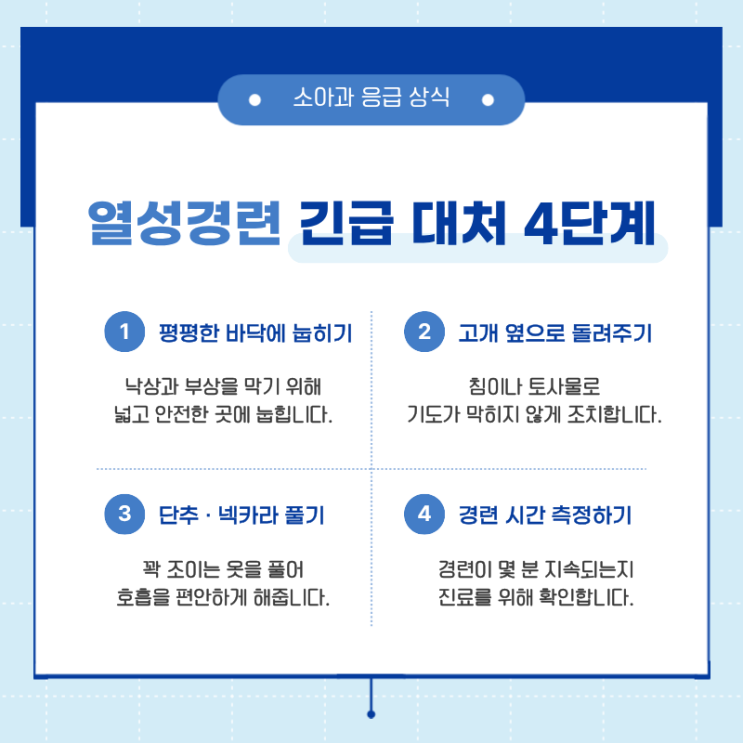
A febrile seizure, which appears in children between 9 months and 5 years of age when body temperature rises sharply, is frightening for caregivers, but in most cases it stops on its own within 5 minutes. What matters most at that moment is a calm response from the parents.
⭕ What you must do
1️⃣ Lay the child on a flat surface : Lay your child safely on a flat, open floor or bed.
2️⃣ Turn the head to one side : Be sure to turn the head to the side so the airway is not blocked. (This prevents saliva or vomit from backing up.)
3️⃣ Loosen clothing : Undo buttons or a tight collar so your child can breathe comfortably.
4️⃣ Time the seizure : Note exactly when the seizure started. (This is the single most important factor when your child is examined.)
❌ What you must never do
1️⃣ Do not put anything in the mouth : Do not put fingers, a spoon, a handkerchief or anything else into the mouth. (It can block the airway or injure the jaw joint.)
2️⃣ Do not restrain the body by force : Do not forcibly hold down or press on the arms and legs of a child who is shaking.
3️⃣ Do not give medicine or water while unconscious : Forcing an antipyretic or water on a child who is unconscious risks it going into the lungs.
When to call 119 or go to the emergency room immediately!
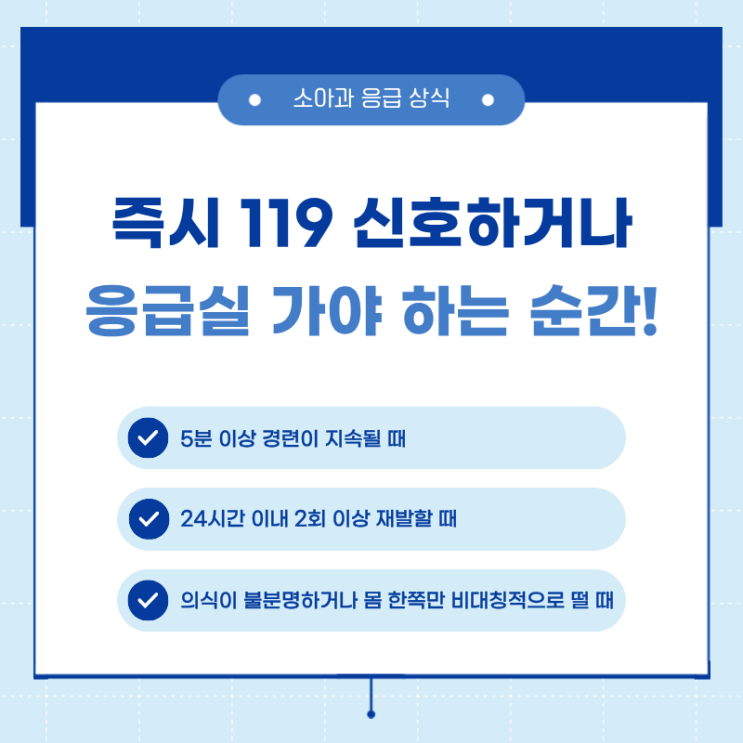
If any of the following happens, get help from emergency medical staff without delay.
-
The seizure lasts longer than 5 minutes
-
Seizures repeat 2 or more times within 24 hours
-
Your child does not regain consciousness after the seizure ends, or breathing is labored
-
Only one side of the body (a hand, foot or the face) stiffens, or the shaking is asymmetric
🔗 [Helpful FAQ on handling a high fever]
“My child has a 39°C fever but is asleep. Should I wake them to give medicine?”
“My child vomited right after taking an antipyretic. Should I give it again?”
The 5 questions parents ask most often in the small hours when a high fever strikes!
A pediatric specialist lays out clear guidance.
👉 [Baby’s high fever of 39 degrees: should you wake a sleeping child for an antipyretic? Everything about when to go to the ER]
Fever during a child’s growth is one of the natural processes for building up immunity. If parents stay just a little calm and respond by following the ingredients and timing, your child can get through it without any major problems.
Since it is most important to accurately identify the cause of your child’s fever during the day and receive appropriate treatment, if your child suffered from a fever all night, we recommend visiting a pediatric clinic the next morning for an examination. SONGDO ANSHIN will always be by your side for the healthy growth of our children.
※ This article was written for the purpose of providing reliable medical information, and does not advertise or recommend any specific pharmaceutical company’s products. For an accurate diagnosis based on your child’s individual symptoms and condition, please be sure to consult a pediatric specialist.