Can I Stop My Baby’s Runny-Nose or Cold Medicine Early? Medicines You Can Stop vs. Medicines You Must Finish (How to Store Antibiotics)
Hello, this is your trusted pediatrician for Songdo families, SONGDO ANSHIN.
After giving your child the cold medicine or antibiotics prescribed by the pediatrician for 2~3 days, there usually comes a point when the runny nose and cough clearly ease or the fever drops completely.
At this point, many parents pick up the medicine bottle and start to wonder.
“My child’s runny nose and cough have calmed down a lot. Do I really need to finish all the remaining medicine?”
“What if giving strong medicine for a long time causes resistance or side effects?”
Among the medicines a pediatrician prescribes, there is a clear line between medicines that parents can adjust or skip as symptoms improve, and medicines that must be taken for the full number of prescribed days even after symptoms have completely disappeared.
Today, SONGDO ANSHIN neatly summarizes that clear dividing line, along with the correct rules for storing antibiotics, which parents surprisingly often get wrong!
|
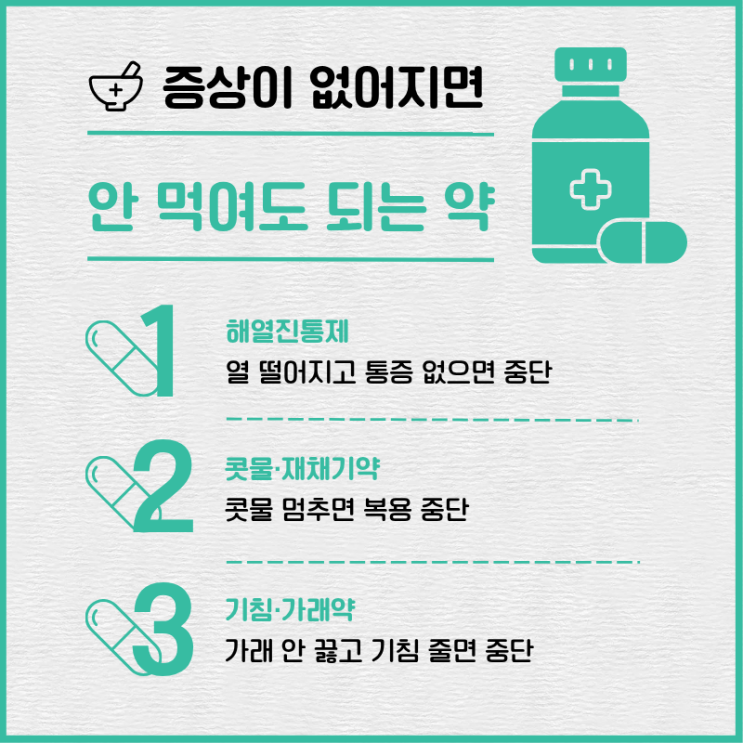
💡[Key Summary] Rules for Taking & Storing Pediatric Medicines 1️⃣ ❌ Must finish the full prescribed course (treatments for the cause) : Antibiotics and antivirals (such as Tamiflu) must be taken for the full number of prescribed days, even after symptoms improve, to completely eliminate the bacteria/virus. 2️⃣ ⭕ Can be adjusted when symptoms improve (symptom-relief medicines) : Fever reducers/pain relievers, runny-nose medicines (antihistamines), and cough/phlegm medicines (antitussive-expectorants) can be safely stopped once symptoms subside. 3️⃣ ⚠️ How to store antibiotics by ingredient : Augmentin-type antibiotics should be refrigerated (2~8℃), while Zithromax/Clacin-type antibiotics should be stored at room temperature as a rule, and any leftover mixed syrup must be discarded immediately. |
Stopping Your Baby’s Cold or Runny-Nose Medicine on Your Own: Medicines You Can Stop vs. Medicines You Can’t
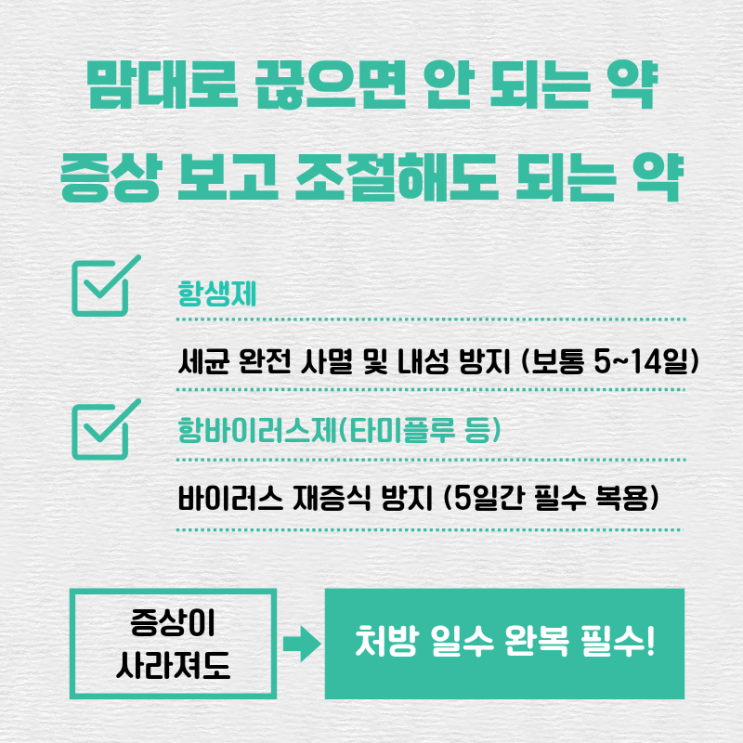
Not every pediatric medicine has to be strictly finished to the last dose. Medicines are distinguished as follows, depending on whether they are a ’cause-targeting treatment’ that treats the root cause of the illness, or a ‘symptom reliever (symptomatic treatment)’ that simply eases discomfort.
📊 [Pediatric Prescription Medicine Types and Dosing Guide]
|
Category |
Typical Medicines and Ingredients |
Correct Dosing Guide |
|
❌ Medicines you must never stop on your own |
• Antibiotics (otitis media, sinusitis, urinary tract infection, etc.) • Antivirals (Tamiflu for influenza, chickenpox medicine, etc.) |
Even if symptoms disappear completely, the full prescribed course (usually 5~14 days) must be completed to be considered fully cured and to prevent resistant bacteria and recurrence. |
|
⭕ Medicines that can be adjusted when symptoms improve |
• Fever reducers/pain relievers (Tylenol, Brufen, etc.) • Runny-nose and sneezing medicines (antihistamines) • Cough and phlegm medicines (antitussive-expectorants) |
If the fever has gone down and there is no pain, or the runny nose and cough have clearly eased, it is safe to stop these medicines based on a specialist’s judgment. |
How Long Babies Should Take Antibiotics and How to Store Each Type Correctly
One of the most important points parents tend to miss is that antibiotic syrups require completely different storage temperatures to stay stable, depending on the ingredient.
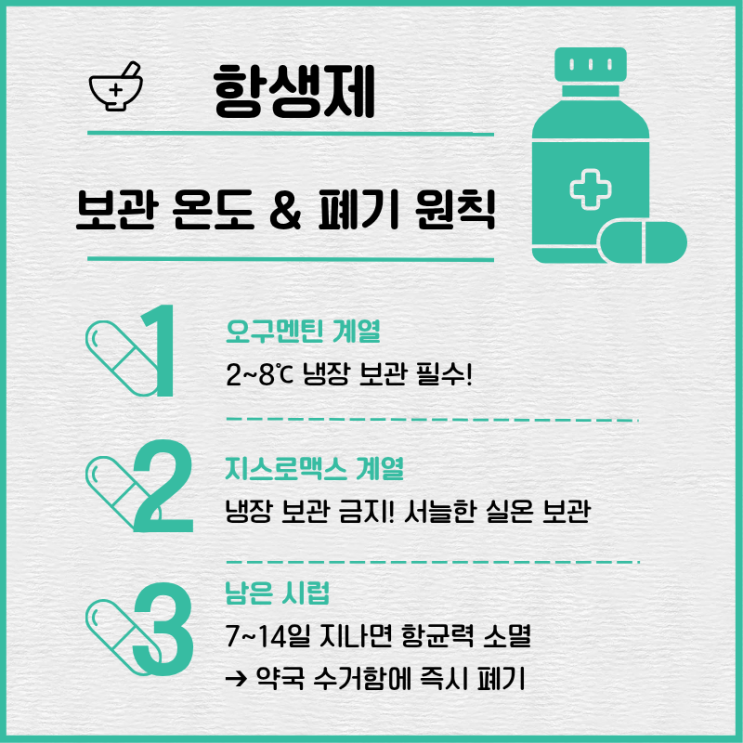
1️⃣ Antibiotics that must be refrigerated (e.g., Augmentin, Amocla, etc.)
-
Ingredient : Amoxicillin-clavulanic acid combination
-
Caution : If left at room temperature, the active ingredient breaks down rapidly and the syrup turns dark brown. It loses its effectiveness and can also irritate your child’s gut and cause diarrhea, so it must always be stored toward the back of the refrigerator at 2~8℃.
2️⃣ Antibiotics that must be stored at room temperature (e.g., Zithromax, Clacin, etc.)
-
Ingredient : Azithromycin, clarithromycin
-
Caution : When these ingredients are placed in a cold refrigerator, the medicine can clump or form crystals, which makes it taste much more bitter and lowers how well it is absorbed. Please store them in a cool place at room temperature, away from direct sunlight.
Never Reuse Your Baby’s Leftover Antibiotic Syrup (Discard It Immediately)
Antibiotic syrup made by mixing powdered medicine with purified water, no matter how well it is stored, loses its antibacterial effect after at most 7~14 days.
“It might come in handy the next time they get sick.” Giving leftover medicine kept in the refrigerator with this thought is ineffective, and it is also the most dangerous thing you can do, as it truly breeds resistant bacteria in your child’s body.
Leftover medicine past its prescribed period should be safely disposed of in the waste-medicine collection bin at a nearby pharmacy or public health center.
A Word of Advice from SONGDO ANSHIN

Rather than stopping medicine too early out of a vague fear of antibiotics or medicines, the wisest way to protect your child from resistant bacteria is to follow the correct dose and storage method for the full prescribed period and completely root out the bacteria.
If your child shows side effects such as diarrhea or a rash while taking the medicine, or has great difficulty taking it, please do not stop on your own; visit the pediatric clinic where your child was seen so the medicine can be safely adjusted.
For our children’s healthy and safe medicine use, SONGDO ANSHIN will always watch over them with care and attention to detail.
💡 [Recommended Related Columns on Taking Medicine Correctly]
“The Real Reason You Shouldn’t Stop Antibiotics Early Just Because the Fever Is Gone!”
If you are curious about the medical mechanism of why stopping antibiotics early when symptoms improve lets only the toughest bacteria survive and become resistant, please see the post below!
👉 Can I stop antibiotics once my baby’s fever is gone? Read why stopping on your own leads to resistance