
RSV Infection Symptoms in Babies: Bronchiolitis, Wheezing, Chest Retractions, and What to Do
Hello, this is SONGDO ANSHIN.
When the cold, dry winds of autumn and winter arrive, so does the illness that parents of babies under 24 months fear most: infant bronchiolitis and RSV (respiratory syncytial virus), its most common cause.
Recently, we have seen a sharp rise in children visiting our Songdo pediatric clinic with RSV symptoms: babies who were being treated for what seemed like a simple cold, but whose wheezing gradually grew harsher, or who began struggling to feed and breathing rapidly.
RSV infection is the most common cause of lower respiratory tract infections in infants and young children. It is highly contagious, and without timely treatment it can lead to bronchiolar obstruction or breathing difficulty, and in severe cases to hospitalization for bronchiolitis or progression to pneumonia. That is why early care is so important.
Today, SONGDO ANSHIN walks you through the main symptoms of RSV infection, the finer points of telling infant bronchiolitis apart, emergency warning signs such as chest retractions, and how to care for your baby at home, all in one easy guide!
|
💡[Key Summary] RSV & Infant Bronchiolitis at a Glance
|
The Clear Difference Between Bronchiolitis and RSV
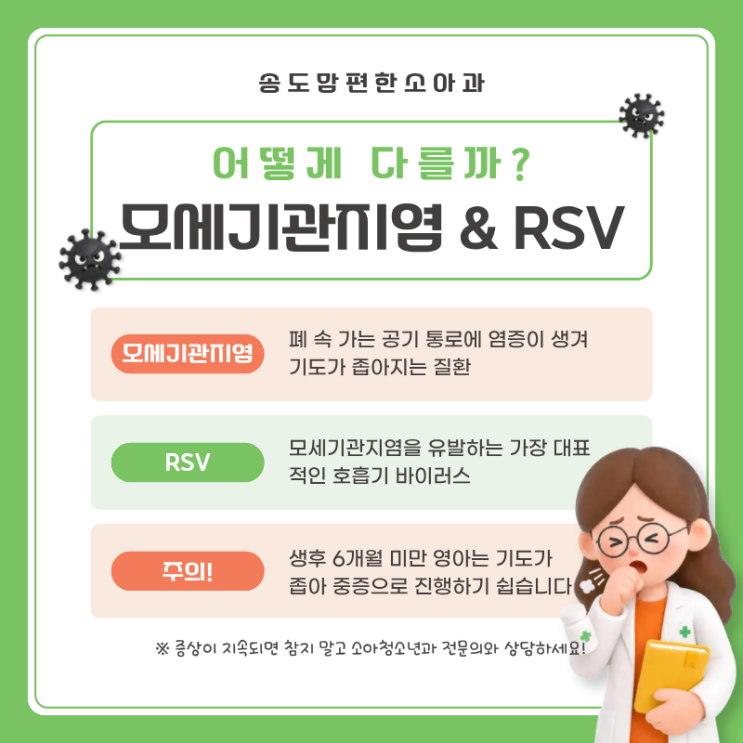
Many parents mistakenly think infant bronchiolitis and RSV are the same thing.
-
Bronchiolitis: An illness (diagnosis) in which the bronchioles, the very thin air passages leading to the lungs, become inflamed. The lining swells and fills with mucus, narrowing the airway.
-
RSV (respiratory syncytial virus): The most common virus that causes bronchiolitis. (※ Rhinovirus, adenovirus, and other viruses can also be causes.)
RSV infection spreads very easily through group settings and close contact within the family, and it is so common that most children are infected at least once before age 2. Infants under 6 months in particular have naturally narrow airways, so they are at high risk of developing bronchiolitis and serious respiratory illness.
Stage-by-Stage Checklist for RSV Infection and Bronchiolitis
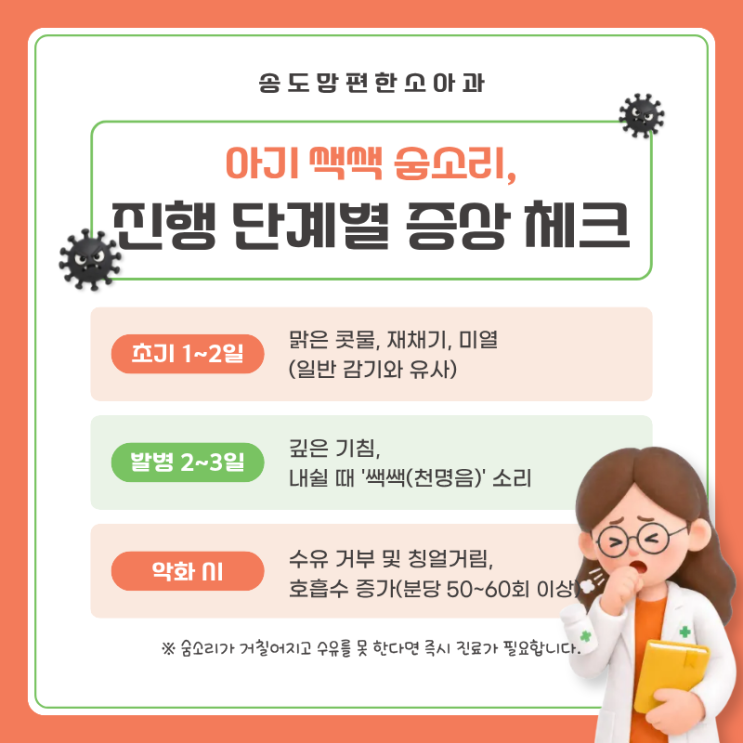
1️⃣ Days 1~2 (upper respiratory cold stage)
Like a common cold, it begins with a clear runny nose, sneezing, and a mild low-grade fever.
2️⃣ Days 2~3 (RSV spreading to the lower airways)
As the inflammation moves down into the narrow bronchioles, the cough deepens and you may begin to hear wheezing (a whistling sound) when your baby breathes out.
3️⃣ When it worsens (airway obstruction and breathing difficulty)
As swollen airway lining and sticky mucus block the airways, the breathing rate speeds up to 50~60 or more breaths per minute (tachypnea), and babies become too breathless to feed: they start sucking on the breast or bottle, then cry and give up.
Home Care & Emergency Rules for Chest Retractions in Babies
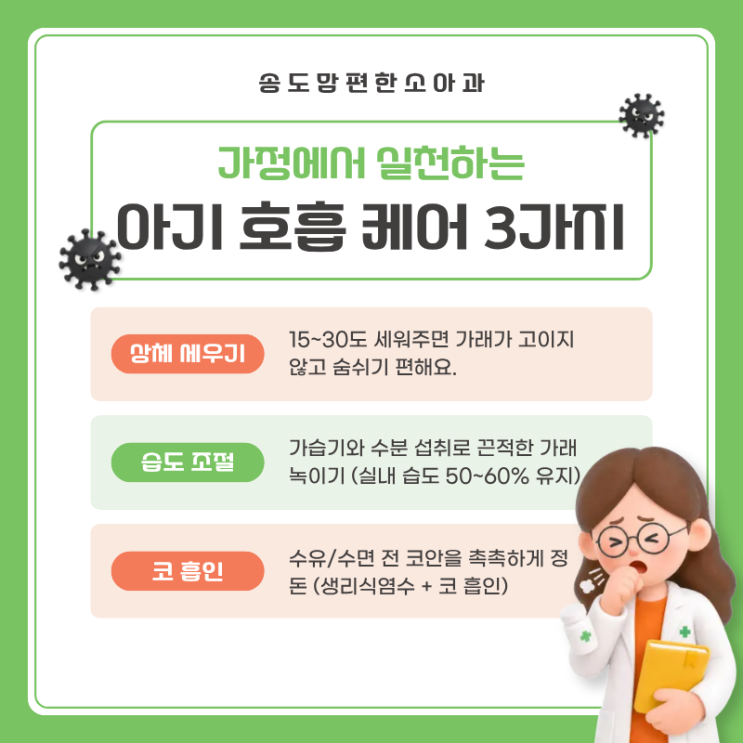
1️⃣ Hold your baby with the upper body slightly raised
Lying flat lets sticky mucus pool at the back of the throat, blocking the airway and making breathing harder. Holding your baby with the upper body raised about 15~30 degrees, or placing a thin cushion behind the back, can help them breathe much more comfortably.
2️⃣ Keep indoor humidity at 50~60% and offer plenty of fluids
Dry air makes airway secretions (phlegm) harden and stick. Run a humidifier to keep the air moist, and offer lukewarm water, formula, or breast milk in small amounts, often.
3️⃣ Gently clear nasal mucus and phlegm
Babies cannot clear phlegm on their own, so before feeding or sleep, put 1~2 drops of saline into the nose to moisten it and then gently remove mucus with a home nasal aspirator. This greatly helps with feeding and sleep.
⚠️ Seek pediatric or emergency care right away if:
-
The area above the collarbone or below the ribs sinks in deeply with each breath in and out (chest retractions in babies)
-
Breathing is extremely fast and the nostrils flare with every breath
-
The lips or fingertips turn bluish (cyanosis in babies)
-
Your baby cannot feed at all, has not urinated for 8 hours or more, and seems limp (dehydration; hospitalization for bronchiolitis may need to be considered)
💡Related Respiratory Illness Guide
“Want to tell it apart from croup, which causes a barking, seal-like cough?”
Check the difference between croup and bronchiolitis in the post below!
👉 “Barking Cough vs. Wheezing”: See the Difference Between Croup and Bronchiolitis in Children
Respiratory Care for Infants and Young Children at SONGDO ANSHIN
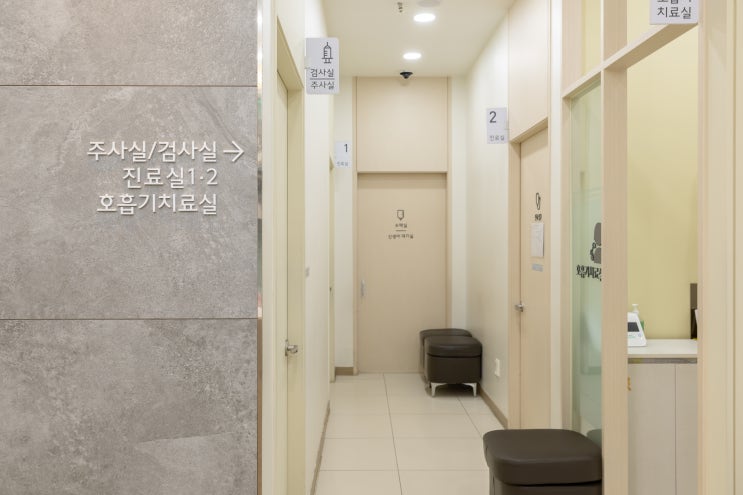
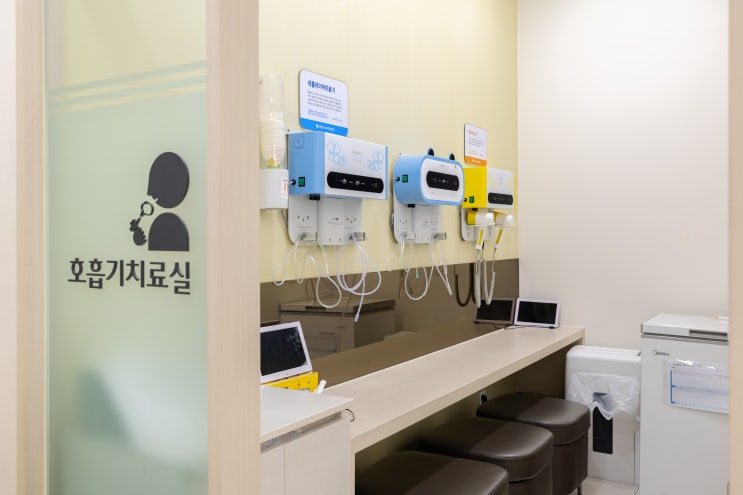
At SONGDO ANSHIN, our board-certified pediatricians listen carefully with the stethoscope and closely monitor RSV infection and bronchiolitis progress, and we support a quick recovery with in-clinic nebulizer (respiratory) treatment and customized IV fluid therapy for children with high fever or dehydration.
If your baby’s breathing sounds different from usual or they are struggling to feed, please don’t put it off. We recommend having your baby properly examined by a nearby board-certified pediatrician.
-
📞 Phone: 032-851-1365
-
📍 Location: 2nd floor, Commercial Building 203, Landmark City Central The Sharp, 68 Landmark-ro, Yeonsu-gu, Incheon (Main Building clinic)
