
Viral Meningitis: Symptoms, Causes, Contagiousness, Hospitalization and Recovery Explained (High Fever, Headache and Vomiting in Children)

Enterovirus, which circulates from summer through the early-autumn change of season in September, can cause gastroenteritis or hand, foot and mouth disease, but when it reaches children with weaker immunity it can progress to “viral meningitis (aseptic meningitis).”
This is especially true now, when group life has resumed after the new term began and the daily temperature swings of the September change of season are widening, which easily lowers children’s immunity. Besides enterovirus, which accounts for more than 90% of viral meningitis cases, herpes and mumps viruses also commonly cause the illness in newborns and young children.
Early meningitis is often mistaken for a simple seasonal cold or a stomach bug and brushed aside. Let us clearly walk you through the early symptoms, contagiousness, hospitalization and treatment of viral meningitis, including the signs that should bring you and your child straight to the clinic.
|
💡 [Today’s key points in 3 lines]
|
Checklist: the 3 main early symptoms of viral meningitis
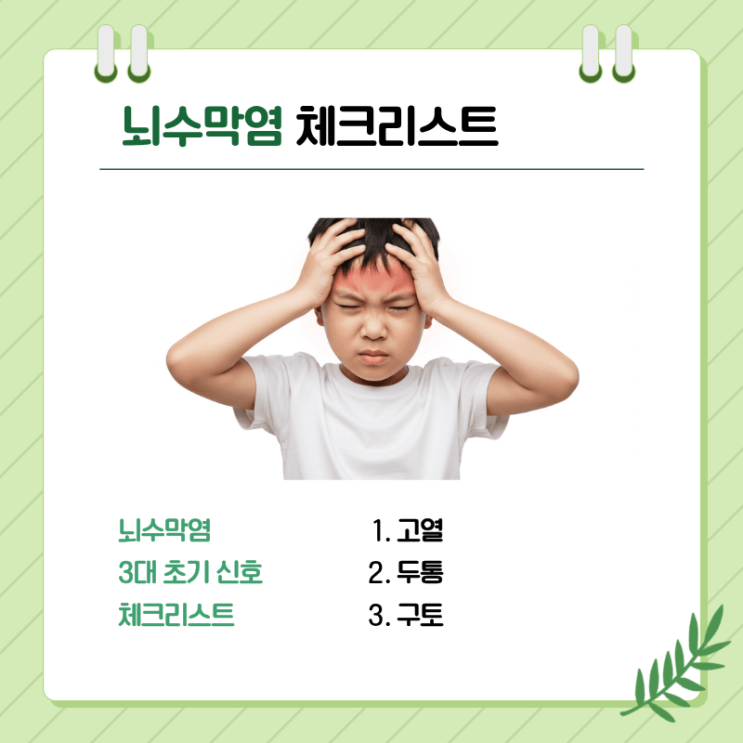
If two or more of the following appear together, do not dismiss it as a simple cold or seasonal gastroenteritis. Have your child examined by a pediatric specialist.
1️⃣ Fever that antipyretics barely bring down (high fever)
A mild to high fever of 38.5–39 degrees or above lasts for 2–3 days or longer.
2️⃣ A splitting headache (in young children and newborns, severe fussiness)
-
Children who can speak: They hold their head and say, “My whole head hurts so much.”
-
Babies and newborns who cannot speak: They cry inconsolably and fret for no clear reason, the anterior fontanelle (the soft spot on the head) bulges, or they bang their head against the wall.
3️⃣ Projectile vomiting (digestive symptoms)
They repeatedly bring up stomach acid or water in a forceful rush (projectile vomiting), even though they have hardly eaten.
A simple way to check for “neck stiffness (nuchal rigidity)” at home
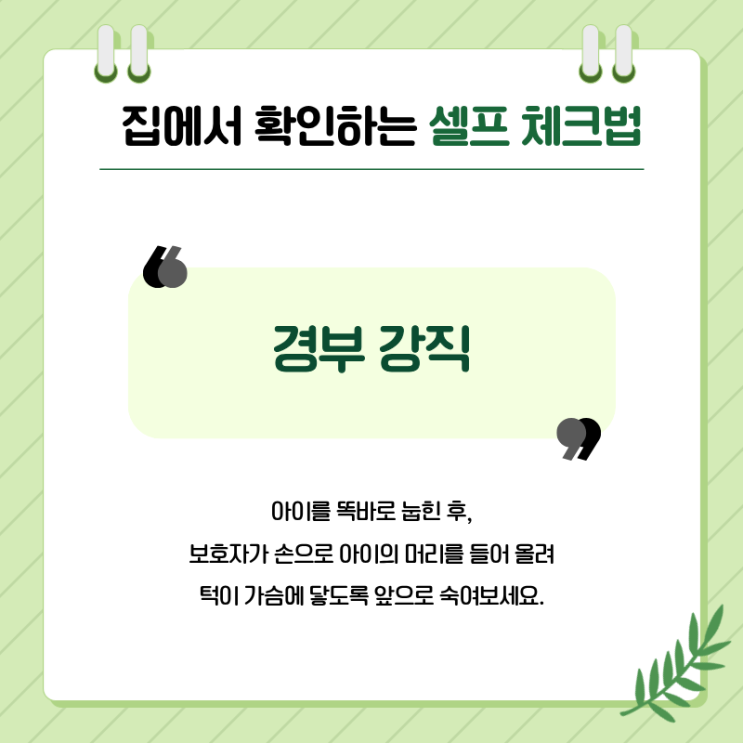
As meningitis progresses, the membranes covering the brain and spinal cord become inflamed and the muscles at the back of the neck stiffen. This neurological sign is known as “neck stiffness”.
-
How to check: Lay your child flat on the back, then gently lift the head with your hands and bend it forward so that the chin touches the chest.
-
Warning signs: If the back of the neck is so stiff that the chin will not reach the chest, or your child bends the waist or legs and cries out in severe pain when the neck is flexed, testing and treatment for meningitis are urgently needed.
Viral meningitis: treatment and hospitalization, aftereffects and recurrence
Q. What is the treatment, and how long is the hospital stay?
Unlike bacterial meningitis, treatment for viral meningitis centers on supportive care with antipyretics and fluid replacement rather than antibiotics. (If herpes virus is the cause, however, antiviral medication is given.) For children who cannot keep medication down because of severe vomiting, or who are at risk of dehydration, IV fluid therapy and about 2–3 days of inpatient treatment are recommended.
Q. What about the recovery period, aftereffects and the chance of recurrence?
Usually, after a recovery period of about 7–10 days, children improve naturally without aftereffects. That said, infection with a different viral strain while immunity is low can lead to a recurrence, so plenty of rest and immune care during recovery are essential.
🔗 [A seasonal respiratory guide worth reading together]
Beyond high fever and headache,
are you also worried about frequent coughing and a runny nose at the change of season?
The difference between a simple cold and allergic rhinitis,
and the private IV therapy room & nebulizer treatment setting at SONGDO ANSHIN
▽ see the post below!
👇 Incheon Songdo pediatrics: seasonal cough and runny nose, a cold or rhinitis?
(evening clinic hours, IV therapy room, nebulizer)
📝 [Frequently asked questions Q&A]
Q. How contagious is viral meningitis, and how does it spread?
A. The causative viruses (enterovirus and others) are contagious through stool, saliva and respiratory secretions. Children should therefore stay home from daycare and school while symptoms last, and personal hygiene such as handwashing is the best prevention.
Q. How can bacterial meningitis be told apart from the viral form?
A. Bacterial meningitis progresses very quickly and is far more likely to leave aftereffects such as brain damage, so it calls for urgent antibiotic treatment, while the viral form follows a relatively mild course. Early symptoms alone make the two hard to tell apart, however, so a cerebrospinal fluid test and an accurate diagnosis by a pediatric specialist are important.

High fever and headache in children at the change of season are easily written off as a simple cold, and the golden hour can slip away. If your child is unusually lethargic or the neck seems stiff, please come in without delay.
We at SONGDO ANSHIN promise to examine every child honestly and attentively, missing not even the smallest symptom and never over-treating.
