
Sogroya Once-Weekly Growth Hormone: Will Children Grow as Well as With Daily Injections? (From Efficacy to Safety)

Hello! Walking alongside children’s healthy growth, this is SONGDO ANSHIN.
For parents considering growth hormone treatment to help their child grow taller, the biggest challenge is precisely ‘a nightly injection’. The daily battle whenever a child is in pain or refuses, plus the worry of accidentally forgetting and skipping a dose. Many parents have agonized more over the practical difficulty of a ‘daily injection’ than over the treatment’s effectiveness.
Today, SONGDO ANSHIN will clearly explain whether the recently spotlighted once-weekly growth hormone injection (product name: Sogroya, ingredient name: somapacitan) can truly deliver an effect on par with daily injections.
The effect is on par with daily injections, and the number of injections drops from 365 to 52 per year!
A review of 3 pediatric clinical studies
|
Starting with this article’s conclusion Once-weekly growth hormone (somapacitan, product name Sogroya) has been confirmed across multiple clinical studies to have a height-growth effect on par with daily growth hormone. Its greatest advantage is that, with similar efficacy, it sharply reduces the number of injections from about 365 to about 52 per year, easing the burden on both child and parents. Even in long-term data extending up to 7 years, no new safety concerns emerged. |
Why is once-weekly growth hormone drawing attention?
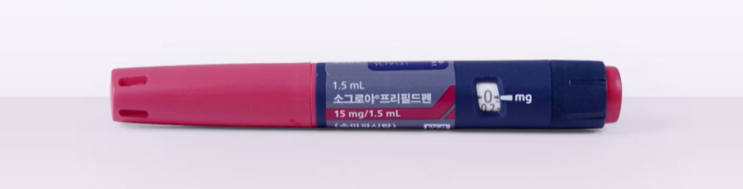
Source: Novo Nordisk Pharma Co., Ltd. website
Growth hormone treatment helps children who do not grow tall enough. Until now, it required an injection almost every single day. The effect is clear, but giving a daily injection is a considerable burden for both child and parents. If there are days when a dose is forgotten or skipped, it can also affect the treatment’s results.
And so what emerged is a growth hormone given only once a week. Somapacitan (Sogroya) is a drug designed to sustain its effect over a long period by briefly binding to and detaching from a blood protein (albumin), so that even a single weekly injection produces a similar effect. So does it really work as well as a daily injection? Let’s look at the actual clinical study results.
Which studies did we look at?
For this review, we selected 3 clinical studies in children. All of them directly compared ‘once-weekly somapacitan’ with ‘daily growth hormone.’
• REAL 3 — A long-term study tracking children with growth hormone deficiency for up to 7 years (the longest data)
• REAL 6 — A study of 110 Chinese children (Asian data)
• REAL 8 — The latest study in children with short stature (ISS), Noonan syndrome, and small for gestational age (SGA)
All three studies compared the rate of height growth (growth velocity, cm/year) over 1 year (52 weeks) as the key metric. For reference, REAL 8 used a higher dose (0.24mg/kg), and in Korea short stature, Noonan, and SGA are not covered by national health insurance (only growth hormone deficiency is reimbursed).
Result 1. Efficacy: On par with daily injections.

The biggest question is ‘how well do children grow?’ The graph below compares the 1-year growth velocity of once-weekly versus daily injections in each study.
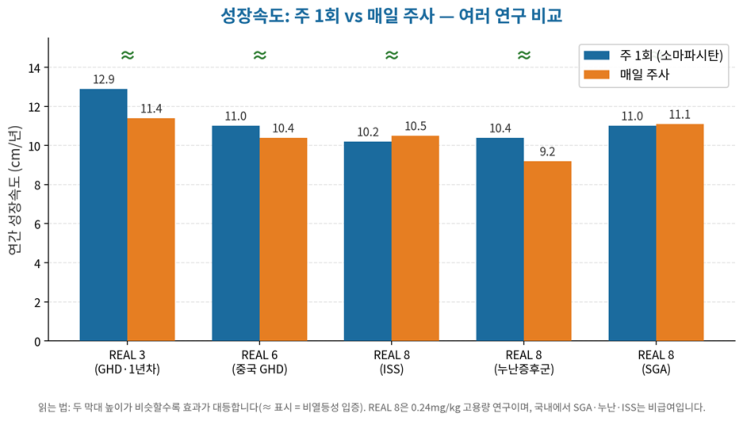
Figure 1. Annual growth velocity by study (cm/year). The ≈ symbol means the two treatments are statistically on par (non-inferiority demonstrated).
|
Key points In the growth hormone deficiency studies (REAL 3, REAL 6), the growth velocity of the once-weekly formulation was equal to or even slightly higher than daily injections (REAL 3 year 1: 12.9 vs 11.4cm/year; REAL 6: 11.0 vs 10.4cm/year). In the short stature, Noonan, and SGA study (REAL 8) as well, it was confirmed to be ‘no worse than (non-inferior to)’ daily injections. |
Result 2. Convenience: The number of injections drops dramatically.
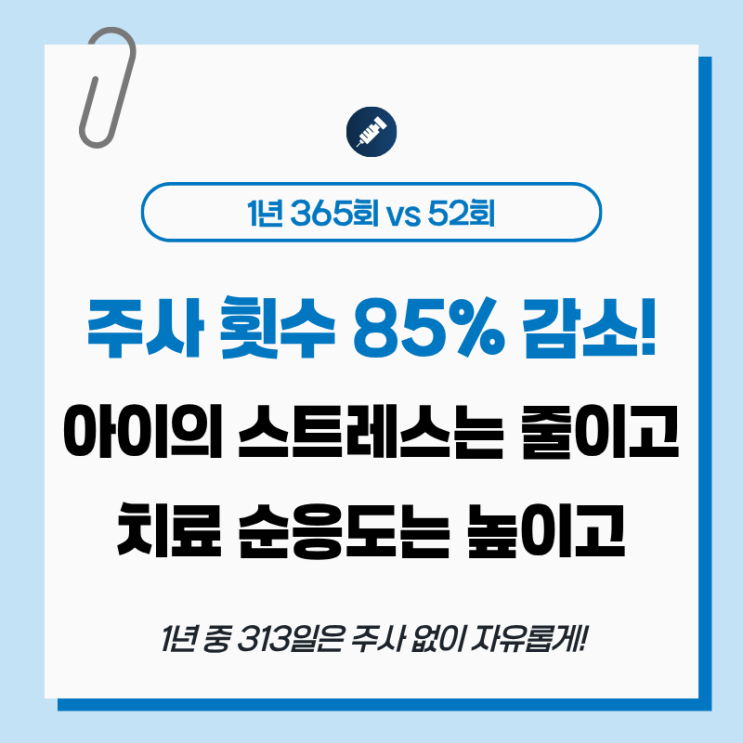
If the efficacy is similar, the next thing that matters is ‘how comfortably can the treatment be continued?’ This is precisely where the once-weekly formulation’s greatest advantage lies.
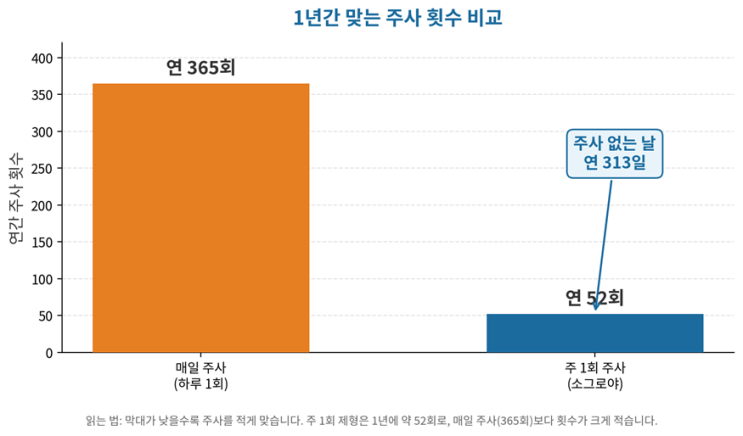
Figure 2. Comparison of the number of injections over 1 year. Daily injections total about 365, while the once-weekly formulation is about 52.
|
Key points Daily injections amount to about 365 per year, while once-weekly is about 52. That means about 313 days a year can be spent without an injection. Actual studies also reported that the treatment burden felt by children and parents was lower than with daily injections. Fewer injections also make it easier to keep up treatment consistently without missing doses. |
A summary at a glance
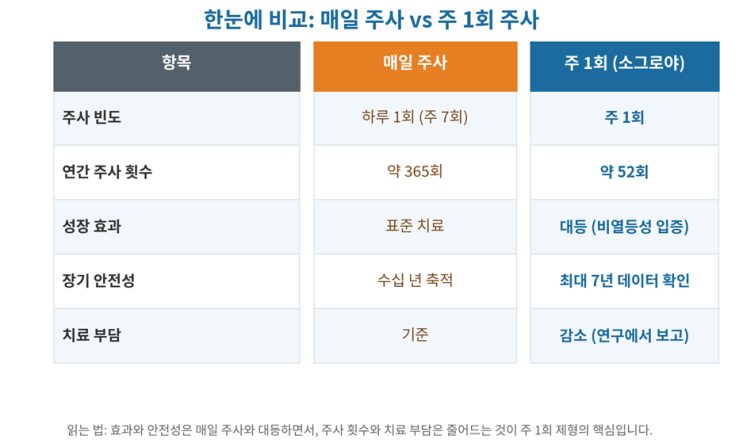
Figure 3. Summary comparison of daily versus once-weekly injections.
What about the side effects of once-weekly growth hormone injections?
All three studies showed safety comparable to existing daily growth hormone, and no new safety concerns appeared.
In the Chinese study (REAL 6), injection-site reactions were low at 2.7%, and no injection-site pain was reported. The common symptoms reported in REAL 8 included respiratory infection, common cold, otitis media, and diarrhea, mostly mild symptoms often seen in children.
However, across growth hormone treatment in general, fluid retention (swelling) and joint discomfort can rarely occur, so during treatment it is important to monitor progress through regular consultations and tests.
How should we interpret these results?

Director Dr. An Sehwan, Pediatrician, SONGDO ANSHIN
The once-weekly formulation has become ‘a realistic option that can replace daily injections.’ It can be especially helpful for those who find daily injections burdensome or who frequently skip them. The fact that long-term data has accumulated for up to 7 years is also a reassuring basis. The choice of drug is determined by taking the child’s diagnosis, growth status, and life circumstances together into account.
Songdo Growth Clinic closing remarks

SONGDO ANSHIN Annex
|
In summary, once-weekly growth hormone matches daily injections in efficacy while greatly reducing the number of injections and the treatment burden. ‘Keeping the effect while making it more comfortable’ is the key. That said, we recommend deciding which treatment suits your child only after tests, a growth evaluation, and a thorough consultation with a specialist. |
So far, we have looked at the efficacy and safety of the once-weekly growth hormone Sogroya. With safety verified through 7 years of long-term data, efficacy on par with daily injections, and, above all, the way it improves the quality of life for both child and parents, it can be a very realistic and good option.
However, the treatment best suited to your child does not have a fixed right answer; it must be decided by comprehensively considering the child’s diagnosis, current growth rate, living environment, and more. At SONGDO ANSHIN, through a specialist’s careful diagnosis and growth evaluation, we work together to craft a personalized growth roadmap just for your child.
Don’t hesitate to consult a specialist about growth treatment. SONGDO ANSHIN will be by your side so that your child’s tomorrow can grow taller than today.
💡 Recommended reading
Do you have questions about the prescription process for once-weekly growth hormone Sogroya or about your visit?
In a previous post, we laid out the domestic launch information and key prescription details in detail.
▽ ▽ ▽ ▽

References
1. Sävendahl L, et al. Seven-year Safety and Efficacy of Somapacitan in Children With GH Deficiency: Final Results From REAL 3. J Endocr Soc. 2026;10(1):bvaf189.
2. Somapacitan Is Effective and Well Tolerated in Chinese Children with Growth Hormone Deficiency: A Randomized Controlled Phase 3 Study (REAL 6). Horm Res Paediatr. 2025.
3. Once-weekly Somapacitan in Children With Growth Disorders (SGA, Noonan Syndrome, ISS): Results From the REAL 8 Phase 3 Trial. Novo Nordisk; 2025–2026.
※ This article is an easy-to-understand explanation of academic papers for the general public and is not a substitute for medical advice. Whether and how to treat each individual must be decided through consultation with a specialist.
