Baby Has No Runny Nose or Cough but a 40°C Fever? Summer Influenza A Symptoms and the Tamiflu Golden Time (Songdo Pediatrics)
Last Friday marked “Ipchu,” the seasonal start of autumn on the traditional calendar, but are any of you actually feeling it yet?
This summer has truly been one hard day after another, with worries about heat-related illness and a heat that gave no relief day or night, leaving us wondering how we ever got through it. Still, since the start of this week, the morning and evening breezes have eased just a little (really, just a little), and it finally feels as if we can breathe again.
During the daytime, though, the heat is still fierce, so many families are escaping indoors with their children or heading overseas for a late summer holiday.
Recently, in the SONGDO ANSHIN consulting room, “My child has no runny nose or cough at all, yet suddenly has a fever of 39–40°C!” is what more and more caregivers have been saying as they come in, alarmed.
Many arrive thinking it might be simple air-conditioning sickness or an ordinary summer cold, only to test positive for summer influenza A (the flu) and be taken aback. This happens often these days.
It has not reached the level of a nationwide epidemic, but cases of summer influenza A with high fever in babies are once again appearing sporadically, mainly among children and adolescents.
“Doctor, how can anyone catch the flu in the middle of summer?” For the caregivers who ask this, today we will clearly walk you through the characteristic symptoms of pediatric influenza A that begins in summer, precautions about cases brought in from overseas, and the golden time for Tamiflu treatment, all in one easy guide!
High Fever Without a Runny Nose or Cough? Features of Summer Influenza A Symptoms

When we hear the word flu, respiratory symptoms such as cough, runny nose, and sore throat usually come to mind first.
Recently, however, children diagnosed with influenza A at our clinic very often show almost no early respiratory symptoms, only a “sudden fever of 39–40°C” on its own.
-
Sudden high fever of 38.5℃ ~ 40℃ : The child burns up like a ball of fire and the fever begins abruptly, with no clear warning signs.
-
Symptoms that appear later: Cough, runny nose, and sore throat may show up late, only after 24 to 48 hours have passed since the fever began.
-
Signals from a child too young to speak : These appear as droopiness, lethargy, poor appetite, and fussiness; headaches or pain are often described as feeling “dizzy” or “sleepy.”
💡A word from the pediatric specialist
So even if there is no runny nose, when a child suddenly runs a high fever and becomes limp and listless, don’t put off getting a diagnosis. Visit a pediatric clinic and have a rapid influenza antigen test done.
Three Reasons Influenza A Is Returning in Midsummer

There are three main reasons why the flu, once synonymous with winter, now shows up in midsummer as well.
|
Category |
Main causes and routes of viral transmission |
|
1️⃣ Air-conditioner use and enclosed spaces |
Continuous indoor air conditioning dries out the air and weakens the nasal mucosa, while poorly ventilated, enclosed spaces make droplet transmission more active |
|
2️⃣ Rising number of cases brought in from overseas travel (★Caution!) |
Fever right after returning home from a holiday in the Southern Hemisphere (where it is winter) or Southeast Asia. The dry, enclosed cabin environment on the plane combined with travel fatigue sharply raises the risk of infection |
|
3️⃣ Weakened immunity and crowded activities |
During school holidays and vacation season, increased use of indoor kids’ cafes, swimming pools, and other crowded facilities widens the chance of exposure to the virus |
Influenza A Treatment and Care That Protects the Golden Time
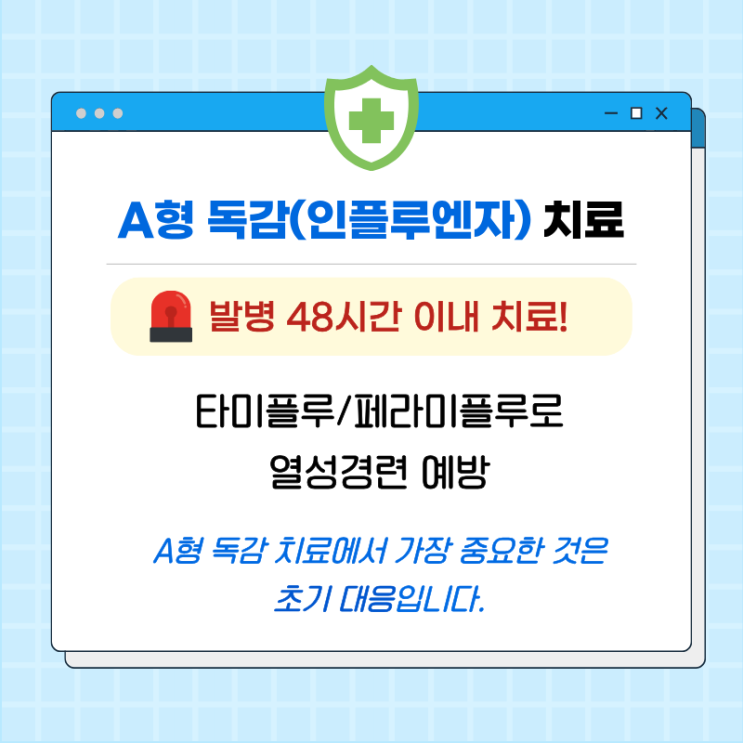
✅ Antiviral medication within 48 hours (Tamiflu / Peramiflu)
-
Antiviral treatment must be started within 48 hours of symptom onset, with Tamiflu (an oral medicine) or Peramiflu (an injection), to suppress viral replication and bring the fever down quickly. It also plays a major role in preventing febrile seizures in children, which makes the timing critical.
✅ Fluid intake and lukewarm sponging
-
To prevent dehydration caused by high fever, give lukewarm water little and often, and if the fever does not come down well even after an antipyretic, add lukewarm sponging as well.
✅ Plenty of sleep and rest at home
-
Influenza is a viral illness that requires the body’s own immunity to recover. Let your child take a break from daycare, school, and outside activities, and rest comfortably at home.
A Message from SONGDO ANSHIN

“It’s summer, so it can’t be the flu…” Putting off the diagnosis with this thought can prolong the days your child suffers from high fever.
At SONGDO ANSHIN, we never miss even the smallest symptom, and we always do our best to help children recover quickly with accurate, prompt testing and care matched to each child.
If your child suddenly runs a high fever for no clear reason, or develops a fever after overseas travel, please feel free to come see us without hesitation!
💡Read this together!
“When did the flu start spreading last year?”
If you are curious about the influenza epidemic advisory issued around mid-October last year, along with
vaccination timing and the criteria for prescribing antivirals,
👇please check out the post below as well!
📌 [Influenza Epidemic Advisory Issued! Why Vaccination Now Matters