
Once-Weekly Growth Hormone Sogroya: Does It Help Children Grow as Well as Daily Injections? (Review of 3 Pediatric Clinical Studies)
Sogroya (somapacitan) vs. Daily Growth Hormone Injections
A Review of 3 Pediatric Growth Hormone Deficiency Clinical Studies

|
💡[Key Conclusion] To start with the conclusion, the once-weekly growth hormone injection (Sogroya) delivered a height-growth effect on par with daily injections. Instead, the number of injections fell sharply from 365 times a year to just 52, easing the burden on child and parents, while the rate of actually keeping to the prescription (adherence) was higher. ‘Same effect, less burden’ is the key point. |
Can a Daily Injection Become a Once-Weekly One?
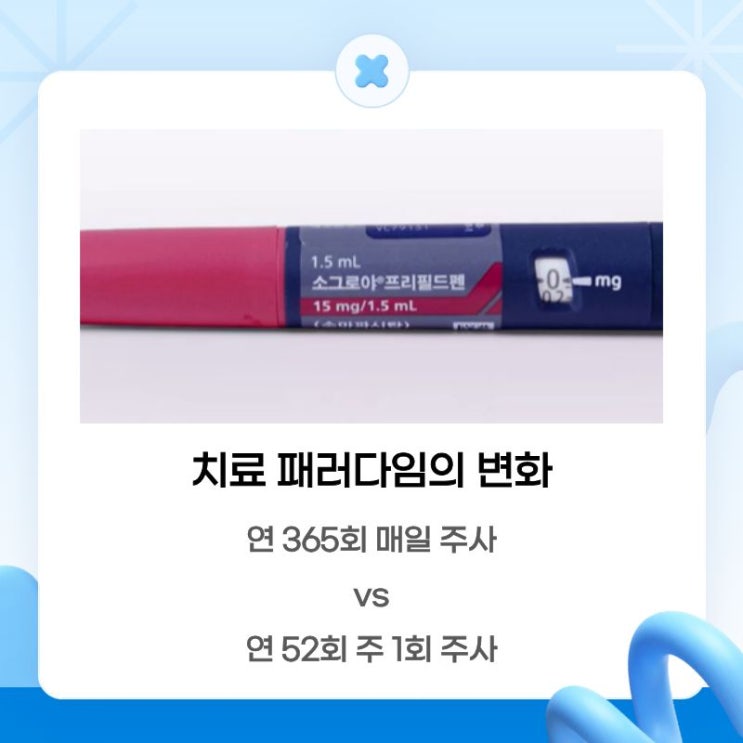
Growth hormone deficiency (GHD) is a condition in which the pituitary gland does not produce enough growth hormone, so a child does not grow as well as peers. Treatment replaces the missing hormone by injection, and until now that meant an injection every night.
For a young child, a daily injection is a heavy burden, and on days it is forgotten or skipped the treatment’s effect also declines.
Sogroya (generic name: somapacitan) is a growth hormone developed to reduce this burden. It is a ‘once-weekly’ formulation. In Korea, all strengths (5, 10 and 15mg) were approved in March 2024.
One question naturally follows — “Even with fewer injections, will my child grow as well as with daily ones?”
Verified Across 3 Clinical Studies in the World’s Leading Journal (JCEM)
To answer this question, we reviewed 3 clinical trials (REAL 3, REAL 4) conducted worldwide that pitted Sogroya directly against daily growth hormone.
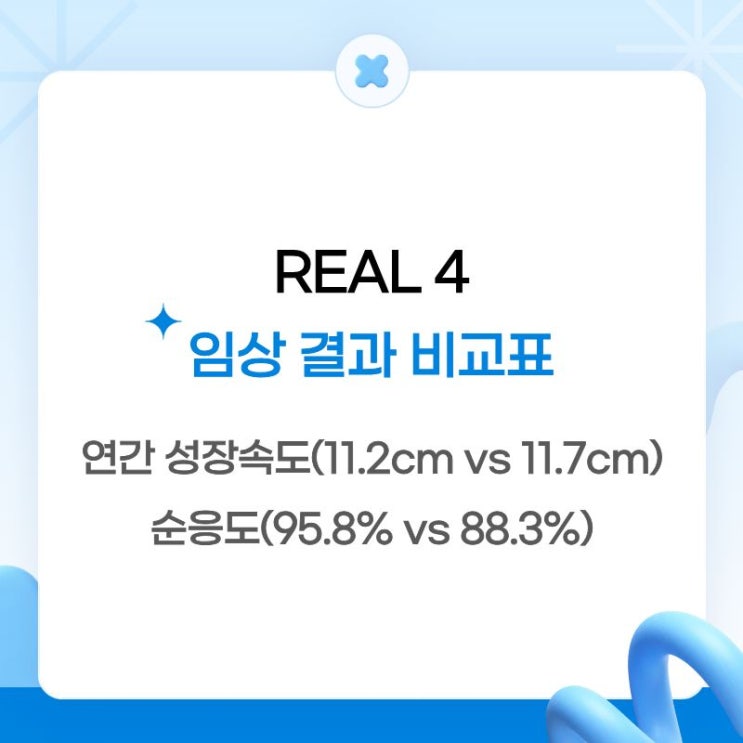
All were studies published in the leading journal of endocrinology (Journal of Clinical Endocrinology & Metabolism), following prepubertal children with growth hormone deficiency for up to 4 years. The largest, REAL 4, divided 200 children in 20 countries into a Sogroya group and a daily-injection group and compared them for 1 year.
|
Category |
Sogroya (once weekly) |
Daily injection |
|
Annual height growth velocity |
11.2 cm/year |
11.7 cm/year |
|
Prescription adherence |
95.8% |
88.3% |
|
Injections per year |
52 times |
365 times |
Analysis of the Study Results

1️⃣ Height-growth effect — not inferior to daily injections
Over 1 year, height growth velocity was 11.2cm per year in the Sogroya group and 11.7cm in the daily-injection group, with no statistically meaningful difference. This is called ‘demonstrating non-inferiority,’ and it rigorously proves not that the treatment is ‘better,’ but that it is ‘not inferior to existing treatment.’
The practical marker of growth, IGF-1 levels, were also well maintained within the normal range in both groups. Even in 3-year and 4-year long-term follow-up, there was no difference in effect.
2️⃣ Adherence and burden — the clear strength of once weekly
The rate of receiving every dose as prescribed (adherence) was 95.8% in the Sogroya group, higher than 88.3% in the daily-injection group. That is because the number of injections itself falls from 365 to 52 per year, about one-seventh.
Among parents of children who switched from daily injections to once weekly, 81.8% preferred once weekly, and 88.9% answered that ‘with once weekly we can keep to it better.’ Treatment burden scores for both children and parents also fell markedly.
Side Effects, Safety, and Limitations
✅ Side effects, Safety
Safety was similar between the two approaches. Common adverse reactions were headache, runny nose, mild fever and limb pain, mostly mild and with little direct relation to treatment. Injection-site reactions were also similar at around 5% in both groups, and no child discontinued treatment because of a serious side effect. Neither blood sugar abnormalities nor antibodies that neutralize the drug were observed.
✅ Significance and limitations
There are limitations, however. Because the participants were children, open-label studies without a placebo (dummy drug) were included, and REAL 3 was a small early study.
Also, in clinical trials the daily-injection group tends to show high adherence as well, so in real clinical practice the adherence advantage of once weekly may be even greater. Growth outcomes differ from child to child, so generalization calls for caution.
Treatment Principles of the SONGDO ANSHIN Growth Clinic

In short, once-weekly growth hormone is an excellent option that shows growth effects on par with daily injections while greatly reducing the injection burden.
But treatment cannot be decided on the convenience of ‘fewer injections’ alone. The child’s current growth status, bone age, precise hormone test values, cost and treatment goals must all be weighed together, and above all, an accurate diagnosis comes first.
Through careful testing, our clinic distinguishes children who truly need treatment from those who do not, and makes it a principle never to over-treat.
|
📢 In summary • Once-weekly Sogroya has proven a growth effect on par with daily injections. • The number of injections per year falls from 365 to 52, greatly lowering the child’s injection stress and the parents’ burden. • More important than convenience is an accurate diagnosis. Come experience growth treatment matched to your child. |
🔗 [Related Reading]
If you are curious about the background to Sogroya’s domestic launch, its basic prescribing information and indications for once-weekly growth hormone,
▽ please also refer to our previous post below.
👉 [Songdo Growth Clinic] Once-Weekly Growth Hormone Injection Sogroya: Domestic Launch and Key Prescribing Information Summary

📖 [Reference Papers]
• Miller BS, et al. REAL 4. J Clin Endocrinol Metab. 2022;107(12):3378-3388.
• Sävendahl L, et al. REAL 3 (3-year). J Clin Endocrinol Metab. 2022;107(5):1357-1367.
• Sävendahl L, et al. REAL 3 (4-year). J Clin Endocrinol Metab. 2023;108(10):2569-2578.
