
When Is the Best Time for an Influenza Test? How Many Hours After a Fever Starts? (Cost, Private Insurance, Result Time & Test Kit Guide)
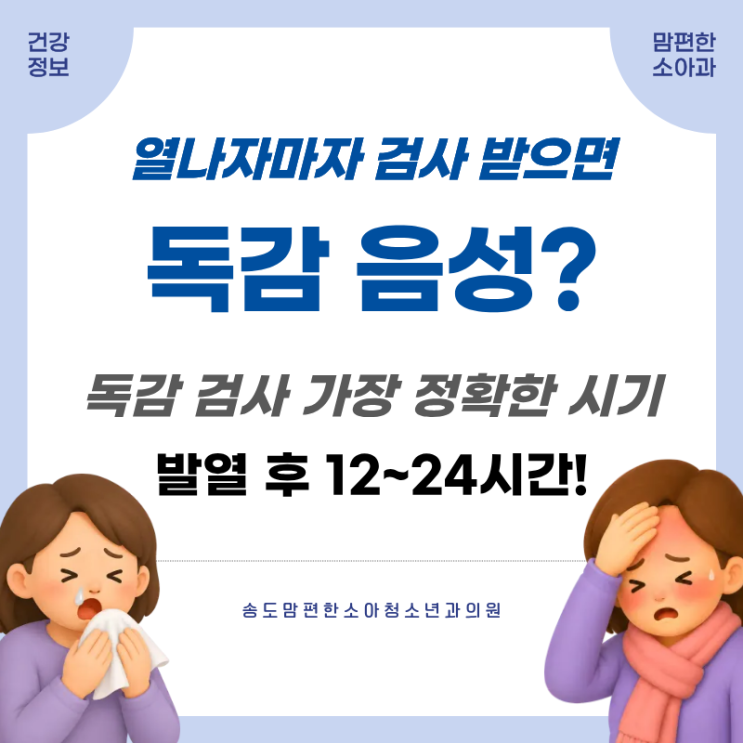
During the changing seasons, when cold winds blow and the gap between day and night temperatures widens, even a slight fever in your child can make you worry that it might be influenza.
Especially when a fever doesn’t come down easily even after giving a fever reducer overnight, many parents rush to the clinic first thing in the morning, saying, “Doctor, my child’s fever just started. Please do an influenza test right away!”
But did you know that, despite how anxious you may feel, an influenza test done right after a fever begins is less accurate and can give a ‘false negative’?
Today, SONGDO ANSHIN will clearly explain the right time for an influenza test, why you shouldn’t test the moment a fever starts, and the questions many parents ask about: the cost of the influenza test, private medical insurance coverage, how long results take, and how the test kit works.
How the Influenza Test Works & How Long Results Take (Rapid Antigen Test)
The influenza test performed at pediatric clinics typically uses the ‘rapid antigen test (kit)’ method.
-
Test method : A thin swab is inserted into the child’s nasal cavity (deep inside the nose) to collect a sample.
-
Result time : After the sample is collected and dropped onto the kit, you can confirm on the spot within about 10–15 minutes whether it is influenza (type A or type B).
Why You Shouldn’t Test Right After a Fever Starts (False Negative)
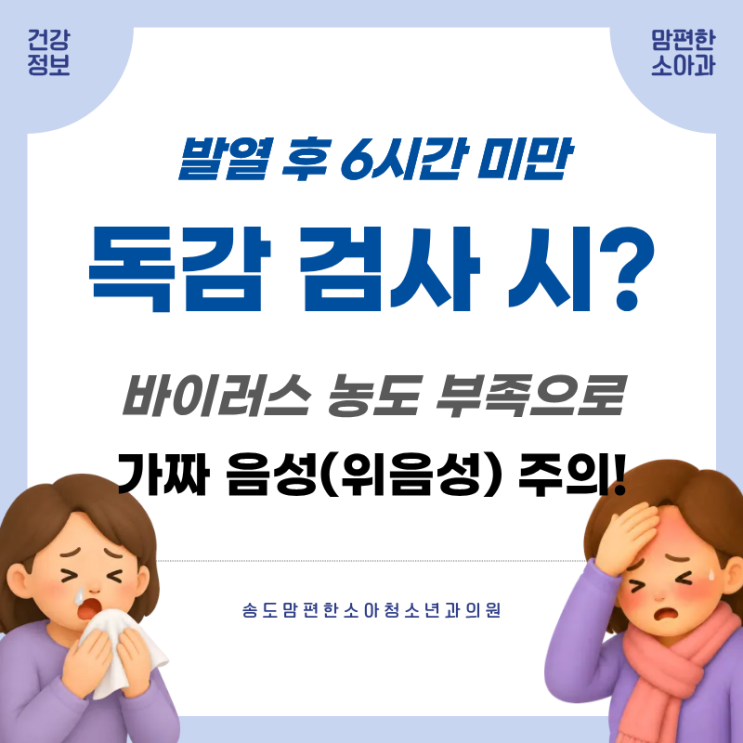
The influenza rapid antigen test kit works by detecting the concentration of the virus’s surface proteins (antigens).
✅ Less than 6 hours after the fever starts
At this stage, the virus has only just begun multiplying in the child’s body. Even if the child actually has influenza, the concentration of viral antigens in the nose may fall below the kit’s minimum detection threshold, so the result may show as ‘negative.’ (Medically, this is called a ‘false negative.’)
✅ Problems that can arise
Real influenza may be mistaken for a common cold, leading to an unnecessary retest a few days later, or delaying the timing of antiviral medications such as Tamiflu or Peramiflu.
[The Most Accurate Timing] Influenza Test Timeline Guide

The influenza rapid antigen test gives the most accurate results once the virus has multiplied above a certain level in the body.
|
Stage |
Time elapsed |
Features & visit guide |
|
Early observation period |
Within 6 hours after fever onset |
Low viral load means a possible ‘false negative’; we recommend giving a fever reducer and observing |
|
Testable & recommended period |
6–12 hours or more after fever onset |
The virus becomes detectable; visit and get tested depending on your child’s condition |
|
Most reliable golden time |
Between 12–24 hours after fever onset |
Viral antigen levels are sufficient, so test accuracy is at its highest |
|
Recommended treatment period |
within 48 hours of symptom onset |
Antivirals such as Tamiflu/Peramiflu give the greatest symptom relief when started in this window |
💡Advice from SONGDO ANSHIN :
If you visit at least 6 hours after the fever starts, you can check the test result, and visiting at around 12 hours allows an even more reliable and accurate diagnosis.
If the fever started in the morning, we recommend visiting late that afternoon or during evening hours; if it started at night or early morning, we recommend visiting the next morning.
Exceptions! When You Should Visit Immediately Without Waiting
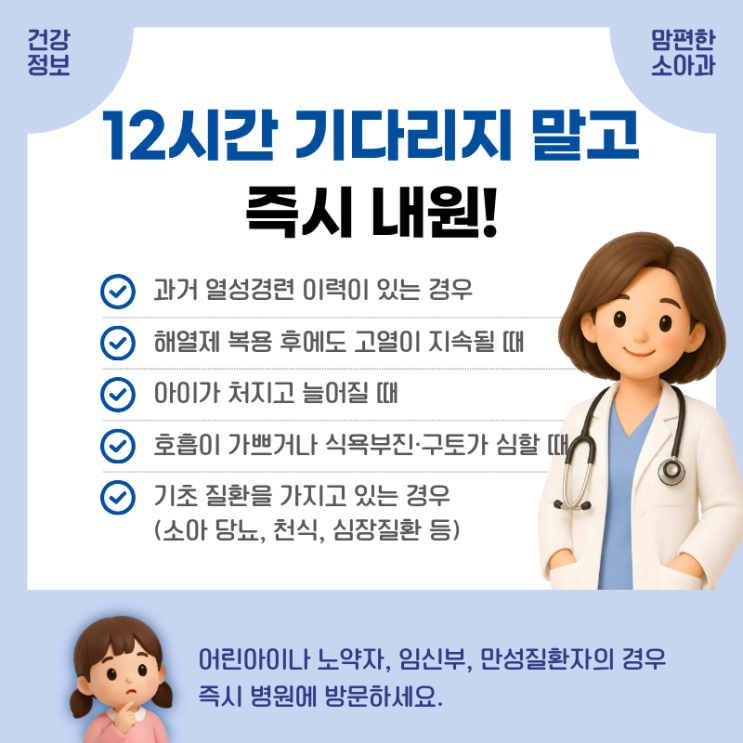
Even though waiting for the right testing time is the general rule, there are exceptions where your child should be examined immediately without waiting, depending on their condition.
1️⃣ If your child has a history of febrile seizures
2️⃣ If a high fever of 39°C or above persists even after an appropriate dose of fever reducer
3️⃣ If your child is lethargic and limp, breathing fast, or has severe loss of appetite or vomiting
4️⃣ If your child has an underlying condition such as pediatric diabetes, asthma, or heart disease
📌 Note :
Even if an influenza test isn’t done right away, it is safer to have your child examined by a pediatric specialist to check for causes other than influenza (otitis media, tonsillitis, adenovirus, etc.) and to receive a prescription for fever control and symptom relief first.
Influenza Test Cost & Private Insurance Coverage
Here is information on costs and insurance claims, the questions patients ask most often when visiting the clinic.
-
Influenza test cost : The influenza rapid antigen test is a non-covered (non-reimbursable) item, and the test costs around 30,000 won. (※ Costs may vary depending on each clinic’s non-covered fee standards.)
-
Private insurance claims : Consultations and tests performed for suspected influenza symptoms (high fever, chills, muscle aches, etc.) based on the doctor’s clinical judgment may be covered by your individual indemnity medical insurance (private insurance). However, eligibility and reimbursement amounts may differ depending on when you enrolled and your policy terms (exclusions, deductibles, etc.), so please check with your insurance company for details. After your visit, we will issue the required documents (itemized statement of medical expenses, receipts, etc.) upon request.
Timing of Treatment After an Influenza Diagnosis (The 48-Hour Rule)
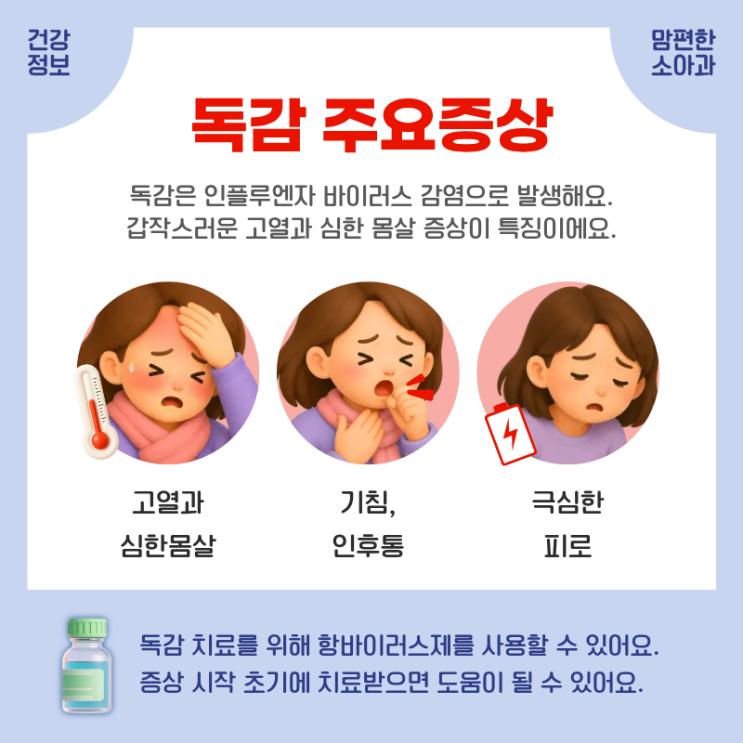
The influenza medications Tamiflu (oral) and Peramiflu (IV injection) work by blocking the replication of the influenza virus in the body.
Starting treatment before the virus multiplies explosively, that is, within 48 hours of symptom onset, shortens the fever period and effectively helps prevent complications. After 48 hours, the medication’s symptom-relief effect may decrease, so it is important to get diagnosed promptly at the right testing time (12–24 hours).
📌 [Recommended Related Posts]
“No Runny Nose or Cough but a 40°C Fever? Can You Still Get Influenza After the Flu Shot?”
If you’re curious about the symptoms of influenza A, which spikes suddenly without an early runny nose or cough, and the difference between oral Tamiflu and Peramiflu IV treatment, see the post below ▽
👉 Influenza A Symptoms & Tamiflu vs Peramiflu IV Treatment: A Complete Comparison

A Word from SONGDO ANSHIN

Even if your child suddenly develops a high fever, try not to panic. Manage their temperature with a fever reducer and note the time the fever first started.
At SONGDO ANSHIN, we consider the timing of your child’s fever and their overall condition together to perform the rapid antigen test at the most accurate time and provide treatment suited to your child.
If you have any questions about managing your child’s fever or influenza testing, please feel free to visit us anytime for a consultation!
