
Growth Clinic vitamin & mineral tests: do you really need them all? A pediatric & adolescent medicine specialist answers.

The vitamin & mineral panel test,
does your child really need it?
The testing philosophy and promise of the SONGDO ANSHIN Growth Clinic — Part 3
Hello! SONGDO ANSHIN here.
“My child seems shorter than their peers. I’d like to get a full nutritional workup. Is that possible?”
This is one of the questions we hear most often from parents in the clinic. We fully understand the worry that your child might grow even a little less than they could. But as specialists who run a growth clinic, we have to say this: getting every test in a ‘nutrition test package’ is not necessarily the right answer. Today we offer an honest, evidence-based guide to why that is, and to what testing your child truly needs.
|
The 3 promises of the SONGDO ANSHIN Growth Clinic 1️⃣ Vitamin D, which is central to growth and bone health, is performed as a baseline test for every child who visits the growth clinic. In contrast, a blanket package that tests vitamins A, C, K, selenium and the like all at once is not recommended by international guidelines. 2️⃣ For parents who come worried about height growth, we first assess bone age and height status, and perform blood tests only when needed. Even then, we build the panel around meaningful items such as vitamin D and anemia. 3️⃣ We do the tests that are needed without hesitation, and we explain the results in an easy-to-understand way. That is what “SONGDO ANSHIN” means: parents feel reassured that “we did only what was necessary, and now we clearly know what to do based on the results.” |

Questions we hear often in the clinic

SONGDO ANSHIN Annex, Exam Room 1
“My child doesn’t seem to be growing well, so I’d like to get a nutritional test.
Another clinic tested vitamins A, B, C, D, K and even selenium all at once. Can you do that here too?”
“The comprehensive growth test package included all the nutritional items, so I was thinking of getting it,
do we really have to test all of that to be accurate?”
These are questions we hear often in the growth clinic.
Parents who visit worried about height growth often ask about nutritional testing as well, wondering whether a nutritional deficiency might be why their child isn’t growing. Wanting to know exactly which nutrients might be lacking and to supplement them for your child’s height and health is a natural and entirely understandable feeling.
Today we want to give an honest answer that best serves that feeling. We’ll explain the conclusion on which international pediatric societies and Korean pediatric nutrition reviews agree, and how our clinic practices in line with that evidence.
Our clinic’s care philosophy: still the same this time
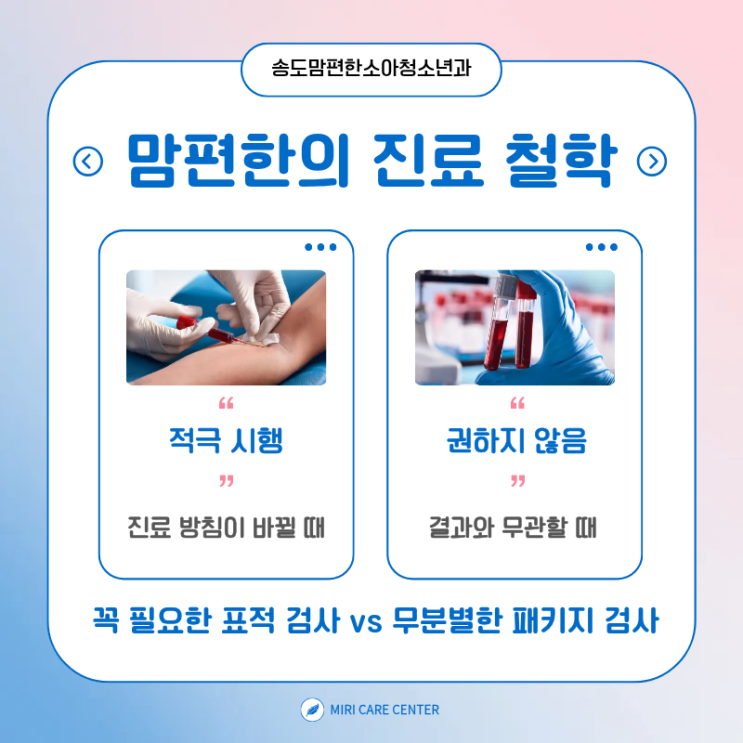
The care principles of our clinic that we described in Parts 1 and 2 apply just the same in this article.
|
Principle for deciding on a test |
Care direction |
|
Actively perform |
When it may change the course of care |
|
Not recommended |
When the same conclusion is reached regardless of the result |
We judge nutritional testing by this same principle. When a test would actually change the direction of care or our dietary and lifestyle recommendations, we perform it actively; a blanket package test that would not, we do not recommend.
Which nutrients carry clinical significance for children’s growth and bone health?

There are a great many kinds of vitamins and minerals. However, the nutrients with verified clinical significance for children’s growth and bone health fall within a relatively narrow range.
A 2025 Korean pediatric nutrition review organized the micronutrients with clear clinical significance into six:
iron, zinc, vitamin A, vitamin D, iodine, and folate.
Among these, the one directly tied to bone health and growth is vitamin D. Vitamin D is an especially important test for children who visit a growth clinic, and we perform it as a baseline test (the detailed reasons are explained in Section 4).
By contrast, items such as vitamins A, C, K and selenium are, by international standard, tested only when a deficiency is clinically suspected.
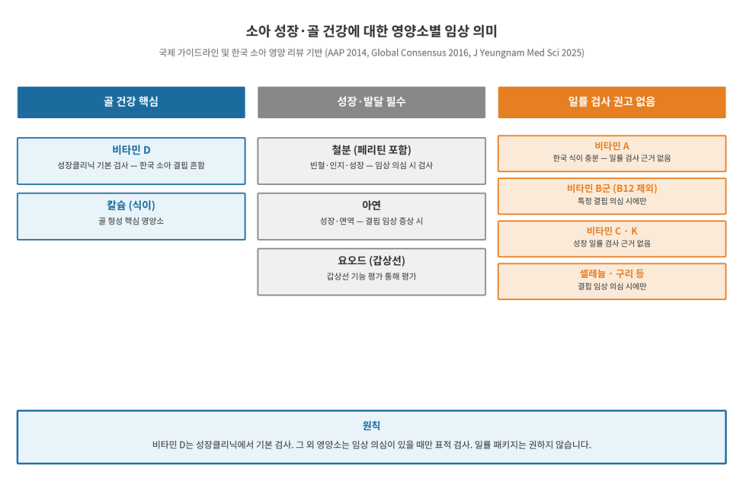
[Graph 1] Clinical significance of each nutrient for children’s growth and bone health.
Vitamin D is a baseline test at the growth clinic; vitamins A, C, K, selenium and the like are tested only on clinical suspicion.
|
Key points Bone-health core: vitamin D — a baseline test for children visiting the growth clinic (deficiency is common in Korean children) Essential for growth and development: iron, zinc, iodine — targeted testing on clinical suspicion Tested only on clinical suspicion: vitamin A, B vitamins (except B12), vitamin C, vitamin K, selenium, copper, and the like |
Why is vitamin D a baseline test at our clinic?
An important distinction is needed here. The American Academy of Pediatrics (AAP) does not recommend blanket vitamin D testing for “healthy general children,” but at the same time it recommends testing for “children whose bone health is of concern.”
|
American Academy of Pediatrics (AAP) 2014 official recommendation “Universal screening for vitamin D deficiency across the entire population of healthy general children is not recommended.” “However, vitamin D testing is performed for children with conditions related to bone fragility (suspected rickets, a history of low-trauma fractures, concerns about growth and bone health, etc.).” |
This distinction is the key. Testing vitamin D in every healthy child who comes in for a school physical is medically a completely different situation from testing a child who visits a growth clinic out of concern about growth.
Children who come to a growth clinic are already a selected group with concerns about growth and bone health. Moreover, in Korea, vitamin D deficiency is very common among children and adolescents because of sunlight levels, indoor lifestyle patterns, and sun-protection habits.
When these two factors combine, vitamin D testing at a growth clinic becomes not a “blanket test” but an “appropriate baseline test for an at-risk group.”

|
That is why our clinic performs vitamin D as a baseline test for children who come in for a growth assessment. It is a decision that considers the clinical context of a growth clinic and the high prevalence of deficiency in Korean children, and it is consistent with the AAP recommendation. This is because vitamin D, once a deficiency is confirmed, can be clearly corrected with supplementation, and that correction genuinely helps bone health and growth. It is a test where ‘the result changes the care.’ |
In other words, vitamin D corresponds exactly to the principle stated in Section 1 — “a test whose result will change the course of care is performed actively.”
[Revisiting a previous post]
Why doesn’t our child get a blood test?
Instead of indiscriminate testing,
performing only the ‘truly necessary tests’ that change the course of care
check SONGDO ANSHIN principle in ▽the previous post.

So what about the other vitamins and minerals?
Unlike vitamin D, which is a baseline test at the growth clinic, the other items bundled into package tests — vitamins A, the B group, C, K, selenium and so on — are a different matter. For these items, unless a deficiency is clinically suspected, the medical basis for blanket testing is weak.
The «Global Consensus Recommendations on the Prevention and Management of Nutritional Rickets», published in 2016, presents the general principle for vitamin and mineral testing as follows.
|
Global Consensus 2016 recommendation Indiscriminate, blanket measurement of nutrients across a population of healthy general children is not recommended. Reason 1: measurement methods and reference values are not standardized across testing laboratories, making results difficult to interpret. Reason 2: in children with no clinical suspicion, it is rare for the treatment plan to change based on test results. |
In short, even the same “vitamin and mineral test” is approached differently depending on the item.
Vitamin D is justified as a baseline test in the growth-clinic context, but a package that tests vitamins A, C, K, selenium and the like all at once is not recommended unless there is clinical suspicion. The key is “being targeted.”
That is why our clinic chooses targeted testing

An Sehwan, MD, Pediatric & Adolescent Medicine specialist and Director of SONGDO ANSHIN
The guideline above is precisely our care principle. Comparing a blanket package test with a targeted test makes the difference clear.
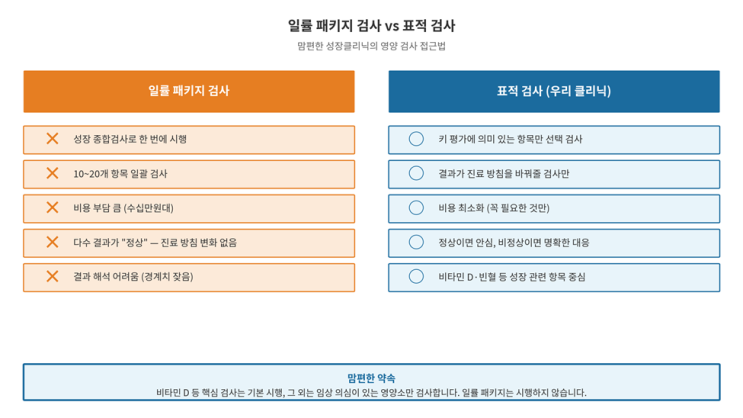
[Graph 2] Blanket package test vs. targeted test. Our clinic tests precisely only the nutrients for which there is clinical suspicion.
How our clinic practices
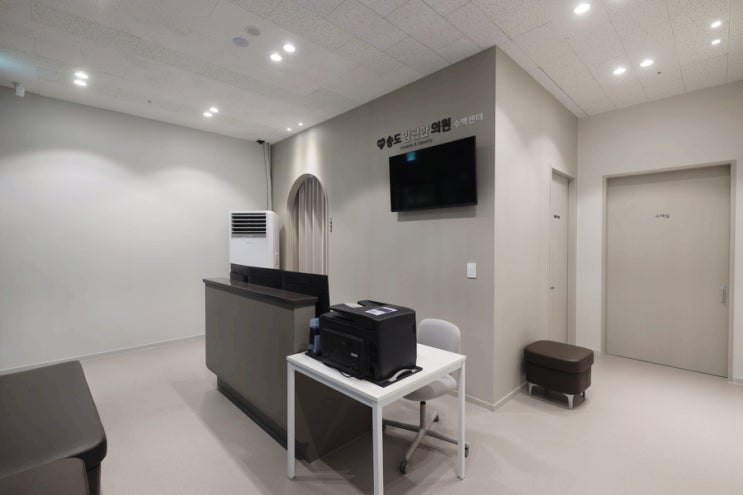
The biggest concern of most parents who visit the growth clinic is “my child seems shorter than their peers.” That is, they often come worried about height growth rather than nutrition. We provide care in the following order.
● Step 1 — Bone-age X-ray
We measure bone age with a wrist X-ray. How mature the bones are compared with peers is the most important starting point for assessing height growth.
● Step 2 — Family history and current height assessment
We check the target height based on the parents’ heights, the child’s current height percentile, recent growth velocity, stage of pubertal progression, and family history together. In most cases this assessment alone is enough to judge whether further testing is needed.
● Step 3 — Blood tests only when necessary
We perform blood tests when the bone-age and height assessment indicates that further confirmation is needed. We do not draw blood uniformly from every child. When we do run blood tests, we build the panel around items meaningful at a growth clinic — vitamin D, anemia (iron), thyroid function, and, if needed, growth-hormone-related tests.
● What we do not recommend
We do not perform package tests that uniformly bundle vitamins A, C, K, selenium, and various minerals. Such items add tens of thousands of won each, yet contribute almost no information to height-growth assessment, and the great majority of the results come back within the “normal range.”
A guide for parents: if you have been advised to get a nutritional panel test

When a vitamin and mineral panel test is recommended to you at a growth clinic or in nutritional-testing advertising, we suggest asking the following three questions.
|
3 good questions to ask ① “Why is each of these test items needed for assessing my child’s height growth?” (Some items, like vitamin D, are meaningful, but think twice about expensive items bundled in with no relation to height assessment.) ② “How would the treatment plan change depending on how the test results come out?” ③ “Is there a medical basis for recommending that all of these items be tested at once?” |
If the doctor answers these three questions clearly, then that test is worth getting. If the answer is vague or along the lines of “it helps with growth, so let’s just try it,” then having your bone age and height status assessed first and getting only the truly necessary tests is also a good choice.
In closing: our promise
In nutritional testing too, our promise is the same.
1️⃣ Height-growth assessment starts with a bone-age X-ray and a review of family history and height status.
2️⃣ Blood tests are performed only when necessary, built around items meaningful for growth such as vitamin D and anemia.
3️⃣ We do not recommend expensive vitamin and mineral package tests. We explain the results in an easy-to-understand way.

The concern parents feel for their child’s height and health is love. The best way to repay that love, we believe, is not “testing everything all at once,” but “confirming exactly what is truly needed and giving the answer that fits it”.
If you’d like to look at height and growth together, or if a nutritional test has been recommended to you and you’re hesitating, come by anytime. We will first accurately assess bone age and height status, and decide together on only the tests that are truly necessary.
References
1. Golden NH, Abrams SA; Committee on Nutrition. Optimizing bone health in children and adolescents. Pediatrics. 2014;134(4):e1229-1243. (American Academy of Pediatrics)
2. Munns CF, Shaw N, Kiely M, et al. Global Consensus Recommendations on Prevention and Management of Nutritional Rickets. J Clin Endocrinol Metab. 2016;101(2):394-415.
3. Hong S. Essential micronutrients in children and adolescents with a focus on growth and development: a narrative review. J Yeungnam Med Sci. 2025;42:25.
※ This article is an easy explanation for the general public of international pediatric society guidelines and academic reviews, and does not replace medical advice.
